The most damaging myth in songwriting is that songs arrive. Professional writers will tell you the opposite: songs are built, inspiration shows up mid-work if it shows up at all, and the writers with memorable catalogs are simply the ones who wrote the most songs. Craft is what lets you finish on the days the muse doesn't call.
Songwriting books in order: write songs people actually remember
July 9, 2026 · 2 min read
The path, stage by stage
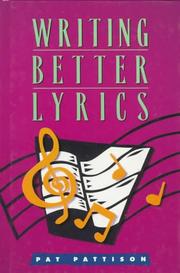
Start with the modern standard. Writing Better Lyrics by Pat Pattison — the Berklee lyric-writing text — teaches the tools nobody intuits on their own: object writing, rhyme types and their emotional weights, how verse structure creates or kills momentum. It will change how you hear every song on the radio. Follow it with Pattison's Song-writing Without Boundaries, a book of timed writing challenges that turns the theory into reps.
Two books widen the lens. The Craft of Lyric Writing by Sheila Davis is the classic deep study of what makes professional lyrics work, with the receipts — hundreds of analyzed examples. And The Artist's Way by Julia Cameron addresses the actual reason most writers stall: not technique, but the internal critic that vetoes ideas before they reach the page.
Songs are tiny stories, so study story. Story by Robert McKee was written for screenwriters, but its mechanics of desire, conflict, and turning points map directly onto three verses and a chorus. Then read the master's own account: Tunesmith by Jimmy Webb — part memoir, part technical manual from the writer of some of the most covered songs of the twentieth century, and the best book ever written on the working life of a songwriter.
Finally, the practical wrap. How to Write Songs on Guitar by Rikky Rooksby connects chord choices to songwriting decisions if the guitar is your writing instrument, and All You Need to Know About the Music Business by Donald S. Passman explains publishing, royalties, and copyright — because a song you can't protect or get paid for is a hobby, not a catalog.
The habit: ten minutes of object writing, every morning
Pattison's core exercise, done daily: pick one ordinary object and write about it for exactly ten minutes using all seven senses — sight, sound, taste, touch, smell, body, and motion. No rhyming, no editing, timer on. This builds the sense-bound imagery bank that separates lyrics people feel from lyrics people merely follow, and it makes writing a reflex instead of an event.
Time and the path
Nine books is roughly 90 hours of reading — write songs the whole way through, because the books only work on a writer in motion. Follow the path, or start at the songwriting hub. Writers who record their own demos should also wander the music production hub.
FAQ
- Do I need to play an instrument to write songs?
- It helps but isn’t required — plenty of successful writers are lyricists who collaborate with composers. Basic guitar or piano is enough to sketch chords, and the path includes a guitar-focused option for exactly that.
- How many songs should I write before expecting a good one?
- Working songwriters commonly say the first fifty are practice. That sounds brutal until you’re writing steadily — at a song a week, it’s a year, and the improvement curve is steep the whole way.
Get the books
- 1Writing better lyricsAmazon ↗Pat Pattison
- 2The Artist's WayAmazon ↗Julia Cameron
- 3Song-writing without boundariesAmazon ↗Pat Pattison
- 4The craft of lyric writingAmazon ↗Sheila Davis
- 5StoryAmazon ↗Robert McKee
- 6Amazon ↗
As an Amazon Associate we earn from qualifying purchases. Some book links are affiliate links; you pay the same price and we may earn a small commission.
Follow the full reading path


Write songs people remember
Beginner10books73 hrs5 stages
@craftsherpa♥ 0
Ready to learn something deeply?
Build a reading path — free