The voice is the only instrument you can't watch yourself play. A guitarist can see a bad fret hand; a singer just hears something vaguely wrong and pushes harder — which is precisely the wrong move. Most stalled singers aren't short on talent. They're practicing songs when they should be practicing the instrument.
Singing with better pitch and confidence: a reading path for your voice
July 9, 2026 · 2 min read
The path, stage by stage
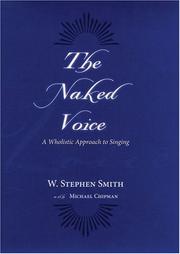
Start with the machine itself. The Voice Book by Kate DeVore explains how the voice actually works — breath, folds, resonance — and how to keep it healthy, which is the difference between a singing habit and a six-month hoarse spell. Then The Naked Voice by W. Stephen Smith reframes technique around freedom rather than control, the mindset shift that keeps beginners from muscling every note.
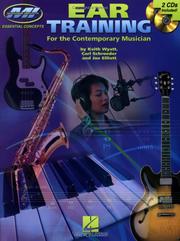
Pitch problems are usually ear problems. Ear Training for the Contemporary Musician by Keith Wyatt trains you to hear intervals and chord qualities before you try to sing them, and Sight Singing Complete by Maureen A. Carr turns that ear into a skill: look at a line of music, sing it accurately. This stage is unglamorous, it feels like homework, and it is where "better pitch" actually comes from — you cannot reliably produce a note you cannot clearly imagine first.
Then go deep on technique. The Structure of Singing by Richard Miller is the serious pedagogical text — systematic exercises grounded in how the vocal mechanism behaves. Singing for the Stars by Seth Riggs teaches the speech-level approach behind a long list of professional voices, and Vocal Workouts for the Contemporary Singer by Anne Peckham supplies the daily workout material you'll actually use.
Finally, the head game. The Inner Game of Music by Barry Green tackles the self-interference that wrecks performances — the inner commentary that tightens the throat mid-phrase — and Performing in the Zone by Jon Gorrie gives concrete tools for nerves, because confidence isn't a personality trait, it's a trained response.
The habit: record everything, review weekly
Record every practice session on your phone — ten minutes is enough. You can't hear yourself accurately while singing (bone conduction lies to you), so the recording is your only honest feedback loop. Once a week, listen back to the earliest and latest takes and write down one specific thing that improved and one to target next. Singers who record improve dramatically faster than singers who don't, for the same reason athletes watch film.
Time and the path
Nine books, worked through with daily practice, comes to roughly 90 hours of reading — the singing itself is extra, and it's the point. Follow the path, or start at the singing hub. A little keyboard fluency makes ear training far easier — the piano hub pairs well with stage two.
FAQ
- Can you really learn to sing from books?
- Books teach you what to practice and why, which most beginners never learn. A teacher accelerates feedback, but the anatomy, ear training, and practice structure in these books do the heavy lifting either way.
- How long until my pitch noticeably improves?
- With daily ear training and recorded practice, most people hear a real difference in six to twelve weeks. Pitch is a trainable perception skill, not a fixed gift.
Get the books
- 1The Voice BookAmazon ↗Kate DeVore
- 2The naked voiceAmazon ↗W. Stephen Smith
- 3Ear training for the contemporary musicianAmazon ↗Keith Wyatt
- 4Sight Singing CompleteAmazon ↗Maureen A Carr
- 5The structure of singingAmazon ↗Richard Miller
- 6Singing for the StarsAmazon ↗Seth Riggs
As an Amazon Associate we earn from qualifying purchases. Some book links are affiliate links; you pay the same price and we may earn a small commission.
Follow the full reading path

Sing with better pitch and confidence
Beginner9books51 hrs4 stages
@craftsherpa♥ 0
Ready to learn something deeply?
Build a reading path — free