Music theory intimidates people because it's usually taught as a pile of rules with no apparent purpose. But it's really a language — a way of describing what your ear already hears — and like any language it's learned in order: the alphabet first, then grammar, then the subtle style of the masters. Skip ahead and it's arbitrary; take it in sequence and each rule turns out to explain a sound you already love.
Learn music theory from books: from notation to voice leading
July 6, 2026 · 1 min read
The path, stage by stage
Our music theory path climbs from notation to analysis.
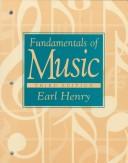
Foundations — the language of music. Fundamentals of Music and Music Theory for Dummies — notation, scales, intervals, rhythm. The alphabet before the grammar.
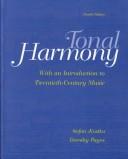
Core harmony — chords, keys, progressions. Tonal Harmony (the standard text) and The Complete Musician — how chords function and connect, the grammar of Western music.
Voice leading and counterpoint. Counterpoint and Harmony and Voice Leading — how independent melodic lines combine, the craft beneath Bach and everything after.
Advanced tonal analysis — form and chromaticism. The Structure of Atonal Music, Schoenberg's Structural Functions of Harmony, and Analyzing Classical Form.
Deep mastery — synthesis and modern perspectives. Audacious Euphony (neo-Riemannian theory) and The Study of Orchestration — theory at the edge.
The habit: hear it at the keyboard
Music theory learned only on paper stays deaf. Sit at a keyboard (any keyboard) and play everything you read — the chord, the progression, the voice leading. Theory is a description of sound, and it only becomes real when your ear connects the symbol to what it hears. Analyze scores of music you love and the rules stop being rules and become the choices composers made.
Around 113 hours. Follow the path or browse the music theory hub. Like reading poetry, it's the study of a form of beauty — learning to hear more in what you already enjoy.
FAQ
- Do I need to play an instrument to learn music theory?
- Not formally, but access to any keyboard transforms the learning — theory is about sound, and playing what you read connects the symbols to your ear. Even basic piano skills make every stage click faster.
- Can I learn music theory without reading standard notation?
- The first stage teaches exactly that, so no prior notation is required. Notation is the alphabet of the whole path; a few weeks with the foundations stage and it stops being a barrier.
Get the books
- 1Fundamentals of musicAmazon ↗Earl Henry
- 2Music Theory for DummiesAmazon ↗Michael Pilhofer
- 3Tonal HarmonyAmazon ↗Stefan Kostka
- 4The Complete MusicianAmazon ↗Steven G. Laitz
- 5CounterpointAmazon ↗Kent Kennan
- 6Harmony and voice leadingAmazon ↗Edward Aldwell
As an Amazon Associate we earn from qualifying purchases. Some book links are affiliate links; you pay the same price and we may earn a small commission.
Follow the full reading path

How to learn Music theory
Beginner11books113 hrs5 stages
@craftsherpa♥ 0
Ready to learn something deeply?
Build a reading path — free