Ask any quilt shop employee about the first-quilt graveyard: the ambitious king-size tops that died in a closet at eighty percent done. People fail at quilting not because the sewing is hard but because they scale before they have skills — and because nobody warned them that a quilt has two crafts in it, piecing the top and then actually quilting the layers, and the second one ambushes beginners. This path is short and ordered to get you to finished, because a finished lap quilt teaches more than an abandoned masterpiece.
Make Your First Quilt: The Best Quilting Books, in Order
July 9, 2026 · 2 min read
The path, stage by stage
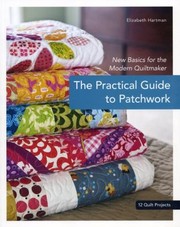
Start with The Practical Guide to Patchwork by Elizabeth Hartman. It is the right first book because it is modern, unfussy, and built around twelve real projects that scale in difficulty — and because it drills the skill that determines whether blocks fit together: the accurate quarter-inch seam. Rotary cutting, pressing discipline, chain piecing — the boring fundamentals arrive attached to quilts you actually want to make.
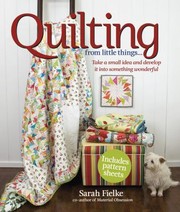
Then let your design sense grow. Quilting from Little Things by Sarah Fielke starts with small projects that each teach a technique — curves, appliqué, working with prints — and builds toward more ambitious quilts. Small quilts are the quilter's equivalent of the musician's scales: every technique gets learned at a size where mistakes cost an afternoon, not a season.
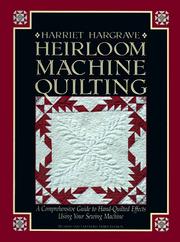
Now the ambush stage — finishing. Heirloom Machine Quilting by Harriet Hargrave is the book that proved a home sewing machine can produce quilting worthy of the word heirloom: basting, feed control, invisible thread work, and feathers, from the teacher who trained a generation. And Hand Quilting with Alex Anderson covers the slow, meditative alternative — the rocking stitch, hoops, and marking — because hand quilting is not a lesser option but a different pleasure, and small projects make it entirely practical.
The habit: the seam check that saves every block
At the start of every sewing session, sew a test seam on two scraps and measure it. If your quarter inch is off by even a thread's width, it compounds across a twelve-seam row into blocks that refuse to line up — the single most demoralizing experience in beginner quilting. Thirty seconds of checking, plus pressing each seam before crossing it with another, and your points start meeting like they do in the book photos. Precision in quilting is not talent; it is this habit.
How long it takes
Four books is roughly 40 hours of reading, woven between projects that will happily fill a year of evenings. Follow the path, or start at the quilting hub. If your machine skills need shoring up first, the sewing hub is the place to begin.
FAQ
- What size should my first quilt be?
- A baby or lap quilt — roughly 40 by 50 inches. It teaches every skill a bed quilt does but finishes in weeks instead of months, and finishing is the skill beginners most need to practice. Save the king-size ambition for quilt number three.
- Can I quilt on a regular home sewing machine?
- Yes — that is the entire argument of Harriet Hargrave’s Heirloom Machine Quilting. With a walking foot, good basting, and practice managing the bulk, a standard machine produces beautiful quilting; a longarm is a convenience, not a requirement.
Get the books
- 1The Practical Guide To Patchwork New Basics For The Modern Quiltmaker 12 Quilt ProjectsAmazon ↗Elizabeth Hartman
- 2Quilting From Little ThingsAmazon ↗Sarah Fielke
- 3Heirloom machine quiltingAmazon ↗Harriet Hargrave
- 4Hand quilting with Alex AndersonAmazon ↗Alex Anderson
As an Amazon Associate we earn from qualifying purchases. Some book links are affiliate links; you pay the same price and we may earn a small commission.
Follow the full reading path
Make your first quilt
Beginner4books4 hrs3 stages
@craftsherpa♥ 0
Ready to learn something deeply?
Build a reading path — free