Beginners treat embroidery like one monolithic skill and get overwhelmed by kits whose charts assume a vocabulary they don't have. But embroidery is exactly that — a vocabulary. Each stitch is a word: learnable in minutes, mastered in an hour, combined into sentences forever. The people who stick with the craft learn it the way samplers have taught it for centuries: a few stitches at a time, practiced deliberately, added to a growing repertoire. The people who quit bought a complicated kit as lesson one.
Embroidery and cross-stitch: slow stitches, serious craft
July 9, 2026 · 2 min read
The path, stage by stage
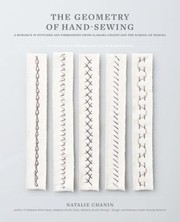
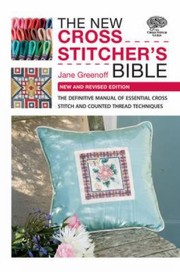
The path starts with structure: Natalie Chanin's The Geometry of Hand-Sewing strips hand stitching down to its logic — a grid system that makes every stitch teachable and every stitch family related — which is the fastest route to confident, even work. For the counted-thread branch, Jane Greenoff's The New Cross Stitcher's Bible is the definitive manual: reading charts, managing threads, and the techniques that make cross-stitch crisp instead of lumpy.
Then the vocabulary builds. The A-Z of Embroidery Stitches from Country Bumpkin is the dictionary itself — the reference you'll consult for the rest of your stitching life, each stitch photographed step by step. Erica Wilson's Crewel Embroidery opens the great free-embroidery tradition of wool on linen, taught by the woman who revived it for modern stitchers. Ruth Chamberlin's Beginner's Guide to Goldwork introduces the most luxurious corner of the craft — metal threads, couching, centuries of ecclesiastical technique — made genuinely approachable. And Françoise Tellier-Loumagne's The Art of Embroidery reframes everything as design: texture, surface, and image-making, the book that turns a stitcher into an artist.
The path deliberately runs both branches — counted and free — because they teach complementary instincts: cross-stitch builds precision and chart literacy, surface embroidery builds line and improvisation. Stitchers who know both choose techniques to suit the design; stitchers who know one bend every design to suit the technique.
The habit: a lifelong sampler, one stitch a week
Keep a working sampler — a dedicated piece of linen in a hoop — and add one new stitch to it every week from the A-Z dictionary: a labeled row, worked until it's even. It's ten minutes a day, it builds vocabulary on a schedule, and within a year you have both a hundred-stitch repertoire and a physical object tracking it. Historical samplers were exactly this — a stitcher's education made visible, one careful row at a time — and yours will be too, which is a better trophy than most crafts offer.
Expect about 60 hours of reading, stitched through with practice. Follow the path or start at the embroidery hub. The hand skills feed straight back into sewing, where a decorated seam is never wasted.
FAQ
- Should I start with cross-stitch or freehand embroidery?
- Either works — cross-stitch offers the structure of counted charts, freehand offers freedom sooner. The path covers both branches; many stitchers start with a small cross-stitch kit for confidence, then move to surface embroidery for range.
- What supplies do I actually need to begin?
- A hoop, a pack of embroidery needles, cotton floss, and a fat quarter of linen or even-weave fabric — well under the cost of one hardback. Resist the mega-kit; the books make clear that even, confident stitches come from practice, not from equipment.
Get the books
- 1The geometry of hand-sewingAmazon ↗Natalie Chanin
- 2The New Cross Stitchers Bible The Definitive Manual Of Essential Cross Stitch And Counted Thread TechniquesAmazon ↗Jane Greenoff
- 3A-Z of embroidery stitchesAmazon ↗Country Bumpkin Publications
- 4Crewel embroideryAmazon ↗Erica Wilson
- 5Beginner's guide to goldworkAmazon ↗Chamberlin, Ruth (Embroiderer)
- 6The art of embroideryAmazon ↗Françoise Tellier-Loumagne
As an Amazon Associate we earn from qualifying purchases. Some book links are affiliate links; you pay the same price and we may earn a small commission.
Follow the full reading path

Embroidery, stitch by stitch
Beginner6books21 hrs4 stages
@craftsherpa♥ 0
Ready to learn something deeply?
Build a reading path — free