People who abandon crochet almost all hit one of two walls. The first is tension: early stitches come out tight, loose, tight again, and the fabric looks like a seismograph reading. The second is pattern literacy — that moment a pattern says something like a cryptic string of abbreviations and the hobby suddenly feels like it requires a decoder ring. Neither wall is talent. Tension yields to a few hours of deliberate practice, and pattern-reading is a small language with a complete dictionary. The books below are, between them, that dictionary.
Crochet from first chain to finished pieces (without the frogging spiral)
July 9, 2026 · 2 min read
The path, stage by stage
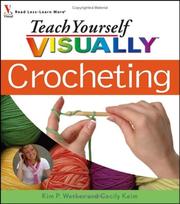
The path starts visually, which matters enormously for a hands-on craft: Teach Yourself Visually Crocheting by Kim P. Werker shows every stitch in photographs, exactly the format a beginner's hands need. Alongside it sits Edie Eckman's The Crochet Answer Book — the troubleshooting companion that answers the questions patterns assume you don't have, from "why is my edge shrinking?" to what that abbreviation actually means. Together they get you through the wall-hitting phase most people quit in.
Then the craft opens up. Eckman's Beyond-the-Square Crochet Motifs teaches the geometry of the craft — circles, hexagons, triangles — which is really a course in reading and understanding structure. Judith Durant's Crochet One-Skein Wonders for Babies supplies a pile of small, fast, giftable projects, the ideal difficulty curve for building speed and confidence. Ana Paula Rimoli's Amigurumi World unlocks the irresistibly charming toy-making branch of the craft, and Sharon Hernes Silverman's Tunisian Crochet finishes with the hybrid technique that produces knit-like fabric on a crochet hook — proof of how far the craft extends past granny squares.
A quiet advantage of this sequence: the two Eckman books bracket the exact skills gap where most crocheters stall. The answer book gets you through the mechanical frustrations of month one; the motifs book arrives right when following patterns starts feeling rote and you're ready to understand structure instead of just executing it.
The habit: fifteen minutes and a swatch journal
Crochet is a motor skill, so frequency beats duration: fifteen minutes daily builds even tension faster than a three-hour Sunday session. The specific habit that accelerates everything is a swatch journal — every new stitch pattern gets a small labeled swatch with hook size and yarn noted. It turns practice into a reference library you'll consult for years, and flipping back through last month's lumpy swatches is the clearest — and kindest — progress report the craft offers.
Roughly 60 hours of reading, with a hook in hand for most of them and yarn everywhere, forever. Follow the path or start at the crochet hub. And if you're yarn-curious in both directions, the knitting hub covers the sibling craft.
FAQ
- Is crochet easier to learn than knitting?
- For most people, yes — one hook instead of two needles, one live loop instead of a row of them, and mistakes are easier to fix. The two crafts share yarn skills, so starting with crochet loses you nothing if knitting calls later.
- What should my first crochet project be?
- A dishcloth or simple scarf in smooth, light-colored worsted yarn — big enough stitches to see, small enough to finish. Finishing quickly matters more than ambition; a completed dishcloth teaches more than an abandoned blanket.
Get the books
- 1Teach Yourself Visually CrochetingAmazon ↗Kim P. Werker
- 2CrochetAmazon ↗DK
- 3The crochet answer bookAmazon ↗Edie Eckman
- 4Beyond-the-square crochet motifsAmazon ↗Edie Eckman
- 5Crochet one-skein wonders for babiesAmazon ↗Judith Durant
- 6Amigurumi WorldAmazon ↗Ana Paula Rimoli
As an Amazon Associate we earn from qualifying purchases. Some book links are affiliate links; you pay the same price and we may earn a small commission.
Follow the full reading path

Crochet from first chain to finished pieces
Beginner7books43 hrs4 stages
@craftsherpa♥ 0
Ready to learn something deeply?
Build a reading path — free