Mandarin has a reputation as one of the hardest languages for English speakers, and it earns part of it: tones that change meaning, thousands of characters, and no shared alphabet to lean on. But most people who stall are not defeated by difficulty — they are defeated by a bad plan, jumping between apps and losing the thread. A realistic, ordered roadmap is worth more here than sheer enthusiasm.
Say it plainly up front: no book, and no book list, will make you fluent. Language is a practice skill built through daily reps, listening, speaking with real people, and — eventually — immersion. These books are the scaffolding around that practice, not a replacement for it.
Why order matters here
Mandarin has clear prerequisites. Pronunciation and tones come before everything, because bad habits set fast and are miserable to fix. A memory system for characters comes before heavy reading. And a structured course sequence should anchor the whole thing so you are not learning random fragments. Read out of order and you build on sand.
The path, stage by stage
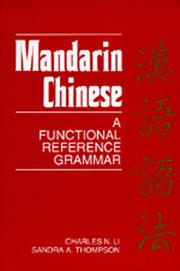
Start by understanding the terrain. Mandarin Chinese by Charles N. Li is a linguist's clear explanation of how the language actually works — tones, structure, and why it is unlike English — so you know what you are signing up for.
Then set up your learning system. Fluent forever by Gabriel Wyner teaches a research-backed method for pronunciation and spaced-repetition vocabulary that applies to any language, and Remembering simplified Hanzi by James W. Heisig gives you a structured way to make characters stick instead of drowning in them.
Now get a real curriculum. New Practical Chinese Reader Vol. 1 by Xun Liu and Integrated Chinese 4th Edition, Volume 1 Textbook by Yuehua Liu are the two standard course books — pick one as your spine and work through it systematically rather than sampling both.
For motivation and cultural insight along the way, Dreaming in Chinese by Deborah Fallows is a delightful memoir of learning Mandarin as an adult and discovering how the language shapes thought. Let it remind you why you started when the character drills get heavy.
How to actually learn this
Fix pronunciation first with a tutor or careful listening — tones are non-negotiable. Do character review daily in small doses; consistency beats marathon sessions. Work one course book cover to cover instead of collecting resources. Above all, use the language: talk to tutors and language partners, listen to Mandarin you almost understand, and get real immersion when you can. The books give you the map; only use makes it a language you live in.
Ready to start? Follow the full reading path for the staged study plan, visit the subject hub, or explore more language paths.
Ready to learn something deeply?
Build a reading path — free