Anxiety in later life is common, treatable, and routinely mishandled — usually with some mix of white-knuckling, avoidance, and being told to relax. What actually helps, according to a large evidence base, is skills practice: cognitive-behavioral techniques, sleep repair, movement, and acceptance-based tools. Those skills live in workbooks, and workbooks only work if you write in them. This path orders the best of them so each skill builds on the last. One note up front: these books complement professional care, they do not replace it — persistent anxiety deserves a conversation with your doctor, not least to rule out medical contributors.
Managing Anxiety in Later Life: The Best Books, in Order
July 9, 2026 · 3 min read
The path, stage by stage
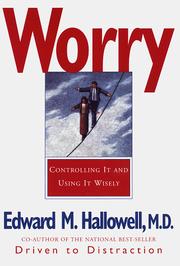
Start by understanding the machinery. Worry by Edward M. Hallowell explains what chronic worry is and why it spirals, in warm, unpatronizing prose — the right first book because it makes the problem feel workable rather than shameful.
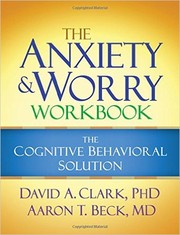
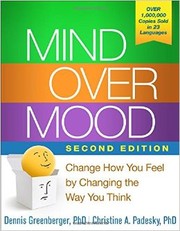
Then pick up the pencil. The anxiety and worry workbook by David A. Clark is a straight-down-the-middle CBT program: identify the anxious prediction, test it, log the result. Follow it with Mind over mood by Dennis Greenberger, the most widely used thought-record workbook in existence, which broadens the same skills to low mood — a frequent traveling companion of late-life anxiety.
Next, treat the body's side of the loop. The relaxation and stress reduction workbook by Martha Davis is a toolbox of breathing, muscle relaxation, and pacing techniques; try them all, keep two. Because anxiety and bad sleep feed each other, Say good night to insomnia by Gregg D. Jacobs delivers the CBT-for-insomnia program that outperforms sleep medication in long-term trials. And Spark by John J. Ratey makes the case — with evidence — that regular walking-level exercise is a legitimate anti-anxiety intervention, not a platitude.
When the worry has a specific address
For many older adults the anxiety is not free-floating; it is about the body. Overcoming Health Anxiety 2nd Edition by Rob Willson is the dedicated workbook for that, and it is the one to reach for if your worry runs through symptom-checking, reassurance-seeking, and repeat appointments. It is careful about the obvious trap — real medical conditions do become more common with age — and teaches you to separate appropriate vigilance from the checking behaviour that feeds the fear. Keep your doctor in the loop while you work it.
The path then turns from control to acceptance. The mindfulness & acceptance workbook for anxiety by John P. Forsyth is the acceptance-and-commitment counterpart to the CBT books: instead of arguing with anxious thoughts, you practise letting them be present while you do the thing that matters anyway. Many people find this the more durable skill of the two, and it is deliberately placed after the CBT work rather than instead of it.
Closing with meaning, not technique
The last two books answer a question the workbooks cannot. The gift of years by Joan Chittister is a short, frank set of reflections on what later life is actually for — written without either denial or gloom, and worth reading slowly, one chapter at a time. And Viktor Frankl's account of finding purpose in the worst circumstances imaginable closes the sequence. A note on the listing: the edition in our catalogue is Man's Search for Meaning adapted for Young Adults, which is a simplified adaptation rather than Frankl's original. The ideas survive the adaptation, but if you want the book as he wrote it, ask for the standard edition.
The habit: one written thought record a day
Every day, catch one anxious thought and run it through a written record: what happened, what you predicted, the evidence, what actually occurred. On paper, not in your head — the writing is the intervention. Ten minutes after breakfast, same notebook, every day. In a month you will have thirty tested predictions, and a visible track record of how rarely the feared thing arrives — which is exactly the kind of evidence an anxious mind cannot argue with.
How long it takes
Ten books, worked rather than skimmed, is roughly 100 hours over several months — appropriately unhurried for skills meant to last the rest of your life. Follow the path, or start at the calm aging hub. Since sleep is half the battle, the better sleep hub is a natural next stop.
FAQ
- Can books really help with anxiety in older adults?
- Guided self-help based on CBT has solid trial evidence, including in older adults, and several books on this path are the standard recommendations clinicians hand out. They work best alongside professional care — see your doctor if anxiety is persistent or worsening.
- What if my anxiety is mostly about my health?
- Go to Rob Willson's health anxiety workbook early rather than late. It targets the checking-and-reassurance cycle directly, and it is written to coexist with genuine medical follow-up rather than replace it.
- Where should I start if I only read one book?
- Mind Over Mood by Dennis Greenberger. It teaches the thought-record skill that underpins nearly everything else in CBT, and it is written to be worked through without a therapist in the room.
Get the books
- 1The anxiety and worry workbookAmazon ↗Clark, David A.
- 2WorryAmazon ↗Edward M. Hallowell
- 3Mind over moodAmazon ↗Dennis Greenberger
- 4The relaxation and stress reduction workbookAmazon ↗Martha Davis
- 5Overcoming Health Anxiety 2nd EditionAmazon ↗Rob Willson
- 6The mindfulness & acceptance workbook for anxietyAmazon ↗John P. Forsyth
As an Amazon Associate we earn from qualifying purchases. Some book links are affiliate links; you pay the same price and we may earn a small commission.
Follow the full reading path
A calmer mind as you age
Beginner10books67 hrs5 stages
@wellsherpa♥ 0
Ready to learn something deeply?
Build a reading path — free