You deploy a system of staggering complexity every waking hour, and you almost certainly cannot explain how it works. Language feels transparent, which is exactly why linguistics is so disorienting and so addictive: the moment you see the machinery, you cannot unsee it.
Order matters because linguistics is organized around a genuine scientific fight, whether language is a biological instinct or a cultural tool, and you want to meet that fight early, from both sides, before descending into subfields.
Stage 1: the big idea and its rival
Start with The Language Instinct by Steven Pinker, still the best-written introduction to the Chomskyan view that language is an evolved biological faculty, as instinctive as a spider's web. Pinker is a dazzling explainer, and the book doubles as a tour of syntax, acquisition, and the absurdity of most grammar scolding. Then read Language The Cultural Tool by Daniel Everett as the direct rebuttal. Everett, drawing on decades with the Pirahã in the Amazon, argues language is invented technology shaped by culture, not instinct. These two books disagree about the foundations of the field; holding both arguments honestly is the fastest way to think like a linguist.
Stage 2: your own weird language
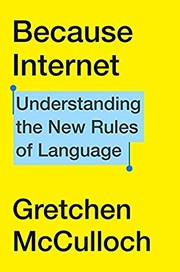
English is a magnificent case study in language change. Our Magnificent Bastard Tongue by John McWhorter tells the story of how contact with Celtic, Norse, and Norman speakers mangled English into its strange modern shape, and his The Power of Babel zooms out to how all languages mutate, blend, and split over time; McWhorter treats change as the natural state of language rather than decay. For change happening right now, Because Internet by Gretchen McCulloch is a genuinely rigorous linguistic analysis of how online writing works, from the passive-aggressive period to why emoji behave like gesture. And Do you speak American? by Robert MacNeil surveys American dialects and the social judgments we smuggle into accent.
Stage 3: language and mind, and the wider map
Return to Pinker for The Stuff of Thought, which uses swearing, verb structure, and innuendo to probe how language reveals cognition. Then widen the lens with The atlas of languages by Bernard Comrie, a guided tour of the world's roughly seven thousand languages and their families. If the subject has hooked you and you want the formal toolkit of phonetics, morphology, and syntax, An introduction to language by Victoria Fromkin is the standard university textbook, better worked through slowly with its exercises than skimmed.
How to actually study this
Linguistics rewards fieldwork you can do for free. After McWhorter, trace the etymology of ten words you use daily. After McCulloch, collect examples of tone conveyed through pure punctuation in your own chats. If you are learning Spanish or Japanese, this path pays double: every concept, from phoneme inventories to word order typology, explains something that once felt arbitrary in your target language.
The staged sequence with study plans is at the full reading path. Related subjects live on the subject hub, or browse all paths.
Ready to learn something deeply?
Build a reading path — free