Most people fail at leathercraft the same way: they buy a starter kit, watch two videos, and try to freestyle a wallet. Leather is unforgiving in a way fabric and wood are not — every awl hole is permanent, every knife slip shows forever, and a crooked stitch line cannot be pressed out. The craft rewards people who learn the sequence: cutting, then stitching, then decoration. This path puts the classic texts in that order.
The Best Books to Learn Leathercraft, in Order
July 9, 2026 · 2 min read
The path, stage by stage
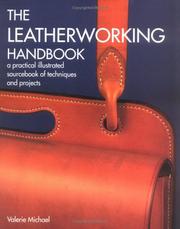
Start with The Leatherworking Handbook by Valerie Michael. It is the book most working leatherworkers recommend first because it treats leathercraft as a system — choosing hide, cutting cleanly, skiving, edge finishing — rather than a pile of tricks. Read it with a strap of veg-tan on the bench and do the exercises as they come.
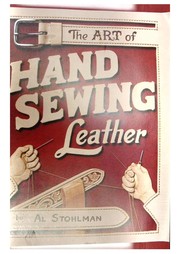
Then go deep on the one skill that defines hand leatherwork: the saddle stitch. The Art of Hand Sewing Leather by Al Stohlman is a thin book about exactly one thing, and it is worth more than any thick book about everything. Two needles, one thread, pricking irons at a consistent angle — once your stitch line looks like a row of tiny slanted teeth, everything you make looks professional.
Leathercraft by Chris Harold Groneman broadens the foundation with project-based fundamentals — patterns, assembly order, hardware — the connective tissue between knowing techniques and finishing objects.
With construction handled, move to decoration. How to Carve Leather by Al Stohlman covers swivel-knife work and stamping, the florid Western tooling tradition, starting from single cuts and building to full patterns. Finally, Leather Braiding by Bruce Grant is the classic reference on plaiting and braidwork — lace-making, round braids, turk's heads — a different branch of the craft that turns scrap into handles, keeper loops, and whole belts.
The habit: the scrap rehearsal
Before every technique touches a real project, rehearse it on scrap — and keep the scraps. Once a week, saddle-stitch one six-inch seam on offcut leather, date it in pen, and pin it to a board. The board becomes a visible record of your stitch line straightening out over months, and the rehearsal rule means you never learn a lesson on a piece you cared about. Ten minutes of scrap work before each session is the cheapest insurance in the craft.
How long it takes
Five books at a reading-plus-bench pace works out to roughly 50 hours — call it a winter of evenings, and you will come out the other side with a stitched, tooled, braided object you made entirely by hand. Follow the path, or browse the wider leathercraft hub. If precise handwork is your thing, the bookbinding path scratches a very similar itch.
FAQ
- Do I need expensive tools to start leathercraft?
- No. A utility knife, two harness needles, waxed thread, pricking irons, and a slab of veg-tan scrap cover the first two books. Buy better tools only when a specific project demands them — the books in this path are explicit about what each technique actually requires.
- What is the single most important leathercraft skill?
- The saddle stitch. It is stronger than machine stitching and it is the visual signature of handmade leather goods. That is why an entire book on the path — Al Stohlman’s hand-sewing classic — covers nothing else.
Get the books
- 1The Leatherworking HandbookAmazon ↗Valerie Michael
- 2The Art of Hand Sewing LeatherAmazon ↗Al Stohlman
- 3LeathercraftAmazon ↗Chris Harold Groneman
- 4Leather braidingAmazon ↗Grant, Bruce
- 5How to carve leatherAmazon ↗Al Stohlman
As an Amazon Associate we earn from qualifying purchases. Some book links are affiliate links; you pay the same price and we may earn a small commission.
Follow the full reading path

Work leather by hand
Beginner5books15 hrs4 stages
@craftsherpa♥ 0
Ready to learn something deeply?
Build a reading path — free