There's a chasm in the middle of "jewelry making" that hobby stores don't mention. On one side: stringing beads, which you can learn in an afternoon and outgrow in a week. On the other: metalsmithing — sawing, filing, soldering, setting — which produces the jewelry you'd actually wear, and which most people assume requires an apprenticeship. It doesn't. It requires a small bench, a few hundred dollars of tools, and the right books in the right order. One line first, because torches are involved: work with ventilation, eye protection, and a real fireproof surface from day one.
Make jewelry you’d actually wear: the metalsmith’s reading path
July 9, 2026 · 2 min read
The path, stage by stage
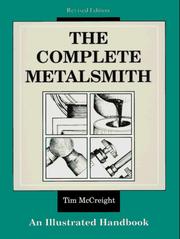
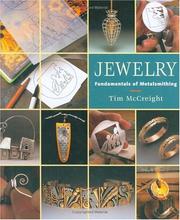
Begin with the book every jeweler owns. The Complete Metalsmith by Tim McCreight is the field's beloved bench-side reference — terse, illustrated, spiral-bound for a reason — covering sawing, forming, soldering, and finishing in a format built for mid-project consultation. McCreight's Jewelry extends the same clear teaching into fundamentals and design. Between the two you have the vocabulary and the technique map.
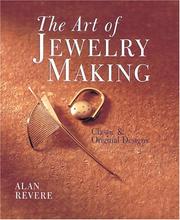
Then go step-by-step through real projects. The Art of Jewelry Making by Alan Revere — from one of America's foremost jewelry teachers — walks classic projects in escalating difficulty, which is exactly what a self-taught smith needs: each piece teaches one new operation while rehearsing the last ones.
Stage three deepens the silverwork. Silversmithing by Rupert Finegold is the serious text on the craft — raising, forming, and finishing — the book you grow into as your ambitions move past flat stock. If you want a gentler on-ramp running alongside the torch work, Metal Clay and Mixed Media Jewelry by Sherri Haab covers metal clay, which fires into fine silver and lets you produce wearable pieces early while your soldering catches up.
Finally, the stones. The Jeweler's Directory of Gemstones by Judith Crowe teaches what you're setting: identification, cuts, durability, and what a fair price looks like — knowledge that protects both your designs and your wallet.
The habit: make the same ring ten times
Pick one simple form — a plain soldered band is perfect — and make it ten times, dating each one. The band demands the whole fundamental loop: measure, saw, form, solder, clean up, finish. Repetition on one form turns each operation from a project into a reflex, and the row of ten rings becomes the most honest progress chart you'll ever own. When the tenth is done, gift the best one and start a new form — a bezel-set stone is the natural next rung.
Around 60 hours of reading, alongside many happy hours at the bench. Follow the path, start at the jewelry making hub, and if tiny precise metalwork turns out to be your whole personality, the watchmaking hub is the deep end.
FAQ
- How much does it cost to start metalsmithing?
- A workable starter bench — saw, files, pliers, a small butane or basic torch, solder, and copper or brass practice stock — runs a few hundred dollars. Practice in copper before touching silver; the skills transfer and the mistakes cost pennies.
- Is soldering jewelry dangerous?
- It’s manageable with basic discipline: ventilation, safety glasses, a fireproof work surface, and no loose sleeves near the flame. McCreight covers safe setup early — read that chapter before you light anything.
Get the books
- 1The complete metalsmithAmazon ↗Tim McCreight
- 2The Art of Jewelry MakingAmazon ↗Alan Revere
- 3JewelryAmazon ↗Tim McCreight
- 4Metal clay and mixed media jewelryAmazon ↗Sherri Haab
- 5SilversmithingAmazon ↗Rupert Finegold
- 6The Jeweler's Directory of GemstonesAmazon ↗Judith Crowe
As an Amazon Associate we earn from qualifying purchases. Some book links are affiliate links; you pay the same price and we may earn a small commission.
Follow the full reading path
Make jewelry you'd actually wear
Beginner6books31 hrs3 stages
@craftsherpa♥ 0
Ready to learn something deeply?
Build a reading path — free