Bookbinding looks like one craft but is actually five stacked on top of each other — folding, sewing, gluing, covering, finishing — and beginners fail by rushing to the pretty parts. The decorated cover is the last hour of a process whose quality was decided in the first: grain direction, fold accuracy, and sewing tension determine whether a book opens flat and survives handling, and none of them are visible in the finished object. It's a craft where patience early is the entire trick, which may be why it suits readers so well.
Bookbinding books: sew your first signatures the traditional way
July 9, 2026 · 2 min read
The path, stage by stage
Start with context, because bookbinding is one of the few crafts where history directly improves your hands: THE BOOK: The story of printing and bookmaking by Douglas C. McMurtrie traces how books came to be built the way they are, and once you know why a spine is shaped like that, the procedures stop being arbitrary and start being obvious.
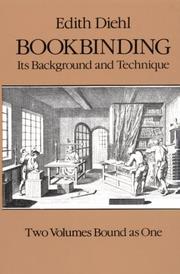
Then the deep foundation: Bookbinding, its background and technique by Edith Diehl is the classic treatise from one of America's great hand binders — half history, half rigorous technique, and still the standard against which instruction is measured. It's the book that turns you from someone following steps into someone who understands structure. Alongside it, The craft of bookbinding by Manly Miles Banister is the approachable workbench companion — clear procedures for sewing signatures, casing in, and the honest beginner projects that build skill in order. Bookbinding by Pamela Richmond rounds out the set with another practical perspective on technique; in a craft this old, seeing two binders solve the same problem differently is itself an education.
The equipment barrier, by the way, is refreshingly low: bone folder, needle, linen thread, PVA, and improvised weights will carry you through your first several books. The expensive-looking presses and finishing tools can wait until the sewing is second nature — which, pleasingly, the books themselves will tell you.
The habit: one pamphlet a week
Sew one single-signature pamphlet every week — five sheets folded, a three-hole or five-hole sewing, a simple cover. It takes twenty minutes and contains bookbinding's core motor skills: accurate folding, consistent sewing tension, clean knots. Vary one element weekly — paper, stitch, cover weight — and you'll build the hand instincts that multi-signature bindings demand, one small finished book at a time. A shelf of your own pamphlets is also the most motivating progress bar in any craft, and a supply of genuinely useful gifts besides.
This is a compact path — about 40 hours of reading, with hands busy throughout. Follow the path or start at the bookbinding hub. The lettering arts next door live at the calligraphy hub.
FAQ
- What tools do I need to start bookbinding?
- A bone folder, needles, linen thread, PVA glue, a craft knife, and something heavy for pressing — well under fifty dollars. Presses and board shears matter later; your first dozen books don’t need them.
- Is bookbinding hard to learn?
- The basic structures — pamphlets, then multi-signature case bindings — are very learnable from books like Banister’s. What takes time is precision: accurate folds and even sewing tension. Weekly small projects build that faster than occasional ambitious ones.
Get the books
- 1BookbindingAmazon ↗Kathy Abbott
- 2Non-adhesive BindingAmazon ↗Keith A. Smith
- 3Bookbinding and the conservation of books[Amazon ↗Matt Roberts
- 4THE BOOK The story of printing and bookmakingAmazon ↗Douglas C. McMurtrie
- 5Bookbinding, its background and techniqueAmazon ↗Edith Diehl
- 6The craft of bookbindingAmazon ↗Manly Miles Banister
As an Amazon Associate we earn from qualifying purchases. Some book links are affiliate links; you pay the same price and we may earn a small commission.
Follow the full reading path
Bind your own books
Beginner7books40 hrs4 stages
@craftsherpa♥ 0
Ready to learn something deeply?
Build a reading path — free