New knitters don't quit because knitting is hard. They quit because of scarf purgatory: months of garter-stitch rectangles on the theory that sweaters are for someday, until boredom wins. The escape is a different theory entirely — that a knitter is someone who understands how knitting works, not someone who has served enough scarf time. One writer built her whole career on that idea, and this path is substantially about getting her into your hands.
Knit your first sweater (and beyond): a reading path in wool
July 9, 2026 · 3 min read
The path, stage by stage
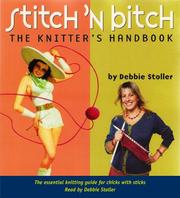
Start friendly. Stitch 'n Bitch by Debbie Stoller is the warm, funny on-ramp — casting on, knit and purl, fixing the inevitable dropped stitch — with patterns you'd actually make. It gets needles moving without fuss.
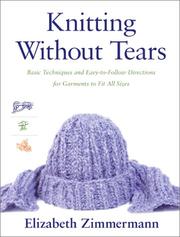
Then, the liberation. Knitting Without Tears by Elizabeth Zimmermann is the most important knitting book of the last century: her unvented seamless methods and her insistence that you are the boss of your knitting turn pattern-followers into knitters who understand the fabric. Read Zimmermann early — earlier than feels responsible — because her confidence is contagious and correct.
Her follow-up, Elizabeth Zimmermann's Knitting Workshop, is the same teacher in course form: a structured sequence of projects, each one introducing a technique, building toward a seamless sweater you designed the numbers for yourself. If the first book converts you, this is where the conversion becomes skill. Read them in that order — the Workshop assumes the attitude the earlier book installs.
Stage three delivers the first sweater properly. The knitter's handy book of sweater patterns by Ann Budd is the pragmatic engine: basic sweaters charted at every size and gauge, so the yarn you love determines the sweater instead of the other way around. Knitting from the top by Barbara G. Walker adds the top-down method — try it on as you go, adjust as you knit — which is the single best fit-insurance a new sweater knitter can buy.
Then go sideways into tradition
Once seamless construction makes sense, Knitting in the Old Way by Priscilla Gibson-Roberts is the book that shows you where all of it came from. It is a survey of how folk knitters across Europe and Asia built garments before printed patterns existed — Norwegian, Andean, Turkish, Fair Isle — reduced to the handful of construction systems underneath. It is a design book disguised as a history book, and after Zimmermann it reads as confirmation: the patternless approach is the old approach.
Stage four is the reference shelf that answers everything: The Principles of Knitting by June Hemmons Hiatt, the field's monumental encyclopedia; Knitting Stitches VISUAL Encyclopedia by Sharon Turner for stitch patterns at a glance; and The Knitters Book of Finishing Techniques by Nancie Wiseman, because seaming and blocking are where handmade stops looking homemade. If you have gone the seamless route these last techniques matter less than you fear — but a set-in sleeve, a buttonband, and a woven grafted shoulder still need doing properly.
The habit: swatch, wash, measure — every project
Knit a gauge swatch, wash and dry it the way you'll treat the garment, then measure. Every project, no exceptions. It costs an evening; skipping it costs a sweater and a month, because gauge that's off by even half a stitch per inch quietly reroutes an entire garment's fit. Keep the swatches in a labeled bag with needle size, yarn, and washed gauge noted on a tag — two years in, that bag will tell you at a glance how a new yarn will behave before you cast on a single stitch.
Roughly 90 hours of reading across years of contented stitching. Follow the path, start at the knitting hub, and if one string craft leads to another, the crochet hub is right there.
FAQ
- How long until I can knit a sweater?
- With the Zimmermann-plus-Budd route, most new knitters can start a simple seamless sweater within a few months of learning. It's a long project, not a hard one — thousands of repetitions of stitches you already know.
- Do I need both Zimmermann books?
- Knitting Without Tears is the argument; the Knitting Workshop is the course. If you only want one, take the first. If it convinces you, the Workshop turns the philosophy into a sequence of projects that actually teach the techniques.
Get the books
- 1Stitch 'n BitchAmazon ↗Debbie Stoller
- 2Knitting Without TearsAmazon ↗Elizabeth Zimmermann
- 3The Principles of KnittingAmazon ↗June Hemmons Hiatt
- 4Knitting Stitches VISUAL EncyclopediaAmazon ↗Sharon Turner
- 5The Knitters Book of Finishing TechniquesAmazon ↗Nancie Wiseman
- 6Knitting in the Old WayAmazon ↗Priscilla Gibson-Roberts
As an Amazon Associate we earn from qualifying purchases. Some book links are affiliate links; you pay the same price and we may earn a small commission.
Follow the full reading path

Knit your first sweater (and beyond)
Beginner9books55 hrs4 stages
@craftsherpa♥ 0
Ready to learn something deeply?
Build a reading path — free