Knit your first sweater (and beyond)
This curriculum takes a complete beginner from holding needles for the first time all the way to constructing full garments, reading complex patterns, and confidently diagnosing and fixing errors. Each stage builds directly on the last: you must be able to knit and purl before you can shape, and you must understand shaping before garment construction makes sense. Roughly 10 books across 4 stages give you both the hands-on technique and the deeper pattern literacy needed for lifelong knitting.
Foundations: Needles, Yarn & First Stitches
BeginnerCast on, knit, purl, bind off, and understand yarn/needle basics well enough to finish a small flat project with confidence.
▸ Study plan for this stage
Pace: 6–8 weeks total. Week 1–4: Read "Stitch 'n Bitch" cover-to-cover at a relaxed pace (~15–20 pages/day), pausing frequently to practice techniques at the needle. Week 5–8: Read "Knitting Without Tears" more slowly (~10–15 pages/day), re-reading Zimmermann's philosophical passages twice to absorb her m
- Yarn weight and fiber content: how Stoller's yarn label breakdowns (in Stitch 'n Bitch) teach you to match yarn to needle size and project type
- Needle types and materials: Stoller's comparison of straight, circular, and double-pointed needles and how material (bamboo vs. metal) affects tension for beginners
- Casting on: the long-tail cast-on and knitted cast-on methods demonstrated in Stitch 'n Bitch, and why choosing the right one matters for edge appearance
- The knit stitch (Continental vs. English style): Stoller presents both grip styles so beginners can find what feels natural before building muscle memory
- The purl stitch and how knit/purl combinations create fabric structure (stockinette, garter, seed stitch) — introduced in Stitch 'n Bitch and reinforced by Zimmermann's project logic
- Binding off: the standard bind-off from Stitch 'n Bitch and Zimmermann's caution against binding off too tightly, a recurring theme in Knitting Without Tears
- Zimmermann's 'unventing' philosophy: treating knitting as problem-solving rather than rule-following, which reframes beginner mistakes as learning data
- Reading a simple pattern: understanding abbreviations (k, p, yo, rep) and row-by-row instructions as introduced in Stitch 'n Bitch's pattern section
- After reading Stitch 'n Bitch, can you explain what the numbers on a yarn label (weight, gauge, needle size) mean and how to use them before starting a project?
- What is the difference between garter stitch and stockinette stitch, and which combination of knit/purl rows produces each — as described in Stitch 'n Bitch?
- Zimmermann opens Knitting Without Tears by arguing that knitters should understand what they are doing rather than follow patterns blindly — what does she mean, and how does that change how a beginner should approach a mistake?
- How does Zimmermann's advice on gauge (her 'basic formula' thinking) differ in tone and approach from the gauge swatching instructions in Stitch 'n Bitch, and what does each book want you to take away?
- Can you describe, step by step, how to execute a long-tail cast-on and a standard bind-off using only what Stitch 'n Bitch teaches?
- What does Zimmermann mean by knitting being 'without tears,' and how does her reassuring voice in Knitting Without Tears prepare a beginner to attempt a first real project independently?
- Swatch sampler (Stitch 'n Bitch): Cast on 20 stitches and knit four 10-row panels back-to-back — garter stitch, stockinette, reverse stockinette, and seed stitch — using the exact needle/yarn pairing Stoller recommends for swatching. Label each panel with a safety pin tag.
- Cast-on comparison drill: Using the same yarn, practice the long-tail cast-on and the knitted cast-on (both shown in Stitch 'n Bitch) on the same needle. Cast on 30 stitches each way, then compare the edge texture and elasticity side by side before choosing your preferred method.
- Tension experiment (inspired by Zimmermann's bind-off caution in Knitting Without Tears): Knit two identical 15-stitch swatches and bind off one very tightly and one loosely. Measure and photograph both. Reflect in a knitting journal on how bind-off tension changes the fabric's drape.
- First flat project — a dishcloth: Using Stitch 'n Bitch's beginner pattern section as a guide, cast on 30 stitches in a worsted-weight cotton yarn and knit a 30-row garter-stitch dishcloth. The goal is one complete, finished object with a real cast-on edge and bound-off edge.
- Zimmermann reflection journal: After finishing each chapter of Knitting Without Tears, write 2–3 sentences in your own words summarizing her main point. At the end of the book, review your notes and identify one piece of her advice you will apply to your next project.
- Mistake-and-fix practice: Deliberately drop a stitch mid-swatch, then practice the 'tinking' (unknitting stitch by stitch) method described in Stitch 'n Bitch to recover it. Repeat three times until recovery feels calm rather than panicked — embodying Zimmermann's 'no tears' philosophy.
Next up: Completing a confident flat project with cast-on, knit/purl, and bind-off — and internalizing Zimmermann's problem-solving mindset — gives the reader the mechanical fluency and psychological resilience needed to tackle shaping, increases/decreases, and reading more complex patterns in the next stage.
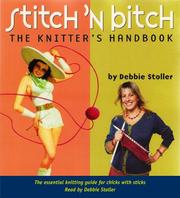
The most widely used beginner entry point — conversational, heavily illustrated, and covers every cast-on, the knit and purl stitch, and basic finishing in a completely non-intimidating way. Read this first to build core vocabulary and muscle memory.
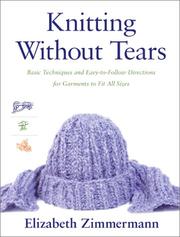
A short, opinionated classic that teaches you to think like a knitter rather than just follow instructions. Reading it immediately after Stoller reframes everything you just learned and plants the seed of pattern intuition.
Building Technique: Shaping, Texture & Fixing Mistakes
BeginnerExecute increases, decreases, and basic colorwork; read a stitch pattern chart; and identify, diagnose, and fix the most common knitting mistakes.
▸ Study plan for this stage
Pace: 10–12 weeks total. Week 1–5: "The Principles of Knitting" by June Hemmons Hiatt (~20–25 pages/day, focusing on shaping, tension, and stitch structure chapters). Week 6–8: "Knitting Stitches VISUAL Encyclopedia" by Sharon Turner (~15–20 pages/day, working through stitch pattern sections hands-on at t
- Increases and decreases: understanding the mechanics, directionality, and visual effect of M1L/M1R, KFB, K2tog, SSK, and centered double decreases as explained in Hiatt's structural analysis
- Shaping logic: how increases and decreases are placed to create intentional fabric geometry (raglan lines, darts, waist shaping), grounded in Hiatt's principles of stitch manipulation
- Reading stitch pattern charts: decoding RS/WS row conventions, repeat brackets, symbol keys, and no-stitch squares as demonstrated in Turner's Visual Encyclopedia
- Texture techniques: knit/purl combinations, slipped stitches, cables, and simple lace motifs as catalogued and charted in Turner's encyclopedia
- Basic colorwork: understanding stranded and intarsia color changes, managing floats, and maintaining gauge across color sections, drawn from Hiatt's colorwork principles
- Gauge and tension awareness: diagnosing how uneven tension, wrong needle size, or yarn substitution distorts shaping and stitch patterns
- Identifying and diagnosing common mistakes: dropped stitches, twisted stitches, accidental yarn-overs, and misread chart rows, as addressed in both Hiatt and Wiseman
- Fixing mistakes: techniques for tinking (unknitting), frogging, dropping down to correct a stitch, and using a crochet hook to rescue ladders, as detailed in Wiseman's finishing techniques
- After reading Hiatt, can you explain the structural difference between a K2tog and an SSK — why does each lean the way it does, and when would you choose one over the other?
- Using Turner's Visual Encyclopedia as a reference, can you look up an unfamiliar stitch pattern, read its chart, and cast on a swatch to reproduce it accurately?
- Can you describe what a 'float' is in stranded colorwork, why overly long floats are problematic, and what Hiatt recommends to manage them?
- If you discover a dropped stitch three rows below your needles, what is the step-by-step process Wiseman outlines for retrieving it, and what tool do you need?
- How do you 'tink' (unknit) back to a mistake, and when is tinkling preferable to frogging an entire row according to Wiseman?
- Given a swatch that is too wide and too short compared to a pattern's gauge, what two adjustments would Hiatt's principles suggest, and how does incorrect gauge interact with shaping calculations?
- Shaping sampler swatch (Hiatt): Knit a 6-inch square swatch that deliberately incorporates at least four shaping techniques — M1L, M1R, K2tog, and SSK — arranged to form a visible diamond or leaf shape, using Hiatt's descriptions as your technical guide.
- Chart-reading drill (Turner): Select five stitch patterns from Turner's Visual Encyclopedia that you have never tried — at least one cable, one lace, and one slip-stitch texture — and knit a small swatch (20–30 rows) of each, reading only from the chart (not the written instructions) to build chart fluency.
- Mistake simulation and rescue log (Wiseman): Intentionally create and then fix each of the following on a practice swatch: a dropped knit stitch, a dropped purl stitch, an accidental yarn-over, and a twisted stitch. Document each mistake and its fix in a notebook, noting which tool and method Wiseman recommends.
- Two-color stranded swatch (Hiatt + Turner): Knit a 4×4-inch stranded colorwork swatch using a simple geometric motif from Turner's encyclopedia, applying Hiatt's float management guidance. Measure gauge before and after blocking and record any difference.
- Tink-and-frog practice (Wiseman): Knit 20 rows of a textured pattern from Turner, then practice tinkling back exactly 5 rows stitch by stitch, re-knitting them; then frog back 10 rows and re-knit from a placed stitch marker, building confidence in both correction methods.
- Shaping a mini-project: Knit a simple shaped piece (a small triangle or trapezoid dishcloth) using increases on one edge and decreases on the other, writing out your own row-by-row shaping plan before you begin, then comparing your finished dimensions to your plan.
Next up: Mastering shaping mechanics, chart reading, and mistake correction in this stage gives the reader the technical confidence and diagnostic eye needed to tackle full garment construction — where all these skills must work together across complex patterns, multiple pieces, and professional-level finishing.

The definitive technical reference — covers every cast-on variation, increase, decrease, and stitch structure in exhaustive detail. Use it as a deep-dive companion at this stage so you understand *why* techniques work, not just how to execute them.

A well-organized stitch dictionary with clear charts and photos for hundreds of textures and patterns. Reading it here trains your eye to decode stitch charts before you need them in garment patterns.
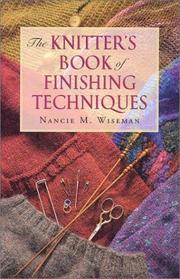
Finishing and error-correction are often neglected in beginner books; this fills that gap completely, covering seaming, picking up stitches, fixing dropped stitches, and unraveling cleanly — all skills you need before tackling garments.
Going Deeper: Pattern Reading & Garment Logic
IntermediateRead and adapt a written garment pattern, understand ease and fit, work in the round, and complete a simple sweater or accessory with set-in or raglan shaping.
▸ Study plan for this stage
Pace: 10–12 weeks total: Week 1–3 — "Knitting in the Old Way" (~20–25 pages/day, focusing on construction logic and proportion chapters); Week 4–7 — "The Knitter's Handy Book of Sweater Patterns" (~15–20 pages/day, working through multiple size/gauge tables and stitch pattern substitutions); Week 8–12 — "
- Seamless & minimal-seam garment construction logic as taught in 'Knitting in the Old Way' — understanding how folk/ethnic sweater shapes are engineered from the body outward
- Ease: positive vs. negative ease, how it affects fit, and how Gibson-Roberts uses body measurements as the true foundation of a pattern
- Gauge as a design variable: how Ann Budd's stitch-count tables in 'The Knitter's Handy Book of Sweater Patterns' let you swap any gauge into a standard silhouette
- Reading and scaling a written pattern: decoding abbreviations, repeat brackets, size parentheses, and schematic diagrams across all three books
- Raglan vs. yoke vs. set-in sleeve shaping: the geometric and arithmetic differences explained through Walker's top-down methodology in 'Knitting from the Top'
- Working in the round: circular vs. double-pointed needles, managing floats, jogless joins, and how Walker's top-down approach makes in-the-round construction the default
- Garment math: calculating cast-on counts, increase/decrease rates for armholes and sleeves, and body length from schematic measurements using Budd's formulas
- Pattern adaptation: substituting yarn weight, resizing for a different gauge, and modifying stitch patterns — a skill threaded through all three books
- After reading 'Knitting in the Old Way,' can you explain why Gibson-Roberts starts every garment design with body measurements rather than a published size, and how that philosophy changes the way you approach a commercial pattern?
- Using Ann Budd's tables in 'The Knitter's Handy Book of Sweater Patterns,' how would you find the correct stitch counts for a drop-shoulder pullover in a worsted-weight yarn for a 40-inch finished bust with 2 inches of ease?
- What is the difference between raglan and yoke (circular) shaping as Walker describes them in 'Knitting from the Top,' and what are the practical consequences of each choice for fit at the shoulder?
- How do you convert a bottom-up written pattern into a top-down construction using Walker's principles, and what information from the original schematic do you need to preserve?
- If your gauge swatch gives you 18 sts / 4 inches instead of the pattern's 20 sts / 4 inches, how do you use Budd's stitch-count tables to re-derive the cast-on and shaping numbers for the same finished measurements?
- How does Gibson-Roberts' treatment of steeks and percentage-based shaping connect to Walker's top-down increases, and what do both approaches reveal about the underlying geometry of a sweater?
- Measure yourself or a willing model using Gibson-Roberts' measurement chart from 'Knitting in the Old Way'; record all key dimensions and calculate your personal ease preferences for a close-fit vs. relaxed sweater
- Swatch in at least two different yarn weights, block both swatches, and use Budd's tables in 'The Knitter's Handy Book of Sweater Patterns' to derive complete stitch-count blueprints for a drop-shoulder pullover in each gauge — compare how the numbers shift
- Choose one pattern from 'The Knitter's Handy Book of Sweater Patterns' and rewrite the instructions for a size that is NOT listed, interpolating stitch counts from the tables and writing out every step as if publishing the pattern yourself
- Knit a top-down raglan swatch-sleeve following Walker's step-by-step instructions in 'Knitting from the Top' — work the yoke increases, separate the sleeve stitches onto waste yarn, and continue the body for at least 2 inches to verify your increase rate produces the correct stitch count
- Complete a full small-scale garment (child's hat with a set-in brim, a top-down raglan baby sweater, or a seamless yoke cowl) using Walker's top-down method, documenting every calculation in a knitting journal so you can audit your math row by row
- Take any bottom-up pattern from Budd's book and write a conversion plan — identify the cast-on, the shaping sequences, and the finishing order, then re-sequence them top-down using Walker's framework, noting every place where the math must be reversed or recalculated
Next up: By mastering pattern math, ease, and both bottom-up and top-down construction logic across these three books, the reader has the analytical foundation to move into advanced stages focused on stitch pattern design, colorwork architecture, and fully custom garment drafting without relying on pre-written size tables.

Teaches the geometry and logic behind traditional garment construction — understanding how a sweater is actually shaped makes every pattern you read afterward far more legible and adaptable.

Provides a master set of stitch-count tables for hats, socks, mittens, and sweaters at multiple gauges — an essential bridge between 'following a pattern' and understanding how patterns are built.
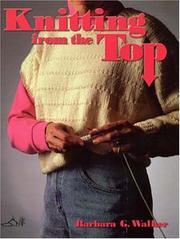
Walker's top-down construction method demystifies garment shaping by letting you try on the work as you go, making fit adjustments intuitive. Reading this after Budd's tables gives you both the numbers and the method.
Mastery: Design, Fit & Advanced Construction
ExpertModify or draft your own garment patterns, achieve precise fit, work complex stitch patterns into garments, and troubleshoot construction problems independently.
▸ Study plan for this stage
Pace: 4–6 weeks, ~20–25 pages/day; Zimmermann's book is dense with technique and philosophy, so plan extra time to knit alongside the reading — treat each chapter as a workshop session, not just a reading assignment
- Elizabeth Zimmermann's 'Percentage System' (EPS) for drafting seamless garments proportionally from a single body measurement (chest circumference)
- Seamless, circular construction as a design philosophy — yokes, saddle shoulders, set-in sleeves worked in the round, and the 'Surprise Jacket'
- Knitting math: calculating stitch counts, ratios, and shaping from first principles rather than following a fixed pattern
- Gauge as a design tool — swatching not just for size but to understand how yarn, needle, and stitch pattern interact structurally
- Modifying and adapting patterns for fit: adjusting sleeve cap height, body length, neckline depth, and ease with intentionality
- Integrating complex stitch patterns (cables, lace, colorwork) into garment construction without disrupting shaping math
- Troubleshooting construction problems independently: identifying the root cause of fit issues, dropped stitches in pattern, seaming errors, and tension inconsistencies
- Zimmermann's design philosophy: trusting the knitter's own judgment, 'unventing' techniques, and developing an intuitive understanding of fabric structure
- Can you explain the Percentage System and use it to calculate cast-on counts and key shaping points for a sweater in your own gauge?
- How does seamless, circular construction differ structurally from flat, seamed construction, and what are the fit and aesthetic trade-offs of each?
- If your finished garment is too tight across the upper chest but fits well at the body, what construction variables would you diagnose and how would you correct them in a future version?
- How would you adapt a stitch pattern with a 6-stitch repeat into a garment body that requires 142 stitches for correct fit?
- What does Zimmermann mean by 'unventing,' and how does that mindset change how you approach a knitting problem you've never encountered before?
- How do you calculate the rate of sleeve cap shaping to achieve a smooth set-in sleeve head that matches your armhole depth?
- Swatch & EPS Draft: Knit a gauge swatch in your chosen yarn, then use Zimmermann's Percentage System to draft a complete seamless yoke sweater schematic from scratch — no commercial pattern allowed.
- Surprise Jacket Knit-Along: Work Zimmermann's Surprise Jacket exactly as described, pausing after each section to annotate your copy of the book with what construction problem each step is solving.
- Fit Modification Lab: Take a commercial pattern you've previously knitted that had a fit issue; use EPS math to identify where the proportions broke down and write a corrected set of instructions.
- Stitch Pattern Integration: Choose a cable or lace motif with a non-trivial repeat and draft a hat or yoke section that incorporates it, showing your written math for adjusting stitch counts to accommodate the repeat while maintaining correct circumference.
- Troubleshooting Journal: Intentionally introduce three common errors into a small swatch (a dropped stitch mid-cable, a twisted stitch in lace, an uneven tension join in the round) and document in writing how you identified and fixed each one.
- Design-to-Finish Garment: Using only EPS and Zimmermann's construction principles as your guide, design and knit a complete small garment (child's sweater or adult vest) entirely from your own drafted numbers, keeping a written log of every calculation and every deviation you made mid-project and why.
Next up: Mastering EPS and Zimmermann's construction philosophy gives the knitter a fully internalized mathematical and structural framework, making them ready to explore specialized advanced territories — such as tailored fit systems, ethnic and historical construction methods, or published design work — because they can now evaluate, adapt, or originate any pattern rather than simply execute one.
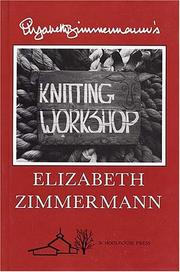
Zimmermann's most complete book unifies everything — percentage-based garment math, design thinking, and a philosophy of fearless experimentation. It is the capstone that turns a skilled knitter into an independent one.
Discussion
Keep reading
Paths that share books, cover the same subject, or open a related topic.