Kayaking and canoeing look simple from shore and turn serious fast: moving water, cold water, and your own fatigue can escalate a pleasant afternoon into a genuine emergency. That is why paddling is a subject where reading genuinely matters — understanding strokes, rescue, and river hydrology before you need them can be the difference between a good story and a bad one.
But read this plainly: books cannot teach your body to paddle or roll, and they are no substitute for instruction from a qualified coach, a buddy system, a life jacket, and matching your outings to your actual skill. Use these to build knowledge and judgment; build the physical skills on the water, under supervision.
Why order matters here
The sequence follows the risk curve. Learn flatwater fundamentals first, then the self-rescue skills that make deeper water survivable, then the moving-water and expedition knowledge that assumes everything before it. Skipping ahead is how people get in over their heads — literally.
The path, stage by stage
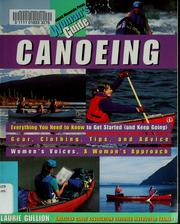
Start on calm water. Canoeing by Laurie Gullion and Canoeing and kayaking by Laurie Gullion cover the fundamentals — equipment, strokes, and safety basics — in a clear, instructional way. Path of the paddle by Bill Mason is the beloved classic that teaches canoe technique with real feel for the water, and Paddle your own canoe by Gary McGuffin reinforces solid form.
Then build the skills that keep you safe when things go wrong. The bombproof roll and beyond by Paul Dutky is the definitive guide to the kayak roll — the self-rescue skill that unlocks everything harder — and River rescue by Les Bechdel teaches how to read moving water and respond when a paddle goes sideways. Read these before you attempt anything beyond flatwater.
For the payoff, Derek C. Hutchinson's expedition kayaking by Derek C. Hutchinson takes you to open-water and multi-day paddling, where navigation, weather, and endurance all come into play. Treat it as the horizon, not the starting line.
How to actually learn this
Take a class before your first real outing, and always paddle with others in conditions below your limit. Read the rescue and rolling books alongside pool or supervised practice, not instead of it — reading about a roll and executing one are worlds apart. Keep a simple log of conditions and what you learned. The books make you a smarter, safer paddler; the water makes you a paddler.
Ready to get started? Follow the full reading path for the staged study plan, visit the subject hub, or explore related outdoor paths.
Ready to learn something deeply?
Build a reading path — free