Sailing has two curriculums, and most people only sign up for the first. Curriculum one is making the boat go: points of sail, trimming, tacking without embarrassment. Curriculum two is seamanship — weather, navigation, right-of-way, anchoring, what to do when the wind gets serious — and it is the one that keeps curriculum one from becoming a story on the evening news. People stall at this subject because they learn to sail on a sunny afternoon and stop, leaving them competent in exactly one kind of day. Two standing rules before any of it: wear the life jacket, and get real on-the-water instruction — books make lessons stick, but the water gives the exam.
Learn to Sail: The Best Sailing Books, in the Order to Read Them
July 9, 2026 · 2 min read
The path, stage by stage
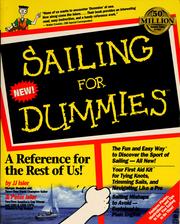
Start with Sailing for Dummies by J. J. Isler — dismiss the title; Isler is a world-class racer, and it is a genuinely excellent plain-language first book on how a boat turns wind into motion. Read The Complete Sailor by David Seidman alongside it: beautifully illustrated, salty in the best way, and focused on building sailors rather than passengers — the feel of the sport as well as the mechanics.
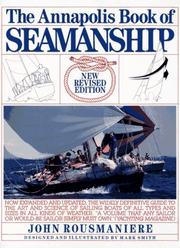
Then begin the second curriculum. The Annapolis Book of Seamanship by John Rousmaniere is the modern American standard — boat handling, weather, navigation, safety, and emergencies, in one authoritative volume you will reread for years. Keep Chapman Piloting & Seamanship by Charles B. Husick beside it as the encyclopedic reference: rules of the road, ground tackle, lights, signals — the answers to questions you have not thought to ask yet. Between those two books lies most of what "knowing what you are doing" means on the water.
Round out the shelf with The Sailor's Handbook by Halsey C. Herreshoff, a compact companion from a legendary sailing family. And read Heavy Weather Sailing by K. Adlard Coles not because you plan to meet a gale, but because the sea does not consult your plans — Coles's storm accounts and hard-won tactics are the classic text on the conditions every sailor hopes to avoid and must respect.
The habit: the post-sail debrief log
After every sail, take five minutes at the dock and log three things: the conditions (wind speed and direction, sea state), one maneuver that went well, and one thing you would do differently. Wind you estimated and wind that was reported rarely match at first — the log is how your eye gets calibrated. A season of entries turns vague experience into actual judgment, which is the whole difference between hours on the water and seamanship.
How long it takes
Six books is roughly 60 hours of reading — a winter's worth, timed so the knowledge is aboard before spring launch. Follow the path, or start at the sailing hub. And if your cruising grounds get remote, the wilderness survival hub covers the self-reliance skills that sailing quietly assumes.
FAQ
- Can I learn to sail from books?
- Books teach the concepts, vocabulary, and seamanship judgment; the boat teaches the reflexes. The effective combination is on-the-water instruction plus this kind of reading — sailors who do both progress far faster than either alone, and the books keep teaching for decades after the first lesson.
- What is the best boat to learn sailing on?
- Something small and responsive — a dinghy or small keelboat — because small boats give instant feedback on every trim and steering input. The beginner books on this path all make the same point: learn on a boat that punishes mistakes with a splash, not a shrug.
Get the books
- 1Sailing for dummiesAmazon ↗J. J. Isler
- 2The Annapolis book of seamanshipAmazon ↗John Rousmaniere
- 3The complete sailorAmazon ↗David Seidman
- 4Chapman Piloting & SeamanshipAmazon ↗Charles B. Husick
- 5Heavy weather sailingAmazon ↗K. Adlard Coles
- 6The Sailor's HandbookAmazon ↗Halsey C. Herreshoff
As an Amazon Associate we earn from qualifying purchases. Some book links are affiliate links; you pay the same price and we may earn a small commission.
Follow the full reading path

Learn to sail
Beginner6books64 hrs4 stages
@wellsherpa♥ 0
Ready to learn something deeply?
Build a reading path — free