Most would-be backpackers never stall on a trail. They stall in the gear-research phase, comparing tents for months, because buying equipment feels like progress while learning skills feels like homework. It's exactly backwards: skills are what make a heavy pack lighter, a wrong turn recoverable, and a rainy night merely funny instead of miserable. The gear is the easy part.
Backpacking books for your first nights on the trail
July 9, 2026 · 2 min read
The path, stage by stage
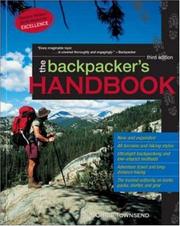
The backbone of the path is The backpacker's handbook by Chris Townsend — decades of long-trail experience distilled into systems: shelter, sleep, food, water, weather. Read it before you buy anything and it will save you several times its cover price in returned gear. Then let Ultralight backpackin' tips by Mike Clelland argue the counter-case: skills replace equipment, and most packs are heavy with fear. You don't have to go full ultralight; you have to internalize the principle.
Navigation is the skill that keeps small problems small, and it deserves its own stage: Wilderness navigation by Bob Burns on map, compass, and GPS fundamentals, deepened by NOLS wilderness navigation by Darran Wells from the outdoor school that literally teaches this for a living. One safety line worth taking seriously: carry a map and compass you actually know how to use, tell someone your route, and treat anything you can't positively identify — plants, mushrooms, water sources — as off the menu.
Then the supporting craft: NOLS cookery by Claudia Pearson fixes trail food, which is where most first trips quietly fail morale. And Mountaineering: The Freedom of the Hills by The Climbing Committee of the Mountaineers is the classic reference the whole outdoor world builds on — you won't read it cover to cover, but the chapters on weather, terrain, and judgment are the adult supervision every new backpacker needs.
For the soul of the thing, A Walk in the Woods by Bill Bryson and Wild by Cheryl Strayed are the two great unqualified-person-walks-a-long-trail books — proof that you don't need to be an expert to start, just humble.
The habit: the backyard shakedown
Before any real trip, do a full-dress overnight somewhere consequence-free — a backyard, a car-camping site, a park a mile from the trailhead. Pitch the shelter, cook the dinner, sleep in the bag, pack it all up wet if you're lucky. Every gear failure and forgotten item surfaces where it costs nothing, and your first real night out becomes a repeat performance instead of a premiere. Experienced backpackers still do this before every season and every new piece of gear; beginners who adopt it skip an entire tier of miserable learning experiences.
This path runs about 80 hours of reading. Follow the path or start at the backpacking hub. For the deeper skills layer, the wilderness survival hub is the natural companion.
FAQ
- What should my first backpacking trip look like?
- One night, low mileage, good weather forecast, a trail you can bail from easily. The goal is a complete rehearsal of your systems — not distance. Ambition can come on trip three.
- Do I need ultralight gear to start backpacking?
- No. Clelland’s book is on the path for its philosophy — skills replace equipment — not its shopping list. Start with borrowed or modest gear, learn what you actually use, and lighten from experience rather than from reviews.
Get the books
- 1Hiking and BackpackingAmazon ↗Karen Berger
- 2The backpacker's handbookAmazon ↗Chris Townsend
- 3Ultralight backpackin' tipsAmazon ↗Mike Clelland
- 4Wilderness navigationAmazon ↗Bob Burns
- 5NOLS cookeryAmazon ↗Claudia Pearson
- 6Wilderness First AidAmazon ↗Howard D. Backer
As an Amazon Associate we earn from qualifying purchases. Some book links are affiliate links; you pay the same price and we may earn a small commission.
Follow the full reading path
Go backpacking: your first nights on the trail
Beginner10books61 hrs4 stages
@wellsherpa♥ 0
Ready to learn something deeply?
Build a reading path — free