Genetics is the rare science where the story and the mechanism are the same thing. The gene was discovered, forgotten, rediscovered, misused, and finally learned to be edited — all within about 150 years — and the science only makes sense when you follow that arc. Try to jump straight to CRISPR and you will be missing the century of ideas that made it thinkable.
So read genetics historically. Each book hands the next one its vocabulary, and by the end the headlines about gene-editing read like the obvious next chapter rather than science fiction.
Get the grand narrative
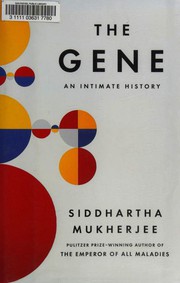
Start with The Gene by Siddhartha Mukherjee — a sweeping, humane history that runs from Mendel's peas through the double helix to modern genomics, and quietly teaches you the vocabulary as it goes. Then read Genome by Matt Ridley, which tells the story one chromosome at a time, making the abstract idea of a genome concrete and navigable.
Add the concepts and the controversies
Now bring in the big interpretive idea. The Selfish Gene by Richard Dawkins reframes evolution from the gene's point of view — a lens that reshaped how biologists think, and one worth engaging critically as much as accepting. Then complicate the simple gene-as-destiny picture with Epigenetics by Richard C. Francis, which explains how experience and environment shape which genes actually speak.
For the human texture, read She Has Her Mother's Laugh by Carl Zimmer, a rich exploration of heredity — what we really inherit, and what we only think we do. The Language of God by Francis S. Collins, written by the geneticist who led the Human Genome Project, offers one scientist's attempt to reconcile the science with belief; read it as a perspective, not a verdict.
Arrive at gene-editing
Finish with the revolution. The Code Breaker by Walter Isaacson profiles Jennifer Doudna and the invention of CRISPR, and A Crack in Creation by Jennifer A. Doudna is her own account — the scientist explaining both the power and the ethical vertigo of editing life. Read together, they are the present tense of the whole subject.
How to actually study this
Genetics has a small core vocabulary — gene, allele, chromosome, expression, mutation — that everything else hangs on. Keep a glossary and don't advance until those feel solid. When a book makes a strong claim about "genes for" a trait, pause and ask what it would take to prove that; the field's history is full of overclaiming, and reading skeptically is part of learning it well.
Read them in sequence via the full reading path, visit the genetics hub, or browse related subjects linking genetics to evolution and medicine.
Ready to learn something deeply?
Build a reading path — free