Here is a fact that reframes everything: for most of human history, going to a doctor was as likely to kill you as cure you. Medicine became genuinely, reliably useful startlingly recently — within the last century and a half. The story of that turn, full of germ theory, anesthesia, antibiotics, and hard-won ethics, is one of the great human dramas. But it sprawls across biology, war, sociology, and moral scandal, so it rewards an ordered approach.
History of medicine: a reading path from plague to CRISPR
July 12, 2026 · 2 min read
Start with the sweep
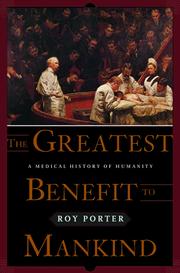
Begin with The Greatest Benefit to Mankind by Roy Porter, the single best one-volume history of medicine from antiquity to the modern day. It is long, but it gives you the whole arc — the frame every other book fits into.
Watch the turn happen
Now zoom in on the pivotal shifts. The Butchering Art by Lindsey Fitzharris tells how Joseph Lister brought antiseptic surgery into a world where operations routinely killed through infection — a vivid case study in one idea changing everything. Then The Ghost Map by Steven Johnson reconstructs the 1854 London cholera outbreak and the birth of epidemiology, showing how tracing a disease can defeat it.
Epidemics and the drugs that answered them
Widen to the great killers. Plagues and Peoples by William H. McNeill argues that infectious disease has shaped history as much as any war or empire — a big-picture rewiring of how you read the past. Then The Demon Under the Microscope by Thomas Hager tells the discovery of the first antibiotics, the moment medicine gained real weapons against bacteria. Pale Rider by Laura Spinney covers the 1918 flu, essential and newly resonant.
The modern frontier and its conscience
Finish with the hardest and most human material. The Emperor of All Maladies by Siddhartha Mukherjee is a "biography" of cancer and the century-long fight against it, and probably the best medical narrative ever written for general readers. Then hold medicine to account: The Immortal Life of Henrietta Lacks by Rebecca Skloot and Medical Apartheid by Harriet Washington force the ethics — consent, race, exploitation — that any honest history must reckon with. Close with Do No Harm by Henry Marsh, a neurosurgeon's candid account of what modern medicine still cannot promise.
How to actually read this
- Read Porter first as your backbone and return to it when a later book raises a period you want to place.
- Track two threads in parallel: what we learned to do, and what it cost the people it was learned on. Medicine's progress and its ethics are the same story.
- After each book, note one practice we now take for granted that did not exist before it.
For the full staged sequence with study plans, follow the full reading path or start at the history of medicine subject hub. If the genetics thread pulls you, browse more science paths next.
FAQ
- What is the best book on the history of medicine?
- The Greatest Benefit to Mankind by Roy Porter is the best comprehensive one-volume history. For a single dramatic story, The Emperor of All Maladies by Siddhartha Mukherjee is unmatched.
- Which books cover medical ethics and race?
- The Immortal Life of Henrietta Lacks by Rebecca Skloot and Medical Apartheid by Harriet Washington confront consent, exploitation, and race in medical research directly.
Get the books
- 1The greatest benefit to mankindAmazon ↗Roy Sydney Porter
- 2The butchering artAmazon ↗Lindsey Fitzharris
- 3Plagues and PeoplesAmazon ↗William Hardy McNeill
- 4The Ghost MapAmazon ↗Steven Johnson
- 5Pale riderAmazon ↗Laura Spinney
- 6The Demon Under the MicroscopeAmazon ↗Thomas Hager
As an Amazon Associate we earn from qualifying purchases. Some book links are affiliate links; you pay the same price and we may earn a small commission.
Follow the full reading path


How medicine got good: a history of healing
Beginner11books120 hrs4 stages
Ready to learn something deeply?
Build a reading path — free