Almost everyone loves dinosaurs at six. The problem is that the version most of us keep is frozen there: sluggish, gray, tail-dragging lizards. Real paleontology has been through a revolution — warm, fast, feathered, bird-descended animals reconstructed from footprints, chemistry, and biomechanics. Self-teaching it is hard precisely because you have to unlearn the childhood picture and absorb a moving field.
Order matters because paleontology is really three subjects braided together: the animals, the deep-time geology that dates them, and the evolutionary logic that connects them. Read a single flashy book and you get charisma without the framework. A path gives you the modern synthesis first, then the arguments that produced it.
Start with the modern synthesis
Begin with The Rise and Fall of the Dinosaurs by Steve Brusatte. It is the current standard-bearer: a working paleontologist walking you through the whole arc from origin to extinction with the newest evidence. It resets your mental picture in one book.
Then add a reference to read alongside it. Dinosaurs by Darren Naish is the compact, rigorously current survey — Naish is a working researcher and one of the most reliable correctives to popular-science drift — and Prehistoric Life by David Norman widens the frame beyond dinosaurs to the whole fossil record, which is the context that makes the dinosaurs mean something. Neither is a narrative; use them the way you would a field guide, dipping in when a name or a clade stops making sense.
Feel the excitement, then the arguments
Follow with My Beloved Brontosaurus by Riley Black, a warmer, funnier tour of how our understanding keeps changing and why that is the fun part. Then read The Dinosaur Heresies by Robert T. Bakker — older and deliberately provocative, it is the book that argued dinosaurs were active and warm-blooded and helped start the revolution the first two books inherited. Reading it after the modern synthesis lets you see which heresies won, and Bakker is wrong about enough that the exercise is genuinely instructive.
Feathers, extinction, and deep time
Now specialize. Feathered dinosaurs by John A. Long grounds the single biggest shift — the dinosaur-to-bird link — in the fossils that proved it. For the ending, T. Rex and the Crater of Doom by Walter Alvarez is the firsthand story of discovering the asteroid impact, told by the scientist who found the evidence. Then widen the lens with The ends of the world by Peter Brannen, which sets the dinosaur extinction inside the five great mass extinctions and the geology that records them.
Deep time and the shape of the tree
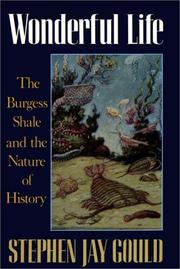
Two books put dinosaurs in their place, which is a smaller one than childhood suggests. Wonderful Life by Stephen Jay Gould is about the Burgess Shale and the Cambrian explosion, and its real subject is contingency — the argument that rerunning the tape of life would produce something unrecognisable. Some of its specific claims about the Burgess fossils were revised by later work, and knowing that is part of the education. Finish with The Ancestor's Tale by Richard Dawkins, which walks backwards from humans through every common ancestor and lands dinosaurs on the full tree of life.
One honest note about the listing: A new aquatic eosuchian from the Newark Supergroup by Paul Olsen also appears among this path's books. It is a genuine piece of paleontological literature and a technical monograph describing a single specimen — not a book for general readers, and it turned up through a catalogue match rather than a curatorial decision. Skip it unless you specifically want to see what a primary description looks like.
How to actually read this
- Keep a simple timeline (Triassic, Jurassic, Cretaceous) on a card and file each animal and event onto it.
- Watch how claims are supported — a track, a bone histology slice, an isotope ratio. Paleontology is detective work, and noticing the evidence is half the education.
- Let The ends of the world teach you the geology you did not know you needed; the rock record is what makes the dates real.
- Check publication dates. This field moves, and a confident sentence from 1986 about dinosaur metabolism is a historical document, not a current claim.
For the complete staged version with study plans, follow the full reading path or start at the dinosaurs subject hub. The geology thread runs deep here — browse related paths if the rocks pull you in.
Ready to learn something deeply?
Build a reading path — free