Game theory has a branding problem: it sounds like it is about games, but it is really the mathematics of strategy — how rational actors should decide when the best choice depends on what everyone else chooses. It quietly underlies auctions, arms races, evolution, pricing, and poker. The reason it is hard to self-teach is that it lives between story and math: the popular books are too soft to build real skill, and the textbooks are too abstract to start with. The path threads that needle.
Game theory: where to start, a reading path
July 12, 2026 · 2 min read
Start with intuition
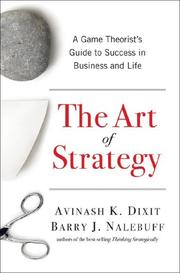
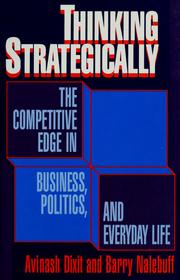
Begin with The Art of Strategy by Avinash Dixit and Barry Nalebuff, the friendliest serious introduction. It teaches genuine strategic reasoning — backward induction, credible threats, coordination — through stories and puzzles, with no heavy math. Its predecessor, Thinking Strategically by the same authors, covers similar ground and is worth it if you want more reps on the core ideas.
The two founding stories
Every game theorist knows two touchstones. Prisoner's Dilemma by William Poundstone is a dual biography of the dilemma itself and of John von Neumann, and it is the most enjoyable way to absorb the field's central puzzle and its Cold War stakes. Then The Evolution of Cooperation by Robert Axelrod runs the famous tournament that asked how cooperation can emerge among selfish agents — one of the most influential and readable results in social science.
Strategy in nature
Game theory is not just for economists. The Selfish Gene by Richard Dawkins shows how evolutionary stable strategies explain animal behavior — why organisms cooperate, cheat, and signal. It is the book that makes game theory feel like a law of nature, not a human invention.
Toward the formal core
When you want the actual machinery, step up carefully. Games of Strategy by Dixit, Skeath, and Reiley is the bridge textbook — rigorous but still readable, with the equilibria worked out properly. For a specialized deep dive, Auction Theory by Vijay Krishna shows how the field designs the real-world mechanisms — spectrum auctions, ad markets — that move billions. Take the formal books slowly and with pencil in hand.
How to actually read this
- Do the puzzles. Game theory is a skill, not a set of facts, and you only build it by actually solving the little scenarios the books pose.
- Learn to draw the payoff matrix and the game tree yourself; if you can set up the game, you are most of the way to solving it.
- Keep spotting real games in the wild — a bidding war, a standoff, a price match — and name the structure. That habit is the whole point.
For the full staged sequence with study plans, follow the full reading path or start at the game theory subject hub. If the reasoning grabs you, the logic and systems-thinking paths are close cousins.
FAQ
- What is the best book to start learning game theory?
- The Art of Strategy by Avinash Dixit and Barry Nalebuff is the best on-ramp — it builds real strategic reasoning through stories and puzzles before any heavy mathematics.
- Can I learn game theory without advanced math?
- Yes, for the core ideas. The Art of Strategy and The Evolution of Cooperation require almost none. The math only becomes necessary if you move on to formal textbooks like Games of Strategy.
Get the books
- 1The Art of StrategyAmazon ↗Avinash K. Dixit
- 2Thinking StrategicallyAmazon ↗Avinash K. Dixit
- 3The evolution of cooperationAmazon ↗Robert M. Axelrod
- 4The Selfish GeneAmazon ↗Richard Dawkins
- 5Prisoner's dilemmaAmazon ↗William Poundstone
- 6Games of strategyAmazon ↗Avinash K. Dixit
As an Amazon Associate we earn from qualifying purchases. Some book links are affiliate links; you pay the same price and we may earn a small commission.
Follow the full reading path
Game theory: the strategy of everything
Beginner9books98 hrs4 stages
Ready to learn something deeply?
Build a reading path — free