Critical thinking is the skill everyone claims to have and almost no one is trained in. The catch is that the biggest obstacle to clear thinking is your own mind — the shortcuts, motivated reasoning, and confident nonsense that feel exactly like careful thought from the inside. So the sequence here is deliberate: first learn how thinking goes wrong, then learn to detect bad arguments in the wild, then learn to build good ones, and only then touch formal logic.
Logic & critical thinking: a reading path to think clearly
July 12, 2026 · 2 min read
See how the mind fools itself
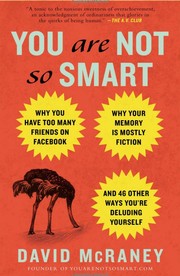
Start with Thinking, Fast and Slow by Daniel Kahneman, the landmark synthesis of how two mental systems — fast intuition and slow reasoning — produce systematic error. Follow it with You Are Not So Smart by David McRaney, a shorter, punchier tour of the specific biases you are running right now. Together they install the essential humility: your brain is not a truth machine.
Sharpen the skeptical eye
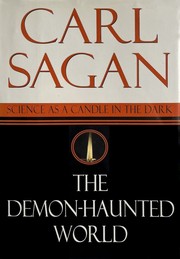
Now aim that awareness outward. The Demon-Haunted World by Carl Sagan is the great manual of scientific skepticism — its "baloney detection kit" is worth the price alone. A Field Guide to Lies by Daniel J. Levitin teaches you to interrogate numbers, graphs, and claims, and Crimes Against Logic by Jamie Whyte is a brisk takedown of the rhetorical tricks that pass for reasoning in public life.
Build arguments that hold
Detection is only half of it; you also have to construct. A Rulebook for Arguments by Anthony Weston is the compact classic on assembling a sound argument, and Thank You for Arguing by Jay Heinrichs covers persuasion — the rhetoric side, how to actually move people. For reading itself as a thinking skill, How to Read a Book by Mortimer J. Adler teaches you to engage a text actively rather than absorb it passively.
Go formal, and go human
If you want the rigorous underpinnings, Introducing Logic by Dan Cryan is a friendly illustrated on-ramp, and The Logic Book by Merrie Bergmann is the serious textbook for formal deductive logic. Finally, close the loop with How Minds Change, McRaney's book on how people actually revise their beliefs — because thinking clearly is useless if you can never update.
How to actually study this
Practice on live material: take a news story or an argument you agree with and try to find its weakest point. Keep a "bias journal" for a week, catching your own errors in real time. And test the formal logic by doing the exercises — logic is a skill, not a set of facts, and it only sticks through reps.
Read them in order on the full reading path, explore the logic hub, or browse Discover to connect clear thinking with game theory and media literacy.
FAQ
- What is the best book to start critical thinking?
- Thinking, Fast and Slow by Daniel Kahneman — it names the biases that sabotage clear thought. Follow with You Are Not So Smart for a faster tour of the same terrain.
- Do I need to study formal logic to think critically?
- Not to start. Cognitive-bias and argument books build most of the skill; add Introducing Logic and The Logic Book only if you want the formal foundations.
Get the books
- 1Thinking, fast and slowAmazon ↗Daniel Kahneman
- 2The Demon-Haunted WorldAmazon ↗Carl Sagan
- 3You are not so smartAmazon ↗David McRaney
- 4Crimes Against LogicAmazon ↗Jamie Whyte
- 5A rulebook for argumentsAmazon ↗Anthony Weston
- 6Thank You for ArguingAmazon ↗Jay Heinrichs
As an Amazon Associate we earn from qualifying purchases. Some book links are affiliate links; you pay the same price and we may earn a small commission.
Follow the full reading path

Think straight: logic & critical thinking
Beginner11books93 hrs5 stages
Ready to learn something deeply?
Build a reading path — free