Most of the hardest problems — traffic, burnout, climate, why the fix made things worse — aren't caused by bad people or bad luck. They're systems behaving exactly as they're structured to behave. Systems thinking is the discipline of seeing that structure: the feedback loops, delays, and stocks that make a system produce outcomes no one intended. It's one of the highest-leverage mental models there is, and it reads in a clean progression from intuitive primer to genuine complexity science.
Systems thinking: a reading path to see connections
July 12, 2026 · 2 min read
Start with the primer
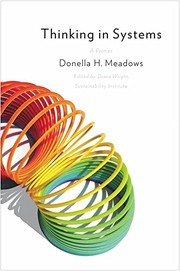
Begin with Thinking in Systems by Donella H. Meadows — the clearest, most humane introduction to the field, and the book almost everyone recommends first. It gives you the vocabulary (stocks, flows, feedback, delays) that the rest of the subject assumes. Read it slowly; it repays it.
Then read her essay Leverage Points by Donella H. Meadows, which ranks the places to intervene in a system from least to most powerful — a single framework you'll use for the rest of your life.
Apply it to organizations and error
Now see systems thinking at work. The Fifth Discipline by Peter Senge applies it to organizations and learning, and The Art of Systems Thinking by Joseph O'Connor is a practical guide to the mindset. Then read The Logic of Failure by Dietrich Dörner — a brilliant study of why smart people wreck complex systems, using experiments where participants ruin simulated cities and economies with well-meaning decisions. It's the cautionary heart of the path.
Get rigorous, then get to complexity
For the quantitative core, Business Dynamics by John Sterman is the serious text on modeling feedback systems — dense, but the real thing if you want to build models rather than just talk about them. Then widen out with Limits to Growth by Donella H. Meadows, the famous (and famously debated) attempt to model the whole planet's trajectory — worth reading as both landmark and argument.
Finally, step into complexity science proper: Complexity by M. Mitchell Waldrop tells the story of the Santa Fe Institute and the science of emergent order, and The Systems Thinker by Albert Rutherford consolidates the practical toolkit. Together they take you from "systems have feedback loops" to "order can emerge from the bottom up."
How to actually study this
Draw the loops. Systems thinking lives in diagrams — pick a real system you know (your habits, a team, a city street) and sketch its stocks and feedback loops by hand. Redraw them as the books sharpen you. And watch for the recurring lesson across every book: the intuitive fix often pushes the problem somewhere else, and the highest-leverage change is usually the least obvious one.
Read them in order on the full reading path, visit the systems thinking hub, or browse Discover to connect it with game theory and economics.
FAQ
- What is the best book to start systems thinking?
- Thinking in Systems by Donella H. Meadows is the near-universal recommendation — a clear primer on stocks, flows, and feedback loops that the rest of the field assumes.
- Is systems thinking useful outside of business?
- Very. The same lens explains ecosystems, personal habits, cities, and climate; The Logic of Failure and Limits to Growth show it applied well beyond the boardroom.
Get the books
- 1Thinking in systemsAmazon ↗Donella H. Meadows
- 2The Fifth DisciplineAmazon ↗Peter Senge
- 3The art of systems thinkingAmazon ↗Joseph O'connor
- 4The logic of failureAmazon ↗Dietrich Dörner
- 5Business DynamicsAmazon ↗John Sterman
- 6Leverage Points Places to Intervene in a SystemAmazon ↗Donella H. Meadows
As an Amazon Associate we earn from qualifying purchases. Some book links are affiliate links; you pay the same price and we may earn a small commission.
Follow the full reading path


Systems thinking: see how everything connects
Beginner10books58 hrs5 stages
Ready to learn something deeply?
Build a reading path — free