Almost everything the popular imagination "knows" about the samurai — the unbending code, the serene death-poetry, the pure warrior spirit — is partly a modern invention, romanticized long after the swords were put away. The real history of feudal Japan is messier, more political, and far more interesting. To learn it honestly you have to read in an order that gives you the facts before the myth, and then shows you how the myth was built.
Samurai & feudal Japan: a real history reading path
July 12, 2026 · 2 min read
Get the historical frame
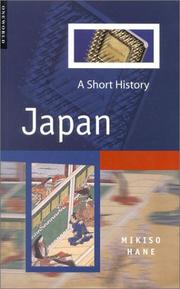
Start with a survey so the chronology is solid. Japan by Mikiso Hane and A History of Japan by R. H. P. Mason both give you the long arc — clans, shoguns, the shifting balance of emperor and warlord — without which the famous stories float free of context. Read one closely; skim the other for reinforcement.
Live inside the period
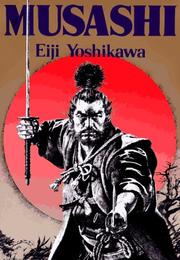
Now go inside it through story. Eiji Yoshikawa's Taiko and Musashi are historical novels beloved in Japan itself — Taiko dramatizes the warlords who unified the country, and Musashi follows the making of its most legendary swordsman. They are fiction, but they carry the texture of the era better than any textbook. For the material reality, Samurai by Mitsuo Kure and The Samurai by Stephen Turnbull give you the armor, tactics, and campaigns as they actually were.
To see the society around the warriors, Edo and Paris by James L. McClain compares early-modern Japan's great city with its European counterpart, grounding the samurai in a whole functioning civilization.
Confront the myth
This is the crucial turn. Bushido: The Soul of Japan by Inazō Nitobe is the 1900 book that sold the West its idea of the samurai code — read it as a primary source, a document of how the myth was packaged. Then read Inventing the Way of the Samurai by Oleg Benesch, which shows how much of "bushido" was constructed in the modern era for modern purposes. Finally, The Last Samurai by Mark Ravina tells the true story behind the twilight of the warrior class — the history the movies gesture at.
How to actually study this
Hold the fiction and the scholarship apart in your head: enjoy Yoshikawa for immersion, but let Hane, Benesch, and Ravina correct him. Keep a short list of the key transitions — Sengoku chaos, unification, the long Tokugawa peace, the Meiji end — because the samurai mean something different in each. Learning feudal Japan well is largely learning to distinguish the romantic story from the documented one.
Read them in sequence on the full reading path, explore the feudal Japan hub, or browse Discover to connect it with other warrior cultures and world history.
FAQ
- Is bushido a real historical code?
- Partly. As Inventing the Way of the Samurai shows, much of what we call bushido was constructed in the modern era; Nitobe’s Bushido is best read as a primary source of that myth-making.
- Are the Eiji Yoshikawa novels historically accurate?
- Taiko and Musashi are historical fiction — superb for the era’s texture, but read them alongside histories like Japan and A History of Japan for the facts.
Get the books
- 1JapanAmazon ↗Mikiso Hane
- 2TaikoAmazon ↗Eiji Yoshikawa
- 3MusashiAmazon ↗Eiji Yoshikawa
- 4SamuraiAmazon ↗Mitsuo Kure
- 5The SamuraiAmazon ↗Stephen Turnbull
- 6Amazon ↗
As an Amazon Associate we earn from qualifying purchases. Some book links are affiliate links; you pay the same price and we may earn a small commission.
Follow the full reading path
The real samurai: feudal Japan's history
Beginner10books104 hrs5 stages
Ready to learn something deeply?
Build a reading path — free