DevOps is one of the most misunderstood terms in software. Newcomers think it means a set of tools — Docker, Kubernetes, Terraform — and try to learn the tools first. Then they wonder why adopting the tools did not fix anything. The reason is that DevOps is a culture and a set of practices for how teams build, ship, and operate software; the tools are just how you implement it. Learn them out of order and you get cargo-cult automation over broken processes.
So the reading starts with why, moves to what the practices are, and only then gets concrete. Reading ORDER here is the difference between understanding DevOps and just installing things.
Start with the story and the why
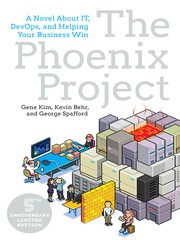
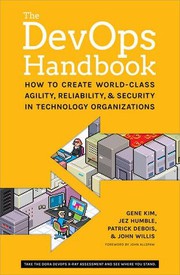
Begin with The Phoenix Project by Gene Kim, a business novel that dramatizes a failing IT organization learning to work differently. It is fiction, and that is the point — it makes the ideas stick by showing what they feel like. Then get systematic with The DevOps handbook by Gene Kim, which lays out the principles the novel dramatized: flow, feedback, and continual learning. Together they give you the philosophy every later book assumes.
Ground it in evidence
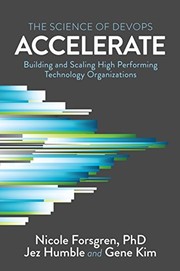
Before the practices, absorb the data. Accelerate by Nicole Forsgren distills years of research into what actually makes software teams high-performing — deploy frequency, lead time, change failure rate, and time to restore. It matters because it turns DevOps from opinion into measurable practice, and it gives you the four metrics to know whether you are improving. It is also short, which is fortunate, because the research summary is the part you will quote for years.
Learn the core delivery practices
Now the how. Continuous Delivery by Jez Humble is the foundational text on building pipelines that let you release software safely and often — deployment pipelines, trunk-based development, and the argument that releasing should be a business decision rather than an engineering event. It is a decade old and the principles have aged far better than the tooling examples; read it for the model, not for the syntax.
Learn to operate what you shipped
Then read Site Reliability Engineering by Betsy Beyer, the influential collection from Google that reframes operations as an engineering discipline with error budgets and service-level objectives. It is a set of essays by different authors, so it is uneven and it describes a scale most teams do not have; take the concepts and leave the org chart.
Its companion The Site Reliability Workbook is the book most people should actually read second, because it exists precisely to answer "yes, but how, at my company" — worked examples of setting SLOs, running incident response, and doing this without Google's headcount. If you only read one of the pair, read the first for the vocabulary and this one for the practice.
Master the modern toolkit
With the practices understood, the tools finally make sense. Terraform : Up & Running by Yevgeniy Brikman teaches infrastructure as code — defining your systems in version-controlled files rather than clicking through consoles — and it is the rare tool book that teaches the reasoning behind module structure and state management rather than just the commands.
Observability Engineering by Charity Majors covers how to actually understand complex systems in production, going beyond dashboards of pre-decided metrics to asking questions you did not anticipate. Read it once you have been paged for something your monitoring did not predict; the argument lands much harder then.
Go deeper: distributed systems and deliberate failure
Three books extend the path past a single team's pipeline. Designing Distributed Systems by Brendan Burns is the patterns book for container-based systems — sidecars, ambassadors, scatter-gather — and it is the bridge from "I can deploy a service" to "I can design several that cooperate". Chaos Engineering by Casey Rosenthal makes the case for breaking production deliberately and in controlled doses, which sounds reckless and is the opposite: it is how you discover the failure modes before they discover you. Do not run experiments in production until you have the observability and the error budgets from the earlier books.
Database Reliability Engineering by Laine Campbell closes the set on the layer that most often takes a system down and that most DevOps material skips — backups you have actually restored, schema changes that do not lock a table for an hour, and replication you understand before the failover.
How to actually study it
DevOps is learned by doing, so build as you read: stand up a small project with a real CI/CD pipeline and break it on purpose. Automate one manual thing you currently do by hand each week. Practice reading logs and metrics from a running system, because operating software is a skill books can only frame. And resist adopting tools before you understand the practice they serve — the whole lesson of this path is that culture and process come first.
Ready to go in order? Follow the full reading path, explore the subject hub, or browse related engineering paths.