The internet is full of advice for creators, and most of it skips the hard part. Making things is step one. Making a living requires an audience, an offer, and a business — three different skills that most creators try to learn in a panic, in the wrong order, after quitting their job.
A creator career compounds in a specific sequence: voice, then audience, then superfans, then money, then durability. Read the monetization books first and you will build funnels for an audience you do not have. Read them in order and each book hands the next one its raw material.
Start with voice
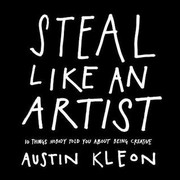
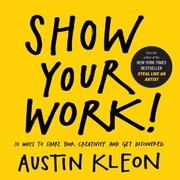
Steal like an artist by Austin Kleon is a short, honest book about influence — it kills the myth that you need to be original before you start. Its companion, Show Your Work!, is the single best argument for building in public: share the process, not just the product, and the audience finds you while you are still learning. These two are a weekend, and skipping them is the most common reason a technically competent creator has nothing anyone wants to follow.
Then learn how attention actually works
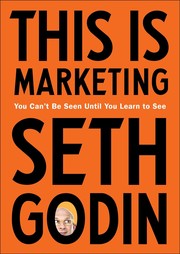
This is marketing by Seth Godin reframes marketing as serving the smallest viable audience rather than shouting at everyone — the core mental model of the entire creator economy. Get Different by Mike Michalowicz is the tactical version of the same instinct, aimed at small businesses: be noticeably different rather than incrementally better, and test it cheaply. It is not written for creators, and the translation is yours to do, but the differentiate-or-disappear argument transfers cleanly to a crowded feed.
Follow with Superfans by Pat Flynn, a practical playbook for turning casual followers into the small group that will actually sustain you. Flynn's central number — that you need a few hundred committed people, not a few hundred thousand indifferent ones — is the most load-bearing idea on this path.
One book here needs a plain warning. Expert secrets by Russell Brunson comes out of the sales-funnel and info-product world, and its techniques are aggressive: scarcity, ladders of increasingly expensive offers, origin stories engineered for conversion. It is on the path because that playbook is everywhere and you should be able to recognise it, in other people's marketing and in your own drafts. Read it as a field guide to a set of tactics, decide deliberately which ones you are willing to use, and notice that it is much easier to run on an audience that does not trust you yet.
Now build the business
Company of One by Paul Jarvis makes the contrarian case that staying small is the goal rather than a consolation prize — it will save you from scaling problems you never needed. Against it, deliberately, The Lean Startup by Eric Ries supplies the discipline the creator world usually lacks: test the smallest version, measure something real, and change direction on evidence rather than on mood. It is a startup book, not a creator book, and the useful half is the method, not the venture-scale ambition.
The Money Book for Freelancers, Part-Timers, and the Self-Employed by Joseph D'Agnese handles the unglamorous machinery of irregular income: taxes, buffers, and paying yourself first. Skip it and the first slow quarter ends the career.
Finish with durability. Perennial Seller by Ryan Holiday is about making work that still sells in ten years — the antidote to the content treadmill, and the right note to end on.
How to actually study this
Publish while you read. One small piece of work per week, shared publicly, beats any amount of reading. After each stage, extract exactly one system — a publishing cadence, an email list, a single offer — and run it for a month before adding the next. Treat your own numbers as the textbook, because none of these authors has seen your audience, and no book on this list can promise you an income.
The staged version with study plans lives at the full reading path. For platform-specific routes, see the creator economy hub, or build your own list from books you already trust.