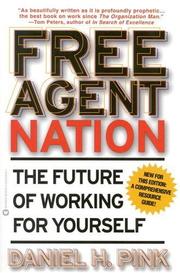
Make a living as a creator
This curriculum takes a beginner from understanding the mindset and mechanics of creative work all the way to running a sophisticated, multi-revenue-stream creator business. Each stage builds on the last: first you internalize the creator's philosophy and audience logic, then you learn the practical craft of building and monetizing an audience, and finally you master the business and strategic layer that separates hobbyists from full-time professionals.
Foundations: The Creator Mindset
BeginnerUnderstand the philosophy behind creative work, why sharing publicly matters, and how even a small, loyal audience can sustain a career — building the mental model before any tactics.
▸ Study plan for this stage
Pace: 2–3 weeks total: Week 1 — Read "Steal Like an Artist" (~96 pages) at a leisurely pace of 15–20 pages/day, pausing to journal after each chapter. Week 2 — Read "Show Your Work!" (~224 pages of illustrated content, light text) at ~30 pages/day. Week 3 — Review notes, complete exercises, and reflect ac
- Influence as a creative foundation: nothing is truly original — all creative work builds on what came before (Steal Like an Artist)
- The 'genealogy of ideas': tracing your creative lineage by identifying the artists, thinkers, and makers who shaped your taste (Steal Like an Artist)
- Doing the work first, identity second: you don't need to know who you are to start making things — creativity reveals identity (Steal Like an Artist)
- Side projects and 'productive procrastination': hobbies and tangential interests feed your main creative work in unexpected ways (Steal Like an Artist)
- The 'scenius' over the lone genius: creativity flourishes in communities and ecosystems, not in isolation (Show Your Work!)
- Sharing process, not just product: documenting and publishing your work-in-progress builds audience trust and authentic connection (Show Your Work!)
- The 1,000 true fans mental model: a small, deeply loyal audience is more sustainable than chasing mass appeal (Show Your Work!)
- Becoming a 'node' in a network: generously sharing what you know and love positions you as a connector and attracts like-minded collaborators (Show Your Work!)
- According to Austin Kleon in 'Steal Like an Artist', why is the idea that 'nothing is original' liberating rather than discouraging for a new creator?
- What does Kleon mean by 'climbing your own family tree' — and how should a beginner creator use their influences intentionally?
- How does 'Show Your Work!' reframe the act of sharing from self-promotion into something more generous and community-oriented?
- What is a 'scenius', and why does understanding it change how you think about your own place in the creator economy?
- How do both books together argue that starting before you feel 'ready' is not reckless, but actually the correct creative strategy?
- In 'Show Your Work!', Kleon advises sharing something small every day. What criteria does he suggest for deciding what is worth sharing?
- Influence map: Draw or diagram your personal 'creative family tree' as prompted by 'Steal Like an Artist'. List 3 creators you admire, then find 3 influences behind each of them. Pin this somewhere visible as your creative north star.
- Steal & remix: Pick one idea, format, or structure from any creator you listed in your influence map. Consciously remix it into something of your own — a short post, a sketch, a paragraph. Reflect in writing on what changed and what stayed.
- Process log for one week: As instructed in 'Show Your Work!', document your creative process daily for 7 days — a photo, a sentence, a rough draft snippet. Post at least three of these publicly (on any platform), no matter how small they feel.
- Scenius audit: Identify one online or local community that orbits a creative interest of yours. Spend one week observing, then make one genuine contribution (a comment, a share, a question). Write a short reflection on how it felt to participate vs. consume.
- 'What's on your desk?' post: Following Kleon's 'Show Your Work!' prompt, write or record a short piece (a blog post, a video, a social caption) that shows what you are currently working on and why — aimed at one specific person who might care.
- Letter to your future creative self: After finishing both books, write a one-page letter articulating your creative philosophy in your own words — your influences, what you want to make, and why sharing it publicly matters to you. Seal it and set a calendar reminder to reread it in 6 months.
Next up: By internalizing the creator mindset — that influence is legitimate, process is shareable, and a small loyal audience is enough — the reader is now ready to move from philosophy into practice, exploring the concrete platforms, formats, and monetization strategies that turn this mindset into a sustainable creator business.

A short, visual primer that dismantles the myth of originality and gives beginners permission to start creating and sharing now — the essential first mindset shift.
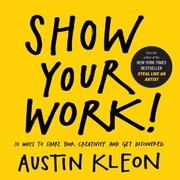
The direct sequel teaches the habit of sharing work-in-progress publicly, which is the foundational behavior of every successful creator; read immediately after Steal Like an Artist.
Audience Building: Growing Your Tribe
BeginnerLearn concrete strategies for attracting, growing, and deepening relationships with an audience across platforms, email lists, and communities.
▸ Study plan for this stage
Pace: 6–8 weeks total: Week 1–2 — "This Is Marketing" (~25 pages/day, ~288 pages); Week 3–4 — "Superfans" (~20 pages/day, ~250 pages); Week 5–6 — "Get Different" (~25 pages/day, ~272 pages); Week 7–8 — review, reflection, and completing all exercises.
- Smallest Viable Audience (SVA): Seth Godin's argument that serving a specific, small group deeply is more powerful than chasing mass appeal — the foundation of sustainable audience building.
- People Like Us Do Things Like This: Godin's insight that identity and belonging drive audience behavior; creators must understand the worldview of the people they seek to serve before creating content or products.
- The Tension of Permission Marketing: Earning the privilege of delivering anticipated, personal, and relevant messages to people who want to receive them — not interrupting strangers.
- The Superfan Pyramid: Pat Flynn's framework showing how casual visitors become active fans and ultimately superfans through progressive stages of trust, connection, and emotional investment.
- The Direct Connection Imperative: Flynn's emphasis on moving audience members off social platforms and into owned channels (email lists, communities) to build relationships you control.
- Making Fans Feel Seen: Flynn's core tactic of personalizing interactions — remembering names, responding to messages, spotlighting community members — to transform passive followers into passionate advocates.
- The DAD Framework (Differentiate, Attract, Direct): Mike Michalowicz's system for standing out in a crowded market by designing marketing that is impossible to ignore, then funneling attention toward a clear next step.
- Test-and-Iterate Marketing: Michalowicz's insistence on running small, low-risk marketing experiments, measuring results honestly, and doubling down only on what demonstrably works.
- After reading Godin, can you clearly define your Smallest Viable Audience — who exactly are they, what do they believe, and what change are you trying to make for them?
- How does Godin's concept of 'people like us do things like this' change the way you would write a piece of content or craft an offer for your audience?
- Using Flynn's Superfan Pyramid, where do most of your current followers or contacts sit, and what is one specific action you could take this week to move five of them one level higher?
- What owned-channel strategy does Flynn recommend to protect your audience relationship from platform algorithm changes, and how would you implement it in your creator business?
- How does Michalowicz's DAD Framework differ from traditional marketing advice, and what makes 'differentiation' the non-negotiable first step before any promotion?
- Can you design one small, testable marketing experiment using Get Different's principles that you could run within 30 days and measure with a clear success metric?
- Audience Avatar Deep-Dive (Godin): Write a one-page profile of your Smallest Viable Audience. Include their specific fears, aspirations, daily frustrations, and the identity statement 'People like us ___.' Pin this above your workspace and reference it before every piece of content you create.
- Permission Audit (Godin): List every channel you currently use to reach people (social media, email, podcast, etc.). For each one, honestly rate whether your audience opted in and actually wants to hear from you. Identify one channel where you are interrupting rather than serving, and draft a plan to shift it toward permission-based communication.
- Superfan Mapping Exercise (Flynn): Draw your own version of the Superfan Pyramid and place 10 real people from your audience into it. For each person in the bottom two tiers, write one personalized outreach message (DM, email, or comment reply) designed to make them feel genuinely seen and move them up a level.
- Email List Launch or Audit (Flynn): If you have no email list, set one up this week using a free tool (ConvertKit, Beehiiv, etc.) and write your first welcome sequence (3 emails). If you already have a list, audit your last 5 emails against Flynn's 'direct connection' principles and rewrite the weakest one.
- DAD Campaign Design (Michalowicz): Using the Differentiate–Attract–Direct framework, design one complete marketing campaign for your creator project. Write the hook (what makes it impossible to ignore?), the attraction mechanism (where will people see it?), and the direct call-to-action (what is the one next step you want them to take?). Keep the budget under $50 or $0.
- 30-Day Marketing Experiment Log (Michalowicz): Choose one marketing idea from Get Different, run it for 30 days, and track a single metric (click-through rate, new subscribers, DM replies, etc.) weekly. At the end, write a one-paragraph post-mortem: what worked, what didn't, and what you will do differently next.
Next up: By the end of this stage you will have a clearly defined audience, a growing owned-channel relationship with them, and a repeatable system for standing out — the essential foundation for the next stage, which shifts focus from attracting an audience to monetizing it by creating and selling products, services, or memberships that your tribe is already primed to buy.
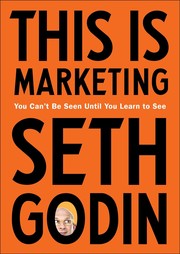
Reframes marketing as serving a specific audience rather than shouting at everyone — gives creators the vocabulary of 'smallest viable audience' and permission marketing before diving into tactics.

Flynn, a veteran online creator, provides a step-by-step playbook for turning casual followers into passionate superfans — the practical complement to Kelly's theoretical model.

Teaches creators how to stand out and be noticed in crowded markets, building on the audience concepts from Godin and Flynn with actionable differentiation strategies.
Monetization: Turning Attention into Income
IntermediateMaster the full toolkit of creator revenue streams — digital products, courses, memberships, sponsorships, and licensing — and understand how to price and package creative work.
▸ Study plan for this stage
Pace: 6–8 weeks total: Weeks 1–4 cover "Expert Secrets" (~25–30 pages/day, reading alongside note-taking on funnel and offer design); Weeks 5–8 cover "The Money Book for Freelancers, Part-Timers, and the Self-Employed" (~20–25 pages/day, with weekly financial tracking exercises running in parallel).
- The 'Mass Movement' framework from Expert Secrets — how creators build audiences around a core belief or cause, not just a product
- The Attractive Character and Epiphany Bridge: using personal story and narrative to sell digital products, courses, and memberships authentically
- The Value Ladder: structuring offers from free/low-ticket entry points up through high-ticket programs and masterminds to maximize lifetime customer value
- Webinars, challenges, and funnels as the primary distribution and conversion mechanisms for creator offers (Expert Secrets)
- The 'Perfect Webinar' script as a repeatable template for launching courses, memberships, and digital products
- The Freelancer's Financial Stack (D'Agnese): separating business and personal finances, self-employment tax obligations, and building an irregular-income budget
- The 'Profit First'-adjacent envelope system D'Agnese advocates — allocating percentages of every payment to taxes, retirement, operating expenses, and personal pay
- Pricing psychology and packaging: how to position and price creative work so that value is perceived before the price is revealed
- After reading Expert Secrets, can you articulate your own 'core belief' or cause that would anchor a mass movement around your creator niche?
- What is a Value Ladder, and how would you design one with at least four rungs (free lead magnet → low-ticket → mid-ticket → high-ticket) for your own creative work?
- How does the Epiphany Bridge story structure differ from a standard sales pitch, and why does Brunson argue it converts better for information products?
- According to D'Agnese, what percentage-based allocation system should a self-employed creator use for each incoming payment, and what are the four or five 'buckets' it covers?
- How should a creator price a membership or course differently from a one-time digital product, and what factors (audience size, transformation delivered, competition) does the combined reading suggest you weigh?
- What are the key tax obligations unique to self-employed creators that D'Agnese highlights, and how do quarterly estimated payments work?
- Value Ladder Mapping: Draw your personal Value Ladder with a minimum of four tiers. For each tier, write the product/offer name, the transformation it delivers, and a draft price point. Use Brunson's framework to justify the jump in price between each rung.
- Epiphany Bridge Script: Write a 300–500 word personal origin story using Brunson's Epiphany Bridge structure (the old belief → the inciting experience → the new belief → the result). This becomes the foundation of your course or membership sales page.
- Perfect Webinar Outline: Using the Perfect Webinar template from Expert Secrets, outline a 60-minute live or recorded presentation for one of your mid-ticket offers. Include the hook, story stack, three secrets, and the close/offer stack.
- Irregular Income Budget (D'Agnese Exercise): List your last 6 months of income (actual or estimated). Calculate the monthly average, identify the lowest month, and build a 'survival budget' based on that floor. Then apply D'Agnese's percentage buckets (taxes, retirement, operating costs, personal pay) to a hypothetical $3,000 payment.
- Offer Packaging Sprint: Design three versions of the same core offer (e.g., a course) at three price points — Basic, Standard, and Premium — by adding or removing bonuses, access levels, and community components. Write a one-paragraph justification for each price point using perceived-value language.
- 30-Day Financial Audit: For one full month, track every business income and expense in a simple spreadsheet. At month's end, calculate your effective hourly rate, your self-employment tax liability, and how much you should have set aside — cross-checking against D'Agnese's recommended allocations.
Next up: Mastering revenue streams and financial self-management sets the foundation for the next stage, which zooms out to long-term creator business strategy — covering audience growth, platform diversification, and building sustainable systems so that the monetization toolkit learned here can scale reliably over time.

A deep dive into selling information products, courses, and memberships — covers the funnel logic and storytelling frameworks that drive creator product launches.
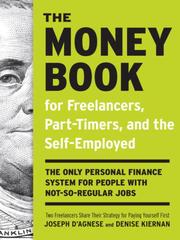
Addresses the unglamorous but critical financial reality of irregular creator income — taxes, savings, and cash flow — so new full-time creators don't go broke despite earning well.
The Creator Business: Strategy & Scale
ExpertThink like a media entrepreneur — understand platform independence, brand deals, licensing, team-building, and the long-term strategy needed to build a durable, scalable creator business.
▸ Study plan for this stage
Pace: 8–10 weeks total: ~2.5–3 weeks per book at 20–25 pages/day. Week 1–3: "The Lean Startup" (focus on validated learning and iteration cycles); Week 4–6: "Company of One" (focus on intentional scale and sustainable business design); Week 7–9: "Perennial Seller" (focus on timeless content creation and l
- Validated learning & the Build-Measure-Learn loop (The Lean Startup) — test creator business assumptions cheaply before committing resources
- The Minimum Viable Product (MVP) applied to creator offerings — launching courses, newsletters, or products as experiments, not finished goods
- Pivot vs. persevere decisions (The Lean Startup) — knowing when to double down on a content format or platform and when to change direction
- The 'stay small on purpose' philosophy (Company of One) — questioning growth for its own sake and designing a business around capacity, values, and profit margins
- Platform independence & resilience (Company of One) — building owned audiences (email lists, direct relationships) rather than renting attention on third-party platforms
- Charging premium prices through trust and expertise (Company of One) — positioning, niching down, and the value of reputation over volume
- The 'perennial' content standard (Perennial Seller) — creating work designed to sell for years, not just at launch, by solving timeless problems
- Long-term marketing as a system (Perennial Seller) — word-of-mouth flywheels, positioning, and the relentless, unglamorous work of sustained promotion
- How can a creator apply the Build-Measure-Learn loop from The Lean Startup to test a new revenue stream — such as a paid community or licensing deal — before fully building it out?
- According to Company of One, why is 'more' not always the right answer for a creator business, and what metrics should replace raw growth as success indicators?
- How does Paul Jarvis's concept of platform independence translate into a concrete audience-ownership strategy, and what owned channels should a creator prioritize?
- What makes a piece of creative work 'perennial' according to Ryan Holiday, and how do the decisions made during creation (topic, depth, format) determine long-term commercial viability?
- How do the marketing principles in Perennial Seller differ from typical launch-and-forget content promotion, and what does a sustainable, years-long marketing system look like for a creator?
- How can the three books be synthesized into a single strategic framework: using Lean Startup to experiment, Company of One to set intentional limits, and Perennial Seller to build lasting assets?
- MVP Revenue Experiment (The Lean Startup): Identify one untested revenue idea for your creator business (e.g., a workshop, a licensing pitch, a paid newsletter tier). Write a one-page 'experiment card' defining your riskiest assumption, a measurable success metric, and the smallest possible test you can run within two weeks. Run it, then write a 'pivot or persevere' memo based on the results.
- Business Capacity Audit (Company of One): List every current and potential revenue stream, task, and platform in your creator business. For each, ask: 'Does this require me to grow my team or overhead to sustain?' Design a version of your business that hits your target income with the fewest dependencies — document the 'Company of One' ceiling you are comfortable with.
- Owned Audience Stress Test (Company of One): Imagine your top platform disappears tomorrow. Map out what percentage of your audience you could still reach directly (email, SMS, owned community). Set a 90-day goal to migrate at least one platform-dependent audience segment to an owned channel, and track weekly subscriber growth.
- Perennial Content Audit: Review your last 20 pieces of content or products. Score each on a 'shelf-life scale' of 1–5 (1 = news-cycle dependent, 5 = relevant in 10 years). Identify your highest-scoring asset and write a one-page plan to deepen, repackage, or reposition it for longer commercial life.
- Long-Term Marketing System Design (Perennial Seller): Map out a 12-month, post-launch marketing calendar for one existing or planned product. Include at least five distinct promotional tactics Holiday endorses — such as earned media outreach, strategic gifting to influencers, evergreen SEO content, and community partnerships — with specific action items and owners for each.
- Integrated Strategy Memo: Write a 2–3 page 'Creator Business Strategy Doc' that synthesizes all three books. Section 1: your current experiment pipeline (Lean Startup). Section 2: your intentional growth ceiling and owned-audience plan (Company of One). Section 3: your one flagship perennial asset and its long-term marketing system (Perennial Seller). Share it with a peer or mentor for accountabil
Next up: By internalizing how to run lean experiments, design a resilient business, and build lasting creative assets, the reader is now equipped to zoom out further — examining the broader cultural, economic, and technological forces shaping the creator economy as a whole, and where it is headed next.
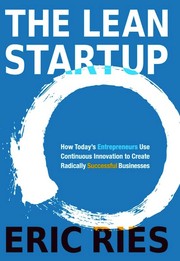
Applies startup thinking — rapid experimentation, validated learning, pivoting — to the creator's product and content strategy, essential for scaling beyond a one-person operation.

Challenges the default 'grow at all costs' narrative and argues for intentionally small, profitable, sustainable creator businesses — a crucial strategic counterweight to hustle-culture advice.

Focuses on creating work and building a back-catalog that sells for years or decades, teaching creators to think beyond viral moments toward lasting, compounding creative assets.
Discussion
Keep reading
Paths that share books, cover the same subject, or open a related topic.