Mathematics is the purest build-in-order subject there is: skip a rung and everything above it wobbles. It's also the subject where adults most often carry an old wound — "I'm not a math person" — that's almost always the result of a gap left years ago, not a lack of ability. A staged reading path lets you find and fill the gaps in sequence, from intuition all the way to real abstraction.
Teach yourself mathematics: the path from arithmetic to abstraction
July 6, 2026 · 1 min read
The path, stage by stage
Our mathematics path rebuilds the staircase.
Awakening mathematical intuition. Strogatz's The Joy of X and Pólya's How to Solve It — math as a way of thinking, not a list of procedures. This reconnects the wounded reader with the pleasure first.
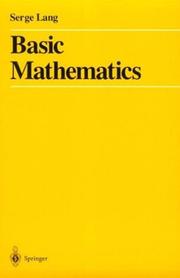
Core pre-university mathematics. Lang's Basic Mathematics and Precalculus in a Nutshell — closing the algebra and trig gaps most people carry.
The calculus and linear algebra core. Spivak's Calculus (rigorous and beloved) and Axler's Linear Algebra Done Right — the twin pillars everything else uses.
Learning to prove and abstract. Velleman's How to Prove It, Rudin's Principles of Mathematical Analysis (the famous "baby Rudin"), and abstract algebra. This stage transforms you from a calculator into a mathematician.
Advanced horizons. Topology, complex analysis, and Mathematics: Its Content, Methods and Meaning — the view from higher up.
The habit: do every problem
There is no reading your way through mathematics — it is a doing subject, absolutely. Do the exercises, every one you can, and struggle with them before peeking at solutions. The struggle is the learning; a proof you fought for is a proof you own. Nothing else on this whole site is as unforgiving of passive reading, or as rewarding of active work.
Around 110 hours of reading and far more of problem-solving. Follow the path or browse the mathematics hub. It's the language under physics and statistics.
FAQ
- I’m "bad at math." Can I really learn it as an adult?
- Almost certainly — "bad at math" is usually an unfilled gap from years ago, not a fixed limit. The path’s early stages exist precisely to find and close those gaps, in order, so the higher math finally has something to stand on.
- Can I skip to calculus?
- Only if your algebra and trig are genuinely solid — most struggles with calculus are actually algebra struggles in disguise. When in doubt, spend a few weeks on the pre-university stage; it pays for itself.
Get the books
- 1The Joy of XAmazon ↗Steven H. Strogatz
- 2How to solve itAmazon ↗George Pólya
- 3Basic mathematicsAmazon ↗Serge Lang
- 4Precalculus mathematics in a nutshellAmazon ↗George F. Simmons
- 5CalculusAmazon ↗Michael Spivak
- 6Linear Algebra Done RightAmazon ↗Sheldon Jay Axler
As an Amazon Associate we earn from qualifying purchases. Some book links are affiliate links; you pay the same price and we may earn a small commission.
Follow the full reading path


How to learn Mathematics
Beginner12books110 hrs5 stages
Ready to learn something deeply?
Build a reading path — free