Here's the tell that someone never actually learned to cook: take away the recipe and dinner collapses. Recipe-following is real and useful, but it's a different skill from cooking — the way reading sheet music differs from playing by ear. People stall because they keep accumulating recipes (dish number 47 teaches roughly what dish number 12 did) instead of learning the small set of principles every recipe is quietly built on. Learn those, and every recipe becomes optional advice.
Cooking fundamentals: how to cook without a recipe in sight
July 9, 2026 · 2 min read
The path, stage by stage
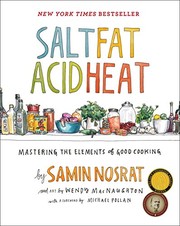
The path opens with the modern classic built for exactly this problem: Samin Nosrat's Salt, Fat, Acid, Heat, which compresses cooking into four elements you can actually reason with. J. Kenji López-Alt's The Food Lab follows with the evidence — why techniques work, tested and measured — so your kitchen instincts get built on physics rather than folklore. Then technique itself: Jacques Pépin New Complete Techniques is the master demonstrating the hand skills, and Julia Child's Mastering the Art of French Cooking remains the deepest single course in the discipline underlying Western cooking.
With principles and technique in place, the path turns to improvisation. The Flavor Bible by Karen Page is the pairing reference that answers "what goes with this?" without a recipe. Yotam Ottolenghi's Plenty shows what fearless vegetable cooking looks like, Harold McGee's On Food and Cooking is the science reference you'll consult for decades, and Tamar Adler's An Everlasting Meal is the graduation text — cooking as an economical, continuous practice where tonight's roast becomes tomorrow's broth becomes Thursday's beans.
The order is doing real work here. Nosrat gives you the framework, López-Alt stress-tests it, Pépin and Child install the hands, and the back half of the path teaches judgment — pairing, improvisation, thrift. Skip to the improvisation books first and they read as philosophy; arrive after the technique books and they read as permission.
The habit: one no-recipe dinner a week
Once a week, cook dinner from what's already in the kitchen with no recipe open. Pick a protein or vegetable, reason through the four elements — what needs salt, where's the fat, what acid finishes it, which heat suits it — and consult The Flavor Bible only for pairing questions. The first few will be mediocre; that's the tuition, and it's cheaper than a single cooking class. Within a couple of months the weekly improvisation stops feeling like a stunt and starts feeling like cooking, which is the whole point.
Call it 90 hours of reading, amortized over a lifetime of dinners. Follow the path or start at the cooking fundamentals hub. When vegetables start feeling like the interesting part, the vegetarian cooking hub is the next door over.
FAQ
- Which book should I actually read first?
- Salt, Fat, Acid, Heat — it gives you a working mental model of all cooking in one book, and everything after it (The Food Lab’s science, Pépin’s technique) slots into that framework instead of floating free.
- Is it worth reading cookbooks cover to cover?
- For this path, mostly yes — these are books of principles and technique rather than recipe collections. Read the front matter and technique chapters like a textbook; treat the recipes as practice exercises for whatever the chapter just taught.
Get the books
- 1Salt, Fat, Acid, HeatAmazon ↗Samin Nosrat
- 2The Food LabAmazon ↗J. Kenji López-Alt
- 3Jacques Pépin New Complete TechniquesAmazon ↗Jacques Pépin
- 4Mastering the art of French cookingAmazon ↗Julia Child
- 5The flavor bibleAmazon ↗Karen Page
- 6PlentyAmazon ↗Yotam Ottolenghi
As an Amazon Associate we earn from qualifying purchases. Some book links are affiliate links; you pay the same price and we may earn a small commission.
Follow the full reading path


Cook without recipes
Beginner10books100 hrs5 stages
Ready to learn something deeply?
Build a reading path — free