Chemistry has a reputation for abstraction — orbitals, moles, equations that look like alphabet soup — and beginners who start there often bounce. But chemistry is also the most tangible science, the one that explains cooking, rust, medicine, and fireworks. Start where it's concrete and story-rich, then climb toward the mathematical heart, and the abstraction arrives with meaning attached.
Learn chemistry from books: from the kitchen to quantum orbitals
July 6, 2026 · 1 min read
The path, stage by stage
Our chemistry path climbs from the kitchen to the quantum.
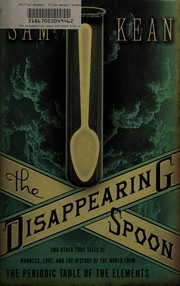
Foundations — chemistry in everyday life. Kean's The Disappearing Spoon (the periodic table as a book of stories), Reactions, and Chemistry: Concepts and Problems. Fall for the subject before it gets hard.
General chemistry — the core framework. Chemistry: The Central Science (the standard text) and a solid General Chemistry — atoms, bonds, stoichiometry, the real backbone.
Going deeper — organic chemistry. Clayden's Organic Chemistry and Arrow-Pushing in Organic Chemistry — the logic of how molecules react (organic is a language; learn to read the arrows).
Physical chemistry — the mathematical heart. Atkins' Physical Chemistry — thermodynamics and quantum chemistry, where the math finally explains the why.
Synthesis — thinking like a chemist. Napoleon's Buttons — how molecules shaped history, tying it all back to the world.
The habit: draw every mechanism
Chemistry, especially organic, is learned with a pencil. Draw the molecules, push the arrows, work the mechanism by hand — don't just read it. The students who pass organic are the ones who drew ten thousand structures; the ones who "read" it are the ones who retake it. Active drawing beats passive reading here more than almost anywhere.
Around 120 hours. Follow the path or browse the chemistry hub. It bridges physics and biology.
FAQ
- Can you really self-study organic chemistry?
- Yes, with discipline — it’s pattern recognition and mechanism logic, both learnable from books like Clayden if you do the arrow-pushing by hand. What’s hard to self-source is lab technique, so pair it with a lab course if you need it.
- How much math does chemistry need?
- Little for the first stages; real calculus for physical chemistry. The path front-loads the tangible, story-driven chemistry so you’re motivated by the time the math shows up.
Get the books
- 1The Disappearing SpoonAmazon ↗Sam Kean
- 2ReactionsAmazon ↗Theodore Gray
- 3Chemistry : Concepts and ProblemsAmazon ↗Clifford C. Houk
- 4Chemistry The Central Science AP 14th EditionAmazon ↗Theodore L. Brown
- 5General chemistryAmazon ↗Linus Pauling
- 6Organic ChemistryAmazon ↗David R. Klein
As an Amazon Associate we earn from qualifying purchases. Some book links are affiliate links; you pay the same price and we may earn a small commission.
Follow the full reading path


How to learn Chemistry
Beginner11books135 hrs5 stages
Ready to learn something deeply?
Build a reading path — free