Bind your own books
This curriculum takes a complete beginner from their very first hand-sewn pamphlet all the way to mastering complex historical and fine-binding structures. Each stage builds on the last — starting with core vocabulary and simple sewing patterns, moving through classic multi-section bindings and material knowledge, and finally arriving at advanced decorative and conservation-grade techniques.
Foundations: First Stitches & Core Concepts
BeginnerUnderstand basic bookbinding vocabulary, handle tools and materials confidently, and complete simple sewn structures like pamphlets and single-section bindings.
A clear, well-illustrated beginner primer that introduces tools, materials, and foundational hand-sewing techniques without overwhelming the newcomer. It establishes the essential vocabulary used in every later book.
Core Structures: Multi-Section Sewing
BeginnerExecute the principal sewn-book structures — Coptic, long-stitch, kettle-stitch, and case binding — and understand how thread, signatures, and covers interact structurally.
Smith's foundational text isolates sewing as the primary structural element, teaching a wide range of thread-based structures and developing a rigorous understanding of how stitches hold a book together.
This authoritative dictionary-style reference (published by the Library of Congress) defines every structure, material, and technique precisely — invaluable for cross-referencing terms encountered in Smith and all future reading.
Materials & Craft Depth
IntermediateMake informed choices about paper, board, cloth, leather, and adhesives; understand how material properties affect the longevity and feel of a binding.
▸ Study plan for this stage
Pace: 8–10 weeks total: Weeks 1–4 on McMurtrie's "THE BOOK" (~25–30 pages/day, focusing on chapters covering papermaking, printing surfaces, and material evolution); Weeks 5–10 on Diehl's "Bookbinding, its background and technique" (~20–25 pages/day, reading more slowly to absorb the technical material on
- Historical evolution of writing and printing surfaces (papyrus, vellum, rag paper, wood-pulp paper) as traced in McMurtrie, and how each material's physical properties shaped the books made from it
- The relationship between papermaking technology and book longevity — why rag paper survives centuries while acidic wood-pulp paper deteriorates, per McMurtrie's historical narrative
- Board construction and its role in structural support: the differences between paste board, mill board, and binder's board as detailed in Diehl
- Covering materials — alum-tawed leather, vegetable-tanned leather, vellum, buckram, and book cloth — their grain, stretch, porosity, and aging characteristics as catalogued in Diehl
- Adhesive chemistry and behavior: the working properties and long-term stability of paste (starch), animal hide glue, and their respective uses in different binding structures, per Diehl
- The concept of 'sympathetic' material pairing — matching adhesive open-time and flexibility to the covering material and paper weight to ensure the binding moves as a unit
- Decorative and functional surface treatments: gold tooling, blind tooling, marbling, and paste papers, and how the underlying material (leather grain, cloth weave) determines the success of each technique as discussed in Diehl
- The craft tradition as a living lineage — how Diehl's survey of historical techniques connects material choices made by medieval and Renaissance binders to decisions a contemporary bookbinder still faces
- According to McMurtrie's account, what material and technological shifts most dramatically changed the physical character of the book between the medieval period and the industrial era, and what were the trade-offs in durability?
- Based on Diehl's technical descriptions, what are the key differences between paste and glue as adhesives, and in which binding situations does each perform better?
- How does Diehl distinguish among the major leather types used historically in bookbinding, and what properties (flexibility, surface texture, longevity) make each suitable or unsuitable for different binding styles?
- What does McMurtrie's history reveal about why certain books from the hand-press period have survived in better condition than books printed a century later, and what materials account for that difference?
- Drawing on Diehl's background chapters, how did the transition from wooden boards to paste boards and then mill boards affect the overall design and weight of bindings across different historical periods?
- After reading both books, how would you justify a specific combination of paper, board, cloth or leather, and adhesive for a binding intended to last 100+ years?
- Material sample journal: Collect small swatches of at least four covering materials (book cloth, buckram, a vegetable-tanned leather scrap, and a piece of vellum or Japanese tissue). Annotate each with notes drawn directly from Diehl on grain direction, stretch axis, porosity, and recommended adhesive — then test each with both paste and PVA to observe the difference in working time and final flex
- Paper acidity audit: Gather 6–8 paper samples of varying ages and types (newsprint, photocopier paper, a page from an old paperback, a sheet of cotton rag paper). Use pH testing strips or a pen to measure acidity, then map your findings against McMurtrie's historical account of the shift from rag to wood-pulp paper to make the history tangible.
- Adhesive comparison test: Following Diehl's descriptions, mix a batch of wheat-starch paste and prepare a small pot of hide glue. Adhere identical cloth-to-board samples with each adhesive. After drying, compare flexibility, reversibility (with moisture), and bond strength — record observations in your material journal.
- Board identification exercise: Source scraps of paste board, grey mill board, and modern binder's board. Compare weight per square inch, rigidity, and response to moisture. Cross-reference your observations with Diehl's descriptions of historical board types to identify which contemporary material most closely matches each historical counterpart.
- Historical binding timeline: Using McMurtrie as your chronological spine and Diehl as your technical reference, create a one-page annotated timeline that maps at least six binding styles to their characteristic materials (paper type, board, covering, adhesive) and notes one longevity strength and one vulnerability for each.
- Covering material mock-up: Cut identical pieces of book cloth and a leather scrap to cover two small (quarter-sheet) boards. Pare the leather edge by hand, turn in both materials, and compare the corner results. Annotate with Diehl's guidance on paring angles and adhesive choice, noting where the material's physical properties helped or hindered the process.
Next up: By internalizing how specific materials behave and why historical binders chose them, the reader is now equipped to move into studying complete binding structures — understanding not just what a binding is made of, but how those materials are assembled into functional, enduring forms.
Provides essential historical and material context — understanding how books were made across centuries sharpens judgment about which materials and structures are appropriate for a given project.
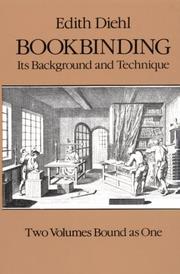
A classic two-volume scholarly survey of binding history and technique; reading it at this stage connects the structures already learned to their historical origins and material traditions, deepening craft intuition.
Advanced Structures & Fine Binding
ExpertExecute complex historical structures (French link stitch, long-stitch on tapes, rounded-and-backed case and full leather bindings) and understand the decisions of a fine binder.
▸ Study plan for this stage
Pace: 10–13 weeks total. Weeks 1–7: "The Craft of Bookbinding" by Manly Miles Banister (~25–35 pages/day, 4–5 days/week), reading sequentially and pausing at each structure chapter to attempt the technique before moving on. Weeks 8–13: "Bookbinding" by Pamela Richmond (~20–25 pages/day, 4–5 days/week), cr
- French link stitch construction: the interlocking chain mechanism between signatures, correct thread path, and how tension affects spine flexibility and durability
- Long-stitch on tapes: the relationship between the exposed stitch pattern on the spine, tape placement, and the structural role of tapes in distributing stress across the text block
- Rounding and backing: the sequential hammer-and-bone-folder process that creates the shoulder, why the arc must match the board thickness, and how this step permanently commits the book's geometry
- Full leather binding: paring leather to working thickness, turn-ins at corners and spine, the role of paste vs. PVA, and managing grain direction to prevent warping
- Rounded-and-backed case binding vs. tight-back binding: understanding when each is appropriate, how the spine lining strategy differs, and the visual and tactile signatures of each
- The fine binder's decision framework: choosing structure based on paper weight, text block size, intended use, and aesthetic intent — as articulated through Richmond's commentary on historical and contemporary practice
- Finishing and tooling fundamentals: blind and gold tooling logic, temperature control, and how decorative decisions are subordinate to structural integrity
- Historical context of complex structures: tracing French link stitch and long-stitch traditions through the examples and historical references provided in both Banister and Richmond
- After working through Banister's instructions on the French link stitch, can you describe — without looking — the exact thread path that creates the chain link between two adjacent signatures, and explain what happens structurally if the tension is uneven?
- Banister details the rounding-and-backing sequence carefully: what is the correct order of operations, what tools are used at each step, and how do you know when the shoulder is correctly formed?
- Richmond frames fine binding as a series of deliberate decisions rather than a fixed recipe — what are the three or four primary variables she identifies that should drive a binder's choice of structure and covering material?
- How does the long-stitch on tapes differ from a standard sewing-on-tapes structure in terms of thread path, spine appearance, and the mechanical load each tape carries?
- Both Banister and Richmond address leather paring: what thickness targets do they describe or imply for different areas of the cover (spine, corners, turn-ins), and why does over-paring at the corners create a specific failure mode?
- What does Richmond mean when she discusses the relationship between a binding's structure and its 'opening quality,' and how does this concept connect to the sewing style and spine lining choices Banister describes?
- Sew a minimum of three practice text blocks using the French link stitch (using Banister's step-by-step instructions), varying thread weight each time; photograph the spine before lining and annotate the images identifying each link, the direction of thread travel, and any tension inconsistencies.
- Execute a complete long-stitch-on-tapes binding from scratch: prepare signatures from a single paper stock, position tapes at mathematically spaced intervals, sew the exposed long stitch, and finish with a simple leather or cloth cover — comparing your finished spine pattern against Banister's diagrams.
- Practice rounding and backing on at least two text blocks of different thicknesses (one thin, one substantial); use a backing board setup as Banister describes, and before gluing the boards on, measure the shoulder depth with calipers and record whether it matches your board thickness within 0.5 mm.
- Pare a full A4/letter-sized piece of vegetable-tanned leather to three different target thicknesses (spine zone, turn-in zone, corner zone) using a paring knife or spokeshave; test each zone by folding sharply and checking for cracking or excessive give, then produce a written self-assessment referencing Richmond's quality criteria.
- Produce one complete full leather binding (tight-back or rounded-and-backed, per Banister's instructions) on a real text block of at least 80 pages; document every decision point — structure choice, adhesive choice, leather choice, paring strategy — in a binder's log, then evaluate the finished book against the decision framework Richmond articulates.
- Side-by-side comparison exercise: bind two identical text blocks, one as a rounded-and-backed case binding and one as a tight-back full leather binding (both covered in Banister); place them side by side, open them to the same page, and write a one-page analysis comparing opening quality, spine profile, and which use-case each serves — drawing on Richmond's language for fine binding evaluation.
Next up: Mastering these complex historical structures and internalizing the fine binder's decision framework builds the technical vocabulary and critical eye needed to move into conservation and restoration work, where the same structures must be diagnosed, respected, and sensitively repaired rather than built from scratch.
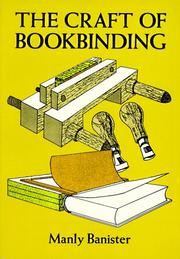
A thorough, step-by-step manual covering the full range of traditional Western binding structures including leather work — the most technically complete single-volume guide for the advancing hand binder.
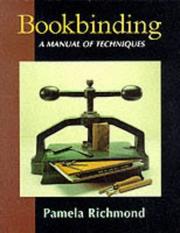
Focuses on the fine details of finishing, forwarding, and leather paring that distinguish competent binding from fine binding, making it the ideal capstone for a learner ready to work at a high level.
Discussion
Keep reading
Paths that share books, cover the same subject, or open a related topic.