American Sign Language is a complete, grammatically rich language — not English on the hands — with its own syntax, its own regional variation, and a vibrant Deaf community and culture behind it. That last point matters more than beginners expect: you cannot really learn ASL while ignoring Deaf culture, because the language and the community are inseparable. Books are a real help for the vocabulary, the grammar concepts, and above all the cultural understanding. But be clear-eyed about the medium: ASL is visual and interactive, so books complement video, classes, and real conversation with signers — they cannot replace watching and being watched.
Learn ASL: Best American Sign Language Books, in Order
July 12, 2026 · 3 min read
Stage one: a real course, not a phrasebook
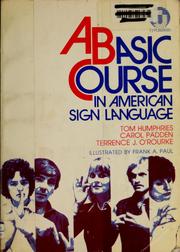
Start with structured instruction. A basic course in American sign language by Tom Humphries builds vocabulary and grammar in a sequenced way and is the closest a book comes to a real course. Then, or alongside it, work through Signing Naturally by Cheri Smith and her co-authors — the curriculum most college ASL 1 classes in the United States actually use. It is built around video and structured practice rather than static illustrations, which is exactly the right shape for a visual language, and it is the single most useful thing on this path if you are teaching yourself.
One duplicate to know about before you buy: the Signing Naturally student workbook that also appears in our listing is part of that same course, not a second book. Buy the level 1 set once and you have both halves.
When you need to look up a specific sign, The American Sign Language Handshape Dictionary The American Sign Language Hands by Richard A. Tennant organizes signs by handshape, which is how they are actually formed. That makes it far more useful than an alphabetical English word list, because in real conversation you see a sign before you know its English gloss.
Stage two: why it is a language, not a code
Once you have some signs, read Linguistics of American Sign Language by Clayton Valli and Ceil Lucas. This is the textbook that lays out ASL phonology, morphology and syntax with the same apparatus used for spoken languages, and it is the evidence behind the claim in the first paragraph of this article. It also explains things that will otherwise baffle you as a learner — why word order shifts, why the face carries grammar, why a sign changes shape depending on what it refers to. It is a genuine textbook, so read it after you have signs to attach it to, not before.
Stage three: the culture you are joining
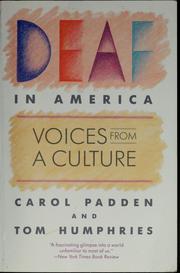
This is where ASL learners who skip ahead go wrong. Deaf in America by Carol Padden is a foundational, accessible account of Deaf culture from inside the community, and Inside deaf culture, also by Carol A. Padden, deepens that picture of Deaf history, identity, and community life. Reading these is not optional enrichment — it is how you learn to sign respectfully and understand the world you are entering. They reframe deafness as a linguistic and cultural identity, not a deficit, and that shift changes how you learn.
Stage four: the bigger picture
For a wider and moving perspective, Seeing Voices by Oliver Sacks explores the world of the Deaf and the nature of sign language itself, connecting ASL to how the brain builds language. It is a beautiful capstone that leaves you understanding not just how to sign but why sign languages are among the most remarkable things human minds do.
How to actually study it
Pair every book with video and, ideally, real people — a class, a Deaf community event, or a language partner. Practice receptively as much as expressively; understanding fast, natural signing is harder and more important than producing it. Learn the culture alongside the vocabulary so your signing is respectful, not mechanical. And be patient with facial expression and body movement, which carry grammar in ASL and cannot be picked up from a page. The books orient you; fluency comes from face-to-face use, and if you need interpreting for anything consequential, hire a qualified interpreter rather than relying on your own level.
Follow the path on the full reading path, explore the subject hub, or browse related language paths.
FAQ
- Can I learn ASL from books alone?
- Books build vocabulary, grammar, and crucial cultural understanding, but ASL is a visual, interactive language. Pair them with video and real conversation with signers to actually become fluent.
- Is Signing Naturally or A Basic Course in American Sign Language the better starting point?
- Signing Naturally is the standard classroom curriculum and is built around video, so it suits self-teachers best. Humphries is a good structured companion. There is no need to buy the Signing Naturally workbook separately — it comes with the level set.
Get the books
- 1A basic course in American sign languageAmazon ↗Tom Humphries
- 2Deaf in AmericaAmazon ↗Carol Padden
- 3Amazon ↗
- 4Signing NaturallyAmazon ↗Cheri Smith
- 5Linguistics of American Sign LanguageAmazon ↗Clayton Valli
- 6SIGNING NATURALLY STUDENT WORKBOOKAmazon ↗Cheri Smith
As an Amazon Associate we earn from qualifying purchases. Some book links are affiliate links; you pay the same price and we may earn a small commission.
Follow the full reading path

Learn ASL: sign language from the ground up
Beginner8books44 hrs4 stages
Ready to learn something deeply?
Build a reading path — free