Arabic opens a civilization — its literature, its news, its faith, its 400 million speakers — and it has a reputation for difficulty that is only half deserved. The script is learnable in weeks; the real challenges are the grammar's logic and the split between Modern Standard Arabic, which you read and hear on the news, and the spoken dialects, which differ region to region. That is exactly why order and a plan matter so much: without them, most self-learners drown in the alphabet or waste months on the wrong variety.
A language is a skill, not a body of knowledge, so be honest about what books do. They give you the system, the vocabulary, and the grammar — but fluency comes from listening, speaking, and immersion that no textbook replaces. Use these to build the scaffolding, then get to real Arabic as fast as you can.
Why order matters here
Script and sounds first, or nothing else sticks. Then core grammar and vocabulary. Then reference works you grow into. Skip the sequence and you will keep restarting.
The path, stage by stage
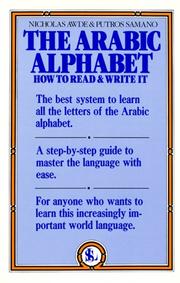
Start with the writing system. The Arabic alphabet by Nicholas Awde is a clear, focused introduction to the letters and their forms — the essential first wall to get over. Then move to a genuine course: Alif Baa: Introduction to Arabic Letters and Sounds by Kristen Brustad, the widely used university text that pairs the script with the sounds and gets you reading and pronouncing properly from the start.
For a friendlier parallel track and phrasebook-style grounding, Arabic for dummies by Amine Bouchentouf introduces practical vocabulary and everyday usage without the intensity of a formal course — useful for keeping motivation high early on.
Once the script is solid, attack the grammar, which is where Arabic's real logic lives. Arabic Verbs and Essentials of Grammar by Jane Wightwick is a compact, well-organized reference to the verb system and core grammar — the part that unlocks reading. Keep it beside you as a lookup, not a book to read straight through.
Then bring in the great reference and a method. A dictionary of modern written Arabic by Hans Wehr is the standard dictionary every serious learner eventually owns; learning to use its root-based organization is itself a skill worth acquiring. And Fluent forever by Gabriel Wyner is not an Arabic book but a method book — its approach to pronunciation, spaced repetition, and building vocabulary is exactly what turns these materials into actual retention.
How to actually study this
Master the alphabet before anything else, writing it by hand daily until it is automatic. Decide early which variety you are learning for — Modern Standard for reading and media, a specific dialect for talking with people in a region — and don't try to do everything at once. Build vocabulary with spaced repetition as Fluent forever prescribes, and get listening input constantly. Above all, speak: find a tutor or exchange partner early, because grammar you never use evaporates.
Use the alphabet and course books as your spine and the grammar and dictionary as references. See the full reading path for the staged study plan, and the subject hub for links to linguistics and the region. Browse other languages at /subjects.
Ready to learn something deeply?
Build a reading path — free