Ancient Egypt suffers from its own fame. Everyone arrives knowing Tutankhamun, mummies, and pyramid conspiracy theories, and almost no one arrives knowing that Egyptian civilization ran three thousand years — Cleopatra lived closer in time to the moon landing than to the building of the Great Pyramid. Random reading here produces a jumble of dynasties and gods with no scaffolding. The fix is a spine-first reading order: political chronology, then religion, then daily life and monuments, then the Egyptians in their own words.
Ancient Egypt Books, in Order: Pharaohs to Daily Life
July 11, 2026 · 2 min read
Why order matters here
Egyptian religion, art, and architecture all changed enormously across those millennia. Without the chronological spine, you'll flatten Old Kingdom pyramid builders and Ptolemaic Greeks into one costume-drama blur. With it, every temple and myth snaps into a specific era.
Stage 1: The spine
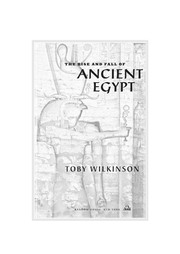
Start with The Rise and Fall of Ancient Egypt by Toby Wilkinson — the best single-volume narrative history, running from unification to Cleopatra with a clear-eyed view of pharaonic power (Wilkinson is refreshingly unsentimental about how coercive the god-king state was). Read it slowly and keep the dynasty structure; every other book in this path hangs from it.
Stage 2: Gods and the afterlife
Egyptian religion is the operating system of the civilization. Egyptian Mythology by Geraldine Harris gives you the core stories and players in an accessible form. Then The Complete Gods and Goddesses of Ancient Egypt by Richard Wilkinson as the reference layer — the full pantheon, iconography, and how deities merged and evolved across eras. With that grounding, read The Ancient Egyptian Book of the Dead in Raymond Faulkner's translation: the actual spells Egyptians took to the grave. It's strange and repetitive and genuinely moving — you're reading a civilization's answer to death in its own voice.
Stage 3: How people actually lived
Everyday Life in Ancient Egypt by Lionel Casson shifts from pharaohs to people: farmers, scribes, craftsmen, households, bread and beer. This is the stage that converts Egypt from spectacle to society. Then the monuments with real archaeology: The Complete Pyramids by Mark Lehner — the definitive, conspiracy-free account of how the pyramids were actually built and what the evidence shows — and Temples of Ancient Egypt edited by Byron Shafer, which explains what temples were for: not congregational worship but the daily machinery of maintaining cosmic order.
Stage 4: In their own words
The Literature of Ancient Egypt edited by William Kelly Simpson collects the stories, love poems, and wisdom texts — the Tale of Sinuhe alone justifies the volume. And for the truly committed, Egyptian Grammar by Alan Gardiner remains the classic gateway to reading hieroglyphs yourself. It's a genuine academic textbook and entirely optional; even browsing its sign lists deepens every museum visit you'll ever make.
How to actually study this
Build a one-page timeline while reading the Wilkinson survey — Old, Middle, New Kingdom, the intermediate periods — and place every later book's material onto it. Then get in front of objects: most major museums have Egyptian collections, and testing your reading against actual steles and coffins is the closest thing to time travel this subject offers.
The staged sequence with study plans is the full reading path. Neighboring ancient-world reading lives at the subject hub, or browse all paths.
FAQ
- What is the best book to start learning about ancient Egypt?
- The Rise and Fall of Ancient Egypt by Toby Wilkinson — a single-volume narrative covering all three thousand years, which gives every later book a chronological home.
- Should I read the Book of the Dead directly?
- Yes, but after some mythology background. Faulkner's translation is the standard, and the spells make far more sense once you know the gods and the afterlife journey they navigate.
- How were the pyramids actually built?
- By organized, paid Egyptian labor over decades — Mark Lehner's The Complete Pyramids lays out the archaeological evidence, including the workers' towns excavated near Giza.
Get the books
- 1The Complete Temples of Ancient EgyptAmazon ↗Richard H. Wilkinson
- 2The rise and fall of ancient EgyptAmazon ↗Toby A. H. Wilkinson
- 3The Ancient Egyptian Book of the DeadAmazon ↗Raymond Oliver Faulkner
- 4Egyptian MythologyAmazon ↗Geraldine Harris
- 5The complete gods and goddesses of ancient EgyptAmazon ↗Richard H. Wilkinson
- 6Everyday Life in Ancient EgyptAmazon ↗Lionel Casson
As an Amazon Associate we earn from qualifying purchases. Some book links are affiliate links; you pay the same price and we may earn a small commission.
Follow the full reading path

Ancient Egypt: pharaohs to daily life
Beginner10books79 hrs4 stages
Ready to learn something deeply?
Build a reading path — free