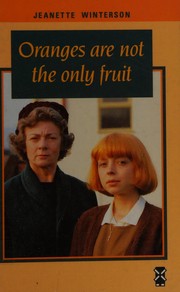
Start with The passion. The obvious recommendation is Oranges Are Not the Only Fruit, and it deserves its reputation, but it is the least representative book Winterson ever wrote: a funny, largely realist, semi-autobiographical novel about a girl raised by Pentecostal evangelists. Readers who love it and go looking for more of the same are routinely thrown by the myth-soaked, time-bending prose that follows.
The passion is under two hundred pages and it is undiluted Winterson — Napoleon's chicken cook, a web-footed Venetian boatwoman, a love story that behaves like a folk tale and hurts like a real one. It tells you within fifty pages whether this writer is for you. If the answer is no, you have lost an afternoon rather than a month, and that is a fair trade.
The core run
Read The passion, then Sexing the Cherry, then Written on the Body. This is the sequence that made her reputation and it is the strongest thirty months of work in her career.
Sexing the Cherry is the wildest of the three — seventeenth-century London, a giantess, twelve dancing princesses, and a structure that abandons chronology entirely. Written on the Body is the one people argue about: a narrator whose gender is never specified, telling the story of an affair with a married woman. Some readers find the device the most moving thing she has done; others find it a trick that draws attention to itself. You will know which camp you are in by page thirty.
The autobiographical pair
Now go back and read Oranges Are Not the Only Fruit, then read Why Be Happy When You Could Be Normal? directly after it. The first is the novel she made from her childhood; the second, published twenty-six years later, is the memoir that tells what the novel left out, including the search for her birth mother. Read as a pair, in that order, they do something neither does alone — the memoir keeps stopping to point at the places where the novel was a kindness rather than a record. This is the single best sequencing decision available in her work.
The difficult middle
Gut symmetries is where a lot of readers stall, and it is worth being plain about why. It runs a love triangle through quantum physics, alchemy and tarot, and the metaphors do a great deal of the structural work that plot usually does. Admirers call it her most ambitious novel. Others find it the point where the imagery stops illuminating the story and starts replacing it. It is not the book to test her on. Her novel The PowerBook, from the same period, is not in our catalogue and gets a similar split reaction.
The later novels
Lighthousekeeping is the gentlest late entry point — a Scottish lighthouse, an orphan, a nested Victorian story — and several readers who bounced off the mid-career books have found their way back through it. The gap of time is her retelling of Shakespeare's The Winter's Tale, written for the Hogarth Shakespeare series, and it is more disciplined than usual precisely because someone else supplied the plot. Frankissstein pairs Mary Shelley with a present-day story about artificial intelligence and cryonics; it is the most essayistic of her novels and the most obviously topical.
The criticism
Art Objects is her book of essays on art and being read. It is combative, quotable, and completely unembarrassed about claiming greatness for the writers she loves, which is either bracing or insufferable depending on your mood. Read it after four or five of the novels, when you can hear it as an argument she is making about her own work.
Where to stop
If you have read The passion, Sexing the Cherry, Written on the Body and the Oranges Are Not the Only Fruit and Why Be Happy When You Could Be Normal? pair, you have read Winterson. That is five books, three of them short. Nothing after them changes the picture, and if the prose has not converted you by then, it will not. Stop without guilt and browse something else on Discover.
Follow the full reading path →