Jeanette Winterson Reading Order: Where to Start
Winterson's career has three distinct movements: an early autobiographical run written in plain, funny, devastating prose, a fiercely experimental middle period where plot dissolves into voice, and a late turn toward myth retellings and memoir. Reading her in publication order works, because the difficulty rises roughly in step with the ambition. This path starts with the two books that need no preparation, spends a stage on the experimental novels that lose most first-time readers, and closes with the memoir that reopens the very first book from the other side.
The way in
BeginnerRead the two Winterson novels that work on anyone, and learn to recognise her signature move — fairy tale and history braided into a first-person voice that refuses to stay in one register
▸ Study plan for this stage
Pace: 2 weeks. Oranges Are Not the Only Fruit is 183 pages and The Passion 176 — both are short-chaptered and go quickly, so ~25 pages a night finishes the stage comfortably. Resist the urge to read either in one gulp: the chapter breaks in Oranges are where the tonal switches happen, and they land better
- The braid: Winterson's basic move is to run a realist story and a fairy tale in the same book, in the same voice, without signalling which is which
- Chapter titles in Oranges are the books of the Old Testament, so the structure of the novel is arguing with the structure of the mother's faith
- Comedy as the load-bearing element - Winterson's funniest book is also her cruellest one, and the jokes are how the pain gets carried
- First person that refuses to stay in one register: a sentence can move from a Lancashire kitchen to an Arthurian quest without changing gear
- The Passion's two narrators, Henri and Villanelle, and what happens to the book's reliability when the second voice starts
- Repeated refrains - 'I'm telling you stories. Trust me.' - as the closest thing Winterson has to a thesis statement
- Desire as the subject that both books organise themselves around, treated as ordinary and as supernatural at once
- In Oranges, what work do the fairy-tale interludes do that the realist narrative cannot do on its own?
- Why is the narrator of Oranges named Jeanette, and what does that do to your reading of the book as autobiography?
- Villanelle's webbed feet are never explained. Does the novel treat them as literal, and does the answer matter?
- How does the pacing of The Passion change once the narration shifts, and what has Winterson gained?
- Which of the two books is doing something the other cannot, and what would you tell a friend to read first?
- Take one chapter of Oranges and mark every point where the register shifts - plain to biblical, comic to fabulist. The density of switching is the style.
- Copy out three sentences from The Passion that are doing lyric work rather than narrative work. Notice how short they are; Winterson's lyricism is compression, not ornament.
- Write down, before you finish Oranges, what you think happened to the mother. Check it against Why Be Happy When You Could Be Normal? at the end of this path.
- Read the fairy-tale passages of Oranges consecutively, skipping the realist chapters. They form a nearly coherent second book - decide what it is about.
Next up: You now recognise the braid and the register-switching in books where a conventional story still holds them together, which is exactly the scaffolding the experimental novels remove.
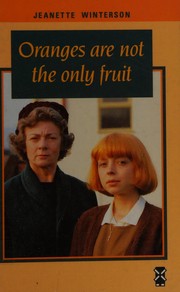
The debut: a girl raised by Pentecostal evangelicals in northern England discovers she is gay. Start here because it is her funniest and most accessible book, and because the memoir at the end of this path is a direct answer to it.
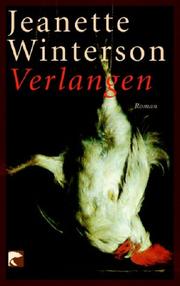
Napoleon's chicken cook and a web-footed Venetian girl, told in short lyrical chapters. Read it second: it is where the fabulist voice arrives fully formed, and it is short enough that the strangeness never outlasts your patience.
The experimental middle
IntermediateRead the novels where Winterson abandons conventional plot and character for language, structure and unresolved questions of gender and desire — and decide how far you want to follow her
▸ Study plan for this stage
Pace: 4-5 weeks. The page counts are deceptively low - Sexing the Cherry 167, Written on the Body 190, Gut Symmetries 223 - but these read at roughly half the speed of the first stage. Budget ~20 pages a night and expect to reread paragraphs. If Gut Symmetries stalls you completely, that is a legitimate r
- Plot as an optional component: in Sexing the Cherry the seventeenth century and the twentieth run simultaneously and the chronology stops behaving on purpose
- The Dog Woman as Winterson's most extreme character invention - grotesque, enormous, and morally the most straightforward person in the book
- The ungendered narrator of Written on the Body, and the fact that the conceit is never announced, only enacted
- Anatomical language as love language: the passages that borrow from medical textbooks are the most erotic writing in the book, which is the whole argument
- Gut Symmetries using quantum physics and the tarot as structuring devices rather than as subject matter
- The cost of the method - character thins as language thickens, and Winterson knows this and accepts the trade
- Where the middle period is still recognisably the writer of Oranges: the refrains, the fairy-tale inserts, the refusal to separate body from story
- At what point did you notice the narrator of Written on the Body was never gendered, and what had you assumed before that?
- What does Sexing the Cherry gain from letting the twelve dancing princesses tell their own endings?
- In Gut Symmetries, is the physics doing real structural work or is it decoration? Argue either side from the text.
- These three books have very little plot. What is carrying you through instead - and is it enough?
- Which of the three would you defend to someone who calls the middle period self-indulgent, and on what grounds?
- Read the anatomy sections of Written on the Body aloud. The rhythm is the point and it is invisible on the page.
- Map the two timelines of Sexing the Cherry on one sheet - which characters recur, and what rhymes between the centuries. The novel is a rhyme scheme, not a plot.
- Try substituting a gender for the narrator of Written on the Body in one scene and reread it. Note exactly what changes and what does not.
- Keep a one-line-per-chapter log of Gut Symmetries. If the log is coherent and the reading experience was not, that tells you where the difficulty actually lives.
- Decide, before moving on, how far you want to follow her. The path works whether you loved this stage or endured it.
Next up: Having seen how far Winterson will push language away from story, you can register the late novels for what they are - a deliberate walk back toward narrative, using borrowed plots as a safety line.

Seventeenth-century London, the twelve dancing princesses, and a giantess called the Dog Woman, spliced with meditations on time. The bridge book: still narrative, but the chronology has stopped behaving.
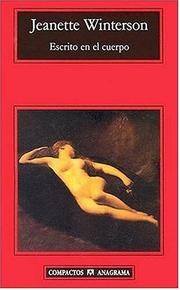
A love story whose narrator is never assigned a gender, told partly in the vocabulary of anatomy textbooks. The most-taught of her experiments and the one to read before the harder ones, because the conceit is simple even when the prose is not.

A love triangle refracted through quantum physics and the tarot. Placed here as the far edge of the middle period: if this one works for you, the difficulty of the earlier experiments will feel earned rather than wilful.
Myths, retellings and the late novels
IntermediateFollow Winterson into her second act, where she rewrites existing stories — Atlas, Shakespeare, Shelley — rather than inventing new ones, and see how much lighter the prose becomes
▸ Study plan for this stage
Pace: 5 weeks. Lighthousekeeping 232, The Gap of Time 288, Frankissstein 352 - roughly 870 pages but far easier going than the middle stage, so ~30 a night is realistic. Read The Winter's Tale plot summary before The Gap of Time if you do not know it; the novel assumes you do and takes ten pages to reward
- The second act: after the experiments, Winterson starts borrowing structures instead of inventing them, and the prose immediately lightens
- Storytelling as survival in Lighthousekeeping - the blind keeper's tales are the novel's argument that a story is a load-bearing structure, not a decoration
- Retelling as criticism: The Gap of Time is a reading of The Winter's Tale as much as an adaptation of it, and it is most interesting where it disagrees with Shakespeare
- Frankissstein's double structure - Mary Shelley in 1816 and an AI plot in the present - and the way each half interrogates the other
- Bodies, invention and embodiment as one continuous subject running from Written on the Body through to Frankissstein's transgender narrator
- Where the late voice is warmer and where it is thinner: borrowed plots resolve, and resolution is not something the middle period ever offered
- Winterson writing about technology without either utopia or panic, which is rarer than it sounds
- What does Lighthousekeeping recover from the early books that the experimental novels had abandoned?
- Where does The Gap of Time depart from The Winter's Tale, and what is Winterson arguing by departing there?
- In Frankissstein, do the two timelines genuinely need each other, or would either work alone?
- Has the prose actually got simpler in this stage, or only more legible? Find a sentence that settles it.
- Is the retelling instinct a late-career expansion or a retreat? Make the case you actually believe.
- Read the abandonment scene in The Gap of Time next to Act III of The Winter's Tale. The comparison is the fastest lesson in what adaptation is for.
- Track the Frankenstein references in Frankissstein that are not in the Shelley timeline - the present-day plot is seeded with them.
- Pick one paragraph from Lighthousekeeping and one from Gut Symmetries and compare clause length. The stylistic shift is measurable.
- List which earlier preoccupations Frankissstein gathers up. You should be able to name at least four books from the previous stages.
Next up: You have now read the whole arc of the fiction, which is exactly the position from which the memoir and the essays stop being background and become arguments about books you have actually read.
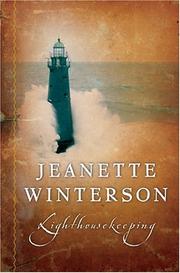
An orphan apprenticed to a blind lighthouse keeper who tells her stories. The warmest thing she has written since the debut, and a deliberate return to storytelling after the experimental years.

A contemporary retelling of The Winter's Tale, and the book where the myth-rewriting instinct becomes explicit. Read it before Frankissstein because the source text is easier to hold in mind.

Mary Shelley and a present-day story about artificial intelligence and transgender embodiment, running in parallel. The late novel that gathers up nearly every earlier preoccupation — bodies, invention, gender, love — into one argument.
The memoir and the essays
IntermediateRead the non-fiction that reframes the whole body of work, and understand what Winterson thinks art is actually for
▸ Study plan for this stage
Pace: 3 weeks. Why Be Happy When You Could Be Normal? is 240 pages and reads fast and hard - a week, but expect to put it down. Art Objects is 192 pages of essays; take one essay per sitting over two weeks rather than reading it as a book, which is how it was written.
- The memoir as a rewrite: Why Be Happy tells the same childhood as Oranges without the fairy-tale armour, and the difference between the versions is the real subject
- What the novel omitted - the breakdown, the adoption papers, the search for the birth mother - and why a novel could omit it while a memoir cannot
- Mrs Winterson as a literary creation in both books, and the honesty of admitting the comic monster was also a person
- Reading as rescue: the account of the Accrington public library is the clearest thing Winterson has written about what books are for
- Art Objects as a defence of difficulty - the argument that the reader owes the work effort, made by the writer who most needs that argument to be true
- Winterson on Woolf and modernism, which retrospectively explains almost every choice in the experimental middle period
- The gap between what a writer says they are doing and what the books do, which you are now equipped to judge for yourself
- Which scene appears in both Oranges and Why Be Happy, and what has changed in the telling?
- Does the memoir make Oranges better, worse, or simply different? Defend your answer with one specific passage.
- In Art Objects, what is Winterson's actual argument for difficulty, and does the middle period meet its own standard?
- Where does the essayist misdescribe the novelist - a claim in Art Objects that the fiction does not bear out?
- After all four stages: is Winterson primarily a stylist, a storyteller, or an autobiographer? The path is designed so this is a real question.
- Read the first chapter of Oranges and the corresponding chapter of Why Be Happy back to back. This is the single most instructive hour in the path.
- Take Art Objects' central claim about art requiring effort and test it against Gut Symmetries, the book most likely to have defeated you.
- Write 200 words on what you would tell someone who has read only Normal-length contemporary fiction about why Winterson is worth the trouble.
- Go back to the prediction you made about the mother in stage one and see how close you were. The gap is what fiction was doing.
Next up: This is the end of the path - you have read the fiction in the order it was written and the non-fiction that reopens it, which is the only sequence in which the memoir can detonate as designed.

The memoir that tells the true version of the Oranges story, including the search for her birth mother and a breakdown the novel never mentioned. Read it last, not first — it detonates far harder when you already know the fictionalised version.

Essays on modernism, Woolf, and why she writes the way she does. The best available defence of the experimental middle period, written by the only person fully committed to it.
Discussion
Keep reading
Paths that share books, cover the same subject, or open a related topic.