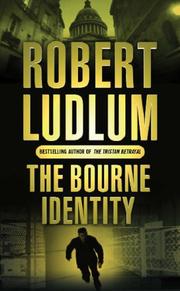
Start with The Bourne Identity. Robert Ludlum wrote exactly three Bourne novels and they form a complete, closed trilogy, which is most of what a Bourne reading order needs to tell you. Everything published afterwards is by a different author writing under his name.
Set the films aside before you open it. Ludlum's Bourne is older, married, and more damaged than the screen version, and the target he hunts across the whole trilogy is a rival assassin the films discard entirely — a fictionalised version of the real terrorist Carlos the Jackal, which anchors the books in 1970s and 1980s European politics rather than in post-9/11 surveillance. The amnesia premise also works differently on the page: recovered memories arrive as fragments of language and reflex, and reconstructing an identity is the actual plot rather than a set-up for action sequences.
The original trilogy
The Bourne Identity, then The Bourne Supremacy (Bourne Trilogy, Book 2), then The Bourne ultimatum. The second is set years later in Hong Kong and built on an impostor premise that only functions once you know the first book's ending — it is the middle of a genuine arc rather than a repeat. The third is Ludlum's last word on the character and closes the thread begun in the first novel. The trilogy ends there and you can stop with a clear conscience.
Two honest warnings. The books carry their period plainly: Marie's role in the first novel is shaped by 1980 assumptions about what a woman in a thriller is for, and the Asian settings of the second trade in broad national types. And Ludlum's prose is not the attraction — exclamation marks, italics, characters announcing their own motivations. If you cannot make peace with it in the first fifty pages, do not continue.
If the trilogy worked, follow the author
The honest next step after a finished trilogy is the writer rather than the character. The Scarlatti Inheritance is Ludlum's first novel and the clearest view of the machinery he reused for thirty years: a conspiracy older and larger than the protagonist, revealed in stages. The Matarese Circle is the one most often named alongside The Bourne Identity and the closest to it in shape — two enemy agents forced into alliance against a conspiracy that owns both their services. The Holcroft covenant is the purest statement of the Ludlum premise, an ordinary man discovering that his inheritance is a plot; read it for the paranoia rather than the plausibility. The Chancellor Manuscript is tighter and more political, with a smaller conspiracy and more attention to institutions.
Across all four the structure is the same: a competent individual against an organisation that has infiltrated the body meant to police it, with the reveal delayed as long as possible. The Nazi and post-Nazi conspiracies are period pieces of 1970s thriller writing and their historical grasp is loose. These are the books that made his name before Bourne, and they explain why the Bourne premise arrived fully formed.
The continuation novels
Ludlum died in 2001, and every Bourne novel since is by another author. The covers read Robert Ludlum's, which is a brand rather than a byline.
Robert Ludlum's Jason Bourne in The Bourne legacy is Eric Van Lustbader's first and the start of a long run under that authorship. It shares its title with a film that has almost nothing to do with it; the novel and the movie are unrelated stories, and confusing the two is common. Robert Ludlum's The Bourne Betrayal is Van Lustbader's second and the point where his version settles into its own shape — faster, more globe-trotting, less interior than Ludlum's, with much more conventional action plotting.
Robert Ludlum's The Bourne Evolution is Brian Freeman's 2020 handover to a third author and is effectively a fresh start. Freeman's Bourne is contemporary in a way Ludlum's cannot be: social media, disinformation and modern surveillance in place of Cold War tradecraft. It works as an entry point if Van Lustbader's books do not hold you.
Where to stop
After The Bourne ultimatum, if you want only what Ludlum wrote. None of the continuations is required and none alters the original three. Judging a continuation against its original is the real skill this last stage teaches, and it transfers to every posthumous series on the market.
More thriller reading orders on Discover.
Follow the full ordered path here: Bourne Reading Order: Where to Start.