Bourne Reading Order: Where to Start
Robert Ludlum wrote exactly three Bourne novels, and they are a complete, closed trilogy — everything after them was written by other authors after Ludlum's death in 2001. So the reading order question is really two questions: which three books are the real series, and what do you read next. This path answers both, keeping the originals first, offering Ludlum's other best thrillers as the honest next step, and putting the continuations last where they belong.
The original trilogy
BeginnerRead the only three Bourne novels Ludlum wrote, in the order he wrote them, and see how little they resemble the films.
▸ Study plan for this stage
Pace: Six to eight weeks for the three — roughly 535, 680 and 720 pages. Ludlum reads fast in bursts and slowly in the middle; forty pages an evening is realistic. Read The Bourne Identity and The Bourne Ultimatum reasonably close together, since the last book closes a thread opened in the first. The Bour
- Robert Ludlum wrote exactly three Bourne novels and they are a complete, closed trilogy — everything published afterwards is by other authors, and knowing that is most of what a Bourne reading order is for
- The novels are almost nothing like the films: Ludlum's Bourne is older, married, more damaged, and the target he is hunting through the whole trilogy is a rival assassin the films discard entirely
- That antagonist is a fictionalised version of the real terrorist Carlos the Jackal, which anchors the trilogy in 1970s and 1980s European politics rather than in post-9/11 surveillance
- The amnesia premise is used differently on the page: Bourne's recovered memories arrive as fragments of language and reflex, and the reconstruction of identity is the actual plot rather than a set-up for action
- The Bourne Supremacy is set years later in Hong Kong and built on an impostor premise that only functions once you know the first book's ending — it is the middle of a genuine arc, not a repeat
- The Bourne Ultimatum is Ludlum's last word on the character and closes the thread begun in the first novel; the trilogy ends here and you can stop with a clear conscience
- The books carry their period plainly: Marie's role in the first novel is shaped by 1980 assumptions about what a woman in a thriller is for, and the Asian settings of the second book trade in broad national types
- Ludlum's prose is not the attraction — exclamation marks, italics, characters shouting their own motivations — and readers who cannot make peace with it in the first fifty pages should not continue
- How does the novel's Bourne differ from the film's? List four concrete differences beyond plot.
- The Bourne Identity is a book about reconstructing an identity from fragments. What is the first thing Bourne learns about himself, and how does he learn it?
- The Bourne Supremacy depends entirely on the first book's ending. What exactly does the impostor premise require you to already know?
- What does the rival-assassin antagonist give the trilogy that a state agency antagonist would not?
- Where do the period attitudes intrude on the plot rather than sitting in the background?
- Read the first fifty pages of The Bourne Identity and make a decision about the prose. It does not change across three books, and the decision is better made early.
- Keep a list of the memory fragments Bourne recovers and in what order. Ludlum is stricter about this sequencing than his reputation suggests.
- Watch a scene from the first film after reading the corresponding section of the book. The comparison is the clearest possible statement of what each medium wanted.
- Note the halfway point of The Bourne Supremacy and set yourself a page target to get past it. That is where the trilogy loses most of its readers.
Next up: The Bourne story is finished by its own author, so the honest next step is the writer rather than the character.
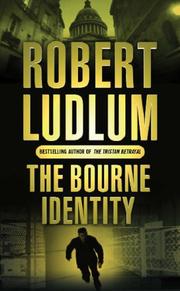
The one everyone means, and the only place to start. The novel's Bourne is older, more damaged and hunting a target the films discard entirely — expect a different story from the one you know.
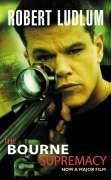
Set years later in Hong Kong and built on an impostor premise that only works once you know the first book's ending. Longer and more convoluted, but the middle of a genuine arc.
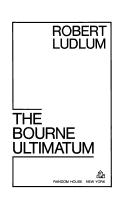
Ludlum's last word on the character and a direct closing of the thread begun in the first novel. The trilogy ends here; stop with a clear conscience.
More Ludlum, if the trilogy worked
IntermediateFollow the author rather than the character, and read the thrillers that made Ludlum's name before Bourne.
▸ Study plan for this stage
Pace: Two to three months for the four, at roughly 360, 600, 500 and 465 pages. Read The Scarlatti Inheritance first and quickly — it is the shortest and the clearest — then space the others out. These do not build on one another, so this is the first stage where reading only two of the four is a perfectl
- This stage follows the author rather than the character, which is what a reader who finished the trilogy actually wants next
- The Scarlatti Inheritance is Ludlum's first novel and the clearest view of the machinery he reused for thirty years — a conspiracy older and larger than the protagonist, revealed in stages
- The Matarese Circle is the Ludlum most often named alongside The Bourne Identity and the closest to it in shape: two enemy agents forced into alliance against a conspiracy that owns both their services
- The Holcroft Covenant is the purest statement of the Ludlum premise — an ordinary man discovers his inheritance is a plot — and should be read for the paranoia rather than the plausibility
- The Chancellor Manuscript is tighter and more political, and shows Ludlum working in a lower key with a smaller conspiracy and more attention to institutions
- Across all four, the recurring structure is the same: a competent individual against an organisation that has infiltrated the body meant to police it, with the reveal delayed as long as possible
- Ludlum's Nazi and post-Nazi conspiracies are period pieces of 1970s thriller writing, and their historical grasp is loose — read them as genre rather than as history
- These are the books that made his name before Bourne, and they explain why the Bourne premise arrived fully formed
- What is the Ludlum machine, stated as a formula? Test your formula against all four books.
- The Matarese Circle pairs two enemies. How does that constraint change the paranoia compared with a lone protagonist?
- The Holcroft Covenant's plot depends on a series of improbabilities. At what point did you stop objecting, and what bought your patience?
- The Chancellor Manuscript is quieter. Does the lower key suit Ludlum, or does it expose what the noise was covering?
- Which of these four is the best novel, and which is the most Ludlum? They are unlikely to be the same book.
- Read The Scarlatti Inheritance first and write the formula down. The other three will confirm or complicate it, and having it in writing makes them far more interesting.
- Pick two of the four rather than all four unless you are genuinely enjoying the run. Completism has no payoff here.
- Note how each book delays its central reveal and what it substitutes in the meantime. Delay management is Ludlum's actual craft.
- Compare the opening chapter of The Scarlatti Inheritance with that of The Bourne Identity. Fourteen years apart, and the architecture is identical.
Next up: You now know Ludlum's own hand well enough to judge what the continuation authors kept and what they replaced.
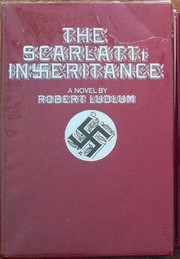
Ludlum's first novel, and the clearest view of the machinery he would reuse for the rest of his career. A short, sharp introduction to his non-Bourne work.
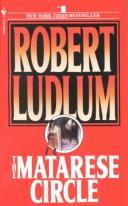
The Ludlum novel most often named alongside The Bourne Identity, and the closest in shape to it — two enemy agents forced into alliance against a conspiracy.
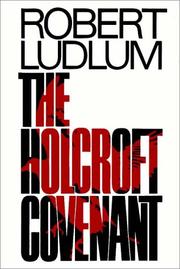
The purest example of the Ludlum premise: an ordinary man discovers his inheritance is a plot. Read it for the paranoia rather than the plausibility.
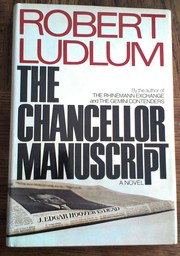
A tighter, more political thriller that shows Ludlum working in a lower key. A good last stop in his own catalogue before the continuations.
The continuation novels
IntermediateUnderstand who has written Bourne since 2004 and sample each hand before committing to a long run.
▸ Study plan for this stage
Pace: Six to eight weeks if you read all three, at roughly 530, 495 and 465 pages. This stage is explicitly a sampling exercise rather than a run: read one Van Lustbader and one Freeman and decide. Reading The Bourne Legacy and The Bourne Betrayal back to back is the fastest way to judge whether that vers
- Ludlum died in 2001, and every Bourne novel after the original trilogy is by a different author writing under his name — the covers say Robert Ludlum's, which is a brand rather than a byline
- The Bourne Legacy, by Eric Van Lustbader, is the first of the continuations and the start of a much longer run under that authorship
- It shares its title with a film that has almost nothing to do with it; the novel and the movie are unrelated stories, and confusing the two is common
- The Bourne Betrayal is Van Lustbader's second and the point where his version settles into its own shape: faster, more globe-trotting, less interior than Ludlum's, with much more conventional action plotting
- The Bourne Evolution, by Brian Freeman, is the 2020 handover to a third author and is effectively a fresh start — it works as an entry point if Van Lustbader's books do not hold you
- Freeman's Bourne is contemporary in a way Ludlum's cannot be: social media, disinformation and modern surveillance replace Cold War tradecraft
- None of the continuations is required, and none of them alters the original trilogy — Ludlum's three books stand complete without them
- Judging a continuation against its original is the actual skill this stage teaches, and it transfers to every posthumous series on the market
- What has Van Lustbader kept from Ludlum, and what has he replaced? Be specific about pacing and interiority.
- Does Van Lustbader's Bourne have the same relationship to his own memory as Ludlum's? If not, what has been lost?
- Brian Freeman restarts the character for a modern threat landscape. Which of Ludlum's premises survive that translation and which cannot?
- Reading a novel branded with a dead author's name: what does the branding promise, and is the promise kept?
- If someone read only the continuations, what would they misunderstand about Bourne?
- Read the first chapter of each of the three continuations before committing to any of them. One hour, and it settles the question.
- Write down three things Ludlum's Bourne does that a continuation Bourne does not. That list is your standard for the rest of the run.
- Check the author's name on the cover of any Bourne novel before buying it. This is the single most useful habit in reading a posthumous series.
- Decide explicitly where you are stopping, and write it down. There is no ending ahead — the continuations continue — so the stopping point has to be yours.
Next up: You have Ludlum's complete trilogy, his own best thrillers, and a working judgement about the books written under his name since.
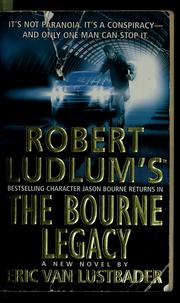
The first novel written after Ludlum's death, and the start of a much longer run under his name. Read it to decide whether a different author's Bourne is one you want to follow.
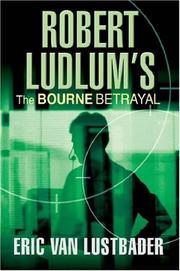
The second of Van Lustbader's, and the point at which his version of the character settles into its own shape — faster, more globe-trotting, less interior than Ludlum's.

The 2020 handover to a third author and effectively a fresh start, so it works as an entry point if the Van Lustbader books do not hold you.
Discussion
Keep reading
Paths that share books, cover the same subject, or open a related topic.