Japanese American internment: books to read, in order
In 1942 the United States removed roughly 120,000 people of Japanese ancestry from the West Coast and held them in guarded camps for the duration of the war. About two thirds were American citizens, and not one was ever charged with espionage or sabotage. This path takes the subject in five movements: a narrative overview and a first-person account to establish what happened, then the decision-making that produced Executive Order 9066, then the camps as the people in them recorded them, then the legal history through Korematsu to the 1988 redress act, and finally the fiction and the aftermath. Read the memoirs before the legal scholarship — the cases are about specific people, and the arguments read differently once you know what was being argued about. One gap to name at the outset: Michi Weglyn's Years of Infamy, the 1976 book by a former camp inmate that first forced the suppressed government evidence into public view, does not resolve in our catalogue and so is not listed below despite being one of the most important works on the subject.
What happened
BeginnerGet the narrative of the removal and the camps end to end, from a general history and from one family who lived it.
▸ Study plan for this stage
Pace: One to two weeks. Richard Reeves's Infamy (193 pages) is a journalist's narrative written for a reader who knows nothing, and goes quickly; Jeanne Wakatsuki Houston and James D. Houston's Farewell to Manzanar (176 pages) is shorter still and can be read in two sittings. Read them in that order and c
- The scale and the composition: roughly 120,000 people, about two thirds of them United States citizens by birth
- No charges, no trials, no findings of espionage or sabotage at any point, before or since
- The sequence — Pearl Harbor, the FBI's immediate seizure of community leaders, Executive Order 9066, the exclusion orders, the assembly centres, the ten camps
- Assembly centres versus relocation centres: racetracks and fairgrounds first, purpose-built camps second
- Issei and Nisei — immigrant parents barred from citizenship by law, and their American-born children who held it
- The 442nd Regimental Combat Team fighting in Europe while the soldiers' families remained behind wire
- What a policy history cannot supply, and why the memoir comes immediately after the narrative
- What is the chronology from December 1941 to the first removals, and how few weeks does it cover?
- How many of those removed were citizens, and why does that number do more argumentative work than any other on this path?
- What happened to property — homes, farms, businesses, boats — and how much notice did families get?
- What does Farewell to Manzanar show about the years after release that Reeves's account cannot?
- Why does the Houston memoir spend so much of its length outside the camp?
- Build a dated timeline from Reeves, from Pearl Harbor to the closing of the camps, and leave room to extend it — you will be adding legal dates in stage four and redress dates at the end.
- Mark on a map the ten camps Reeves names and where each drew its population from. The distances between the exclusion zone and the sites are part of the argument.
- Read the Houston memoir's account of the Wakatsuki family before the removal and after the release, and list what specifically did not come back. That list is the subject of the last stage.
- Write down the three things about this history you did not know before this stage. Check them against the primary accounts in stage three.
Next up: You know what was done; the next stage asks who ordered it, on what evidence, and how much of that evidence was known at the time to be false.

The best single-volume narrative account: the panic after Pearl Harbor, the removal orders, the assembly centres, the camps, and the men of the 442nd fighting in Europe while their families were behind wire. Reeves is a journalist rather than a specialist and writes for a reader who knows nothing, which is exactly what a first book should do.
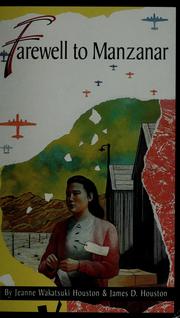
The classic memoir, written with her husband: a seven-year-old girl's camp at Manzanar and, more unusually, the long unravelling of her family afterwards. Read it immediately after Reeves — it is short, and it supplies the interior experience that no policy history can.
How the decision was made
BeginnerTrace the removal back to the people who ordered it, and understand how much was racism, how much was military judgement, and how much was known to be false at the time.
▸ Study plan for this stage
Pace: Three to four weeks. Roger Daniels's Prisoners Without Trial (154 pages) is the compact standard survey and is best read first, in a couple of sittings, to get the chronology and the numbers straight; Daniels's earlier Concentration Camps USA, which forced the argument about what to call these place
- Executive Order 9066 as a delegation of authority rather than an order to imprison anyone specific, and what that delegation permitted
- Robinson's case from Roosevelt's own decades of prior writing about Japanese immigration — the reason it is no longer possible to treat 9066 as reluctantly signed on military advice
- The military-necessity claim, and the intelligence assessments that contradicted it before the order was signed
- Daniels on nomenclature: what these places should be called, and why the choice of word is itself a historical argument
- Hawaii as the control case — a far larger Japanese American population, closer to the fighting, not mass-removed
- Robinson's continental frame: Canadian removals and the Latin American deportees seized and shipped to United States custody
- Economic motive alongside racial hostility — West Coast agricultural interests and who acquired the land
- What does Executive Order 9066 actually say, and who does it name?
- What is Robinson's strongest single piece of evidence about Roosevelt's own views, and what is the best counter-argument?
- Why was there no mass removal in Hawaii, and what does that comparison do to the military-necessity claim?
- What terms does Daniels reject, which does he use, and what turns on the choice?
- What did Canada and the Latin American deportations involve, and how does including them change the story an American-only account tells?
- Read the text of Executive Order 9066 itself — it is short — and then read Robinson's chapter on its drafting. Underline every place the order's language is broader than the policy that followed, and every place it is narrower.
- Set Hawaii and the West Coast side by side on one page: population, proximity to the fighting, economic role, and what was done in each. That table is the clearest test of the official justification.
- Take Daniels's discussion of terminology and rewrite one paragraph of your stage-one timeline using each competing term in turn. Note what changes.
- Add to your timeline every decision point Robinson identifies between December 1941 and the exclusion orders, with the name of the person who made it.
Next up: Having established how the decision was reached, the next stage stops using officials as sources and turns to the record made by the people it was made about.
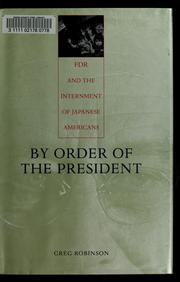
Roosevelt's own role, argued from his papers and his decades of prior writing about Japanese immigration. The book that made it impossible to treat Executive Order 9066 as something the President reluctantly signed on military advice.
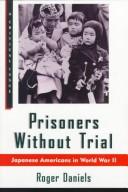
The compact standard survey by the historian who did more than anyone to establish the field. Short, authoritative, and the best place to get the chronology and the numbers straight. Daniels's earlier Concentration Camps USA, which forced the argument about what to call these places, also resolves here.
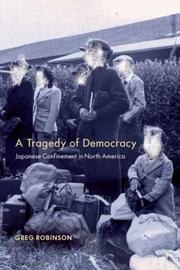
The continental view — the United States, Canada, Mexico and Latin American deportations treated as one North American event. It corrects the impression left by every American-only account that this was a uniquely American decision, and it is the most complete scholarly treatment available.
The camps, as the people in them recorded them
BeginnerRead and look at the primary record — memoir, drawing, photograph and document — made by the incarcerated themselves and by the photographers sent to cover them.
▸ Study plan for this stage
Pace: Four to five weeks. These are primary sources by participants, not histories. Miné Okubo's Citizen 13660 (209 pages) is a hundred and ninety-odd drawings with a few lines of caption each and can be read in an evening, though it repays going back through slowly. Monica Sone's Nisei Daughter (238 page
- Okubo's Citizen 13660 as the first published account of camp life by anyone who was in one — 1946, before any history existed
- Drawing as documentation: what a caption plus an image records that prose does not, and why Okubo drew herself into almost every frame
- Three positions on the same camps — a child at Manzanar, a young woman from Seattle at Minidoka, an adult university student at Tanforan and Topaz
- Sone's 1953 tone as historical evidence in itself, about what could be said in the early fifties and to whom
- The separate FBI detention of Issei men, which splits families before the mass removal even begins
- Lange photographing the removal on government commission, and the government impounding the results because of what they showed
- The gap in the record where Weglyn's Years of Infamy belongs — the survivor who became the scholar who found the documents
- What does Okubo's decision to appear in nearly every drawing do to the reader's position?
- Sone, Uchida and Houston were a young woman, a university student and a small child. Where do their accounts of the same system diverge most?
- What is different about Nisei Daughter's tone, and what does its 1953 publication date explain about that?
- Which of Lange's photographs was suppressed, and what does the commentary say the objection was?
- What does it change to read the memoirs before the court cases rather than after?
- Go through Citizen 13660 once for the images alone with the captions covered, then again reading only the captions. Note the half-dozen drawings whose meaning changes entirely between the two passes.
- Take one subject — the latrines, the food, the queues, the dust — and find how each of Okubo, Sone and Uchida handles it. Three accounts of one detail is the most efficient way to see what each writer chose to record.
- In Impounded, pick five photographs and write what you would have assumed each one showed without the Gordon and Okihiro commentary; then read the commentary and note the corrections.
- List what the Weglyn gap costs this stage specifically — the strand running from inmate to researcher to the documents — and note where in stage four that missing work resurfaces in Irons's findings.
Next up: With the camps documented from inside, the wartime court cases stop being abstractions about executive power and become arguments about the people you have just been reading.
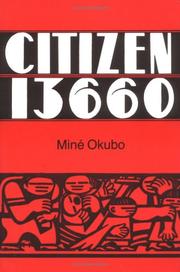
Published in 1946, and the first published account of camp life by anyone who was in one: a hundred and ninety drawings by an artist at Tanforan and Topaz, each with a few lines of caption. The horse stalls, the queues, the dust, the boredom. Nothing else conveys the texture so directly.
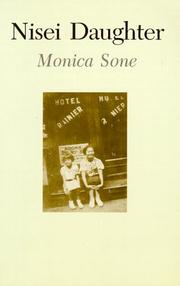
A Seattle childhood, the hotel her family ran, and then Minidoka — written in 1953, when almost nobody wanted to hear it. Its lightness of tone is itself historical evidence about what could be said in the early fifties.
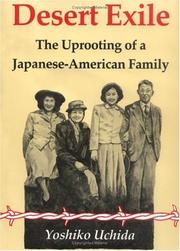
Tanforan and Topaz again, but from an adult university student's perspective rather than a child's, and much sharper about the loss of her father to separate FBI detention. Read it after Okubo and Sone; the three together give you the range of what one camp looked like from three positions.

Dorothea Lange's photographs of the removal, commissioned by the government and then impounded by it because they showed too clearly what was being done. Gordon and Okihiro's commentary explains what each image is and why it was suppressed. Look at the pictures before reading the legal stage.
The law, and the reckoning
IntermediateFollow the wartime cases and the forty-year path to redress, including the discovery that the government had lied to the Supreme Court.
▸ Study plan for this stage
Pace: Five to six weeks, and the reading gets heavier. Peter Irons's Justice at War (432 pages) is legal history and takes two to three weeks; Irons is not a neutral observer of his own story — the suppressed intelligence reports he describes finding in government files are the ones he found, and that dis
- The three wartime cases — Hirabayashi, Yasui, Korematsu — and what each actually tested: curfew, then exclusion, but never detention itself
- The Ringle report and related intelligence assessments, which concluded there was no mass disloyalty and were withheld from the Supreme Court
- Coram nobis: the writ used in the 1980s to vacate the wartime convictions on the ground of government misconduct, and what it did and did not overturn
- Kashima's separate system — men seized within hours of Pearl Harbor and held under Justice Department and Army custody, distinct from the War Relocation Authority camps
- The loyalty questionnaire and its two decisive questions, which split families and produced the segregation of those who answered no
- The commission's finding: race prejudice, war hysteria, and a failure of political leadership — the wording that made the 1988 Civil Liberties Act possible
- A government report as a historical source: what an official finding can do that a monograph cannot
- What did Korematsu actually hold, and what did it carefully avoid holding?
- What did the Justice Department know when it argued military necessity, and who made the decision to withhold it?
- What is the difference between the men Kashima writes about and the families in the WRA camps, in legal authority, duration and conditions?
- What did the two key loyalty questions ask, and why were they impossible for many Issei to answer as intended?
- What did the coram nobis petitions achieve, and what remained legally unresolved afterwards?
- Why did redress take until 1988, and what changed in the intervening decades?
- Read the Korematsu majority and Murphy's and Jackson's dissents alongside Irons's chapter on the case, and mark every factual assertion in the majority opinion that Irons shows was contradicted by material the Court was not given.
- Read the summary and conclusions of Personal Justice Denied and extract the commission's chain of findings as a numbered list. That list is the legal skeleton of everything in stages one through three.
- Find the text of the two loyalty questions and write out how a non-citizen Issei parent and a citizen Nisei son would each have to answer them. The trap is visible once the two are on the same page.
- Add to your timeline the case dates, the coram nobis petitions, the commission report and the 1988 Act. Then look at the gap between the last camp closing and the first apology.
- Set Kashima's separate detention system beside Irons's cases and note which of the men Kashima writes about had any court hearing at all.
Next up: The law is settled and the apology has been made; the last stage is about what none of that undid, in the novel that could not be spoken about and the history of the men who enlisted out of the camps.
The legal history of Hirabayashi, Yasui and Korematsu — and the book that came out of Irons finding, in government files, the suppressed intelligence reports showing the Justice Department knew its military-necessity claim was false. That discovery led directly to the 1980s coram nobis petitions that vacated the convictions.
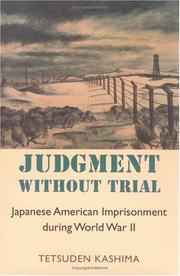
The other incarceration: the men seized by the FBI within hours of Pearl Harbor and held in Justice and Army camps under a separate system, often for years and apart from their families. Almost every general account leaves this out, and Kashima is the reason it is now part of the record.
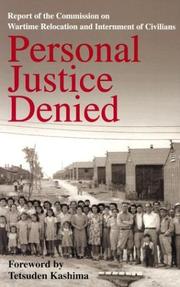
The 1982 congressional commission report, which concluded that the removal was caused by race prejudice, war hysteria and a failure of political leadership, and which produced the apology and reparations of the 1988 Civil Liberties Act. A government document rather than a book, and the most consequential text on this path — read at least its summary and conclusions.
Fiction and aftermath
IntermediateSee what the camps did to people afterwards, in the novel that made the subject unspeakable and the history of the men who enlisted out of them.
▸ Study plan for this stage
Pace: Three to four weeks. John Okada's No-No Boy (260 pages) is short but slow going — it is an angry, formally rough novel and reads best a chapter at a time. Read it only after stage four, because the whole book turns on the loyalty questionnaire and Okada does not explain it. Daniel James Brown's Faci
- The no-no boys: men who answered no to the questionnaire's two key questions and the prison sentences and community ostracism that followed
- Okada's reception — the novel sold almost nothing in 1957, he died believing it forgotten, and it is now the central literary work on the subject
- Why a novel could say in 1957 what the community could not say to itself, and why it was unwelcome for doing so
- The 442nd Regimental Combat Team: volunteers from behind wire, and the most decorated American unit of its size
- Service and resistance as two answers to the same coercion, and Brown's decision to carry a draft resister alongside the soldiers
- Aftermath as the real subject — what happened to families, property, marriages and standing after 1945
- Why the fiction comes last on this path rather than first
- What are Ichiro's actual reasons for having answered no, and does Okada endorse them?
- Why does the Japanese American community in the novel reject him more sharply than white Seattle does?
- What does Okada's prose style — the repetitions, the shouting — do that a more polished novel would not?
- How does Brown handle the resister alongside the soldiers, and does the book take a side?
- Does military service settle the question the incarceration raised, and does either book think it does?
- Having read the whole path: which single book would you give someone who will read only one, and why?
- Reread the loyalty questions you wrote out in stage four immediately before opening No-No Boy, then mark every page where Ichiro's family, friends or enemies invoke them without explanation.
- Track Ichiro's encounters with other Nisei — the veteran, the drinker, the returning soldier — and note what position each represents. Okada builds the argument as a series of confrontations rather than a thesis.
- In Facing the Mountain, follow one soldier's family from the removal to the end and mark every point where the war and the camp intersect in the same paragraph.
- Return to the list you made in stage one of what did not come back for the Wakatsuki family, and check it against Okada's family and Brown's. The overlap is the aftermath these books exist to record.
- Write a one-page reading list of your own for someone starting this subject tomorrow, in order, with reasons — and include Weglyn's Years of Infamy, which this catalogue could not supply.
Next up: The path ends with the service and the refusal held together rather than reconciled, which is as close to a settlement as the subject allows.
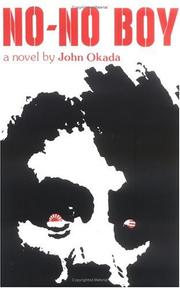
The 1957 novel about a young man who answered no to the loyalty questionnaire's two key questions, refused the draft, and comes home from prison to a community that will not have him. It sold almost nothing, Okada died believing it forgotten, and it is now the central literary work on the subject. Read it knowing the questionnaire, which the earlier books explain.
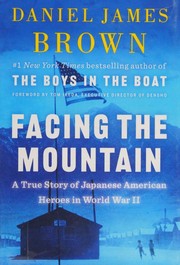
The 442nd Regimental Combat Team, whose soldiers volunteered from behind the wire and became the most decorated unit of its size in American history, told alongside one draft resister. Recent, narrative and unashamedly moving, and the right closing book: it holds both the service and the resistance without pretending either settles the question.
Discussion
Keep reading
Paths that share books, cover the same subject, or open a related topic.