Two misconceptions get in the way of Islamic art immediately. The first is that it is a single style — as though a ninth-century Abbasid lustreware bowl, a Timurid manuscript page, and an Ottoman mosque are variations on one theme rather than the products of distinct courts, centuries, and continents. The second is that everything follows from a prohibition on figural imagery, which is a rule of variable force that was frequently and beautifully ignored, as any Persian miniature demonstrates.
Read in the right order and both misconceptions fall away. Start with a broad visual survey so the material is in your eye, then read the theoretical work on ornament, then go deep on the two areas with the strongest literature — architecture and the arts of the book — and only then take on the dense scholarly synthesis.
Get the material in your eye
Begin with Islamic art by Luca Mozzati, a large illustrated survey covering the geographic and chronological sweep from Spain to India. Its value is coverage and image quality rather than argument: you need to have seen a lot of objects before the analytic books mean anything. Move through it slowly, paying attention to date and place captions.
Then The mediation of ornament by Oleg Grabar, the most important theoretical book on the path. Grabar asks what ornament actually does — how geometry, vegetal design, writing, and architecture function as intermediaries between viewer and object — and in doing so treats decoration as a carrier of meaning rather than as surface. It is demanding and it reorganizes how you look at everything in Mozzati.
Architecture
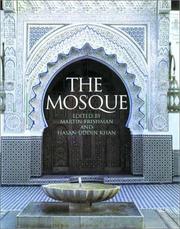
The mosque edited by Martin Frishman and Hasan-Uddin Khan surveys the building type across regions and centuries, showing how a common set of functional requirements produced radically different forms in the Arab world, Iran, Anatolia, South Asia, Southeast Asia, and sub-Saharan Africa. It is the right first architecture book because the regional comparison is built into its structure.
Follow it with Studies in medieval Islamic architecture by Robert Hillenbrand, a collection of specialist essays from the leading scholar of the field. This is where you see close analysis of specific monuments and building types, and it assumes the general picture that Frishman provides.
The arts of the book
Persian painting by Basil Gray remains a standard introduction to the miniature tradition — the Ilkhanid, Timurid, and Safavid schools, workshop practice, and the relationship of image to text. It also settles the figural question definitively by showing you what was actually produced.
The arts of the book in Central Asia extends that into manuscript production more broadly — calligraphy, illumination, binding, and the courts of Herat and Samarkand where the book was arguably the supreme art form. Reading the two together makes clear that painting was one component of an integrated object rather than a freestanding picture.
Synthesis and one region in depth
The art and architecture of Islam 650-1250 by Ettinghausen, Grabar and Jenkins-Madina is the scholarly standard for the early period and the densest book here — the formation of an artistic tradition from late antique and Sasanian roots through the Abbasid, Fatimid, and Seljuq centuries. Taken first it is a wall of unfamiliar names; taken after the survey and the architecture books, it is the volume that ties everything together.
Close with The Arts of Persia edited by R. W. Ferrier, a regional deep dive covering Persian architecture, painting, ceramics, metalwork, textiles, and carpets across a very long span. Persia is a reasonable place to specialize first because its material is exceptionally well documented and it influenced production from Anatolia to Mughal India.
A note on the label itself: art historians argue about whether "Islamic art" is a coherent category at all, given that it groups objects by religion across cultures that had little else in common, and includes work made by and for non-Muslims. Keep that argument in view. Related subject hubs sit at Islamic art.
Follow the full path and the millennium will start to sort itself into places and periods.
Follow the full ordered path here: How to Learn Islamic Art From Books, in Order.