Irish food carries an unfair reputation abroad, built on a century of emigrant nostalgia and boiled-everything jokes. What the tradition actually is: dairy of exceptional quality, sea and river fish, pork and lamb, potatoes and root vegetables, soda breads leavened with buttermilk rather than yeast, and a small repertoire of methods applied carefully. It is ingredient-led cooking, which means it is unforgiving — there is no sauce to hide a mediocre piece of fish behind.
That shapes the reading order. Learn the canonical dishes and the regional and historical logic behind them first. Then the older preserving and handling skills that the canon assumes. Then the festive cooking that concentrates the tradition. Then the house style of the school that has done most to define modern Irish cooking.
The definitive volume
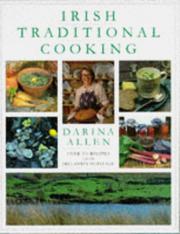
Start with Irish Traditional Cooking by Darina Allen. It is the standard reference and the most thoroughly researched book on the subject in print — soda and wheaten breads, colcannon and champ, bacon and cabbage, Irish stew, seafood chowder, black and white pudding, brack, and the preserves and dairy work around them. Allen collected recipes and testimony from cooks across the country, so the book carries regional and historical context alongside the method, and it distinguishes what is genuinely traditional from what is recent invention. Cook a dozen recipes from it before moving on; the soda bread alone will teach you more about buttermilk chemistry than a chapter of theory.
The skills the canon assumes
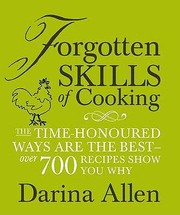
Then Forgotten Skills Of Cooking, also Allen, which is the book for everything the recipes take for granted: butter and soft cheese making, curing bacon, smoking, jam and chutney setting, foraging, keeping hens, growing and storing vegetables, and using the whole animal. It is closer to a homesteading manual than a cookbook in places, and it is where Irish cooking's self-sufficiency logic becomes visible. It also transfers directly to any ingredient-led cuisine, whatever country you are cooking in.
The festive table
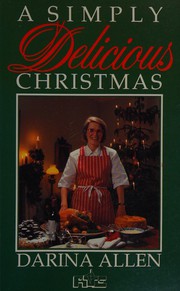
A simply delicious Christmas is Allen again, narrower and more useful than it sounds. Irish festive cooking is where the tradition concentrates — spiced beef, roast goose, ham, mince pies, the Christmas cake and pudding that need weeks of feeding, and the sequencing that lets one cook produce all of it on one morning. Read it for the timelines and the make-ahead logic as much as for the recipes.
The house style
Close with The Ballymaloe cookbook by Myrtle Allen, the elder Allen and the originator of the whole modern Irish food movement. Written from the country-house restaurant in Cork that put local, seasonal Irish produce at the center of serious cooking, it is quieter and more restrained than the later books, with a strong sense that the cook's job is to interfere as little as possible with a very good ingredient. Reading it last, after the traditional canon and the underlying skills, lets you see what a coherent point of view added to the raw material.
Practical notes
Three sourcing issues matter more than any technique here. Real buttermilk, cultured rather than the acidified supermarket kind, changes soda bread completely. Irish butter and cream have a higher fat content than many alternatives, which affects both texture and flavor in the dairy-heavy dishes. And potatoes are not interchangeable — the floury varieties the tradition assumes behave nothing like waxy ones in champ or in a stew. Substitute knowingly rather than by accident.
This is a shorter path than most on ReadingSherpa, and deliberately so; the tradition is compact and these four books cover it well without repetition. If you want more national cuisines, browse the catalog for adjacent paths.
Cook them in this order and Irish food stops being a punchline. Follow the full path to keep the sequence.
Follow the full ordered path here: Best Irish Cookbooks, in the Order to Cook Them.