Almost every stuck chess player is stuck for the same reason: they spent their time on the wrong thing, in the wrong order. Beginners memorize opening lines they never reach; club players collect strategy books while hanging pieces to simple tactics. Chess improvement has a genuine prerequisite structure, and ignoring it is why people plateau for years. The good news is that the order that actually works is well understood.
Reading ORDER matters here more than in almost any subject, because a strategy masterpiece is useless if you are still losing games to two-move combinations.
Tactics first, always
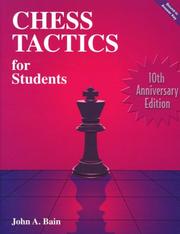
Start by not losing pieces. Chess Tactics for Students by John Bain is a clean workbook of the basic patterns — forks, pins, skewers — that decide the vast majority of amateur games. Drilling tactics is the single highest-return activity in chess, and it comes first for a reason. Reinforce the thinking with Logical Chess, Move by Move by Irving Chernev, which explains every single move of complete games in plain language, teaching you to reason instead of guess.
Build real fundamentals
Now the foundations of good play. Chess fundamentals by Jose Raul Capablanca, written by one of the most naturally gifted players ever, teaches sound principles with beautiful clarity. Then step into strategy proper with The Amateur's Mind by Jeremy Silman, which diagnoses exactly how club players think wrong and retrains you around imbalances — arguably the most useful strategy book for an improving adult.
Deepen your strategic understanding
With fundamentals in place, go deeper. How to reassess your chess is Silman's fuller, more systematic treatment of the same imbalance method, and this is the place to be blunt about an overlap: it and The Amateur's Mind teach one framework at two levels of depth. Read the shorter diagnostic book first if you are under roughly 1400 and the bigger one if you are past it, but do not work through both back to back — you will be reading the same ideas twice.
Pawn structure chess by Andrew Soltis teaches you to understand positions through their pawn skeletons, a concept that quietly explains most middlegame plans and travels straight into the openings you play. For the ambitious, My System (Chess Classics) by Aron Nimzowitsch is a demanding classic that reshaped modern positional thinking; read it once you have the vocabulary to appreciate it, not before.
Openings, in their proper place
Openings belong here — late — and in one book, not twenty. Fundamental chess openings by Paul van der Sterren is the right one: a survey of every major opening explained by idea rather than by memorised move order, so you learn what each system is trying to do. Use it as a reference to understand the positions you keep reaching, not as a repertoire to memorise. That distinction is most of what separates improving players from players who have simply read more.
Finish where games are decided
Endgames win games, and most amateurs neglect them. Silman's complete endgame course by Jeremy Silman is ingeniously organized by rating level, so you learn exactly what you need for your strength and no more. It is the perfect capstone: concrete, immediately useful, and the fastest way to stop drawing or losing won positions.
Dvoretsky's Endgame Manual sits behind it as the reference of record, and it is genuinely brutal — written for masters, dense with analysis, and widely admitted to be more owned than read. Buy it when Silman stops answering your questions, not before.
Two books about the training itself
Two titles in this path are not about chess positions at all. Think Like A Grandmaster by Alexander Kotov is the famous attempt to describe how strong players calculate — the analysis tree, candidate moves, the discipline of not going back. Parts of it have been argued against for decades, which makes it a better book to think with than to obey. Pump Up Your Rating by Axel Smith is the modern counterpart: a Swedish grandmaster's account of what actually produced measurable rating gains, including the unglamorous parts. If you have read plenty and improved little, that is the diagnosis you need.
How to actually improve
Solve tactics puzzles daily, even ten minutes; it compounds like nothing else. Play slow games with enough time to think, then analyze your own losses honestly before consulting an engine — your mistakes are your curriculum. Study whole annotated games to absorb how strong players plan. And spend far less time memorizing openings than your instinct suggests; understanding a few setups deeply beats a shallow repertoire. Real improvement is a matter of consistent practice over months, and a coach or strong opponents will speed it up in ways a book cannot.
Ready to train in order? Follow the full reading path, explore the subject hub, or browse related strategy paths.