Chess strategy: openings, tactics & real improvement
This curriculum takes an intermediate chess player from shaky opening knowledge and pattern recognition through deep strategic understanding and serious study methodology. Each stage builds on the last: first sharpening tactical vision and core principles, then mastering strategic thinking and opening theory, and finally developing the grandmaster-level study habits and endgame precision that separate strong club players from true competitors.
Sharpen Your Weapons: Tactics & Principles
IntermediateBuild a reliable tactical eye and internalize the opening principles that underpin every good chess game, giving you a concrete framework before diving into deeper strategy.
▸ Study plan for this stage
Pace: 8–10 weeks total. Weeks 1–4: "Chess Tactics for Students" (Bain) — work through ~10–15 tactical puzzles per day, roughly 2–3 puzzle sets per session, 5 days/week. Weeks 5–10: "Chess Fundamentals" (Capablanca) — read ~8–12 pages per day at a measured pace, replaying every annotated game and position
- The seven core tactical motifs in Bain's framework: forks, pins, skewers, discovered attacks, double checks, removing the defender, and back-rank mates
- Pattern recognition as a trainable skill — drilling the same motif repeatedly until the visual pattern is spotted instantly
- Capablanca's principle of piece activity: every move must improve the position of a piece or weaken the opponent's
- Control of the center (e4, d4, e5, d5) as the foundation of sound opening play
- Piece development before pawn advances — getting knights and bishops out before launching attacks
- King safety: the obligation to castle early and avoid leaving the king in the center
- The endgame-first philosophy from Capablanca — understanding basic K+P and R+P endings before memorizing openings
- Connecting tactics to strategy: a tactic only works because of an underlying positional weakness — Capablanca's games illustrate this link repeatedly
- From Bain's puzzle sets, can you identify which tactical motif is at work within 30 seconds of seeing a position, and name the exact sequence of moves that wins material or delivers mate?
- What are the six classical opening principles Capablanca outlines in Chess Fundamentals, and why does he rank king safety above early pawn advances?
- How does Capablanca use the concept of 'superior minor piece' — and in which types of positions does he prefer the bishop over the knight, or vice versa?
- After completing Bain's book, can you solve a back-rank mate combination and a double-attack fork in an unfamiliar position without hints?
- How does Capablanca's endgame-first teaching method change the way you evaluate middlegame piece trades?
- What is the relationship between a tactical opportunity and a positional mistake — i.e., why does Capablanca argue that tactics flow from good (or bad) strategy?
- Blind solve & write: Cover Bain's solution page, write your candidate moves on paper, then check — track your accuracy rate per motif category across all four weeks to spot your weakest pattern
- Motif flashcard drill: After finishing each chapter of Bain, create a physical or Anki flashcard for every puzzle you got wrong, with the motif label on the front and the key move on the back — review daily
- Board replay of Capablanca's games: Set up every illustrative game from Chess Fundamentals on a real (or digital) board, play through it move by move, pause before each of Capablanca's moves and predict it, then read his explanation
- Opening principle checklist: After every training game you play online or OTB, run through Capablanca's six opening principles as a post-game checklist — mark which principles you violated and how the game punished you
- Endgame lab from Chess Fundamentals: Isolate the K+P and R+P endgame positions Capablanca presents, set them up, and try to find the winning plan before reading the prose — repeat until you can solve each from memory
- Tactics-to-strategy journal: For 10 puzzles from Bain, write one sentence explaining the positional mistake the losing side made that allowed the tactic — then find a Capablanca game where the same type of weakness appears
Next up: By internalizing Bain's tactical patterns and Capablanca's opening and endgame principles, the reader now has the combinational vision and positional vocabulary needed to engage meaningfully with deeper strategic concepts — such as pawn structure, long-term planning, and prophylaxis — that form the core of the next stage.
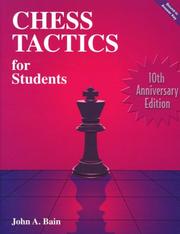
A focused, pattern-based tactics workbook that drills the most common motifs (forks, pins, skewers, discovered attacks) through hundreds of positions — essential before studying strategy, because tactics are the foundation everything else rests on.
Written by a World Champion, this slim classic teaches opening principles, piece coordination, and basic endgames with crystal clarity; it resets any bad habits an intermediate player has accumulated and establishes a clean conceptual baseline.
Strategic Vision: Thinking Like a Strong Player
IntermediateDevelop a genuine strategic vocabulary — pawn structure, weak squares, piece activity, imbalances — so you can form coherent plans rather than moving reactively.
▸ Study plan for this stage
Pace: 12–16 weeks total, roughly 5–6 days/week of study. Week 1–5: My System (~20–25 pages/day, paired with board analysis); Week 6–10: How to Reassess Your Chess (~25 pages/day, with imbalance journaling after each chapter); Week 11–16: Pawn Structure Chess (~15–20 pages/day, slower pace to deeply study
- Nimzovich's core principles: blockade, overprotection, and prophylaxis — understanding not just what to do but why your opponent must be restrained (My System)
- The concept of the passed pawn as a 'criminal' that must be blockaded, and the ideal blockading piece (My System)
- Outposts and the 'hole': identifying squares that can never be attacked by enemy pawns and planting pieces there permanently (My System)
- Silman's theory of imbalances: the seven imbalances (minor piece superiority, pawn structure, space, material, control of a key file/square, lead in development, initiative) as the engine of every plan (How to Reassess Your Chess)
- How to identify the 'worst piece on the board' and improve it as a concrete planning method (How to Reassess Your Chess)
- Thinking in 'fantasy positions' — visualizing the ideal position you want and reverse-engineering a plan to reach it (How to Reassess Your Chess)
- Pawn structure families: the Isolated Queen's Pawn (IQP), the Hanging Pawns, the Carlsbad structure, the Sicilian formations — each carrying its own set of strategic obligations for both sides (Pawn Structure Chess)
- How pawn structure dictates piece placement, minority attacks, pawn breaks, and long-term endgame prospects — structure as the skeleton of every plan (Pawn Structure Chess)
- After reading My System, can you explain what Nimzovich means by 'overprotection' and give an example of a piece or pawn that deserves it in a typical middlegame position?
- Can you list Silman's seven imbalances from How to Reassess Your Chess and, given a sample position, identify which two or three imbalances are most relevant and what plan they suggest?
- From Pawn Structure Chess, what are the key strategic themes — for both sides — in a position featuring an Isolated Queen's Pawn, and when does the IQP become a strength versus a weakness?
- How does Nimzovich's concept of the 'blockade' connect to Soltis's treatment of pawn breaks? Can you describe a structure where preventing a specific break is the top strategic priority?
- Using Silman's 'fantasy position' method, how would you formulate a plan for the side with hanging pawns — and what does the opponent's plan look like in response?
- Can you identify a 'hole' or weak square in a given pawn structure, name the ideal piece to occupy it, and explain why that square is permanently weak?
- My System drill — Blockade spotting: Set up 10 positions with passed pawns (from your own games or a database) and practice finding the optimal blockading piece for each, writing one sentence justifying your choice using Nimzovich's language.
- Imbalance worksheet (How to Reassess Your Chess): After each Silman chapter, take one of your recent slow games, pause at move 15, and write out all seven imbalances as they exist in that position. Then write a 3-sentence plan for each side before continuing the game.
- Fantasy Position journaling: For 5 different middlegame positions from Pawn Structure Chess, draw or diagram your 'fantasy position' — the ideal piece placement you are aiming for — then trace the concrete moves needed to approach it.
- Structure family flashcards: Create one card per pawn structure covered in Pawn Structure Chess (IQP, Carlsbad, Hanging Pawns, Sicilian Dragon, etc.). On the front: a diagram of the structure. On the back: the key pawn break, the minority attack plan if applicable, the ideal piece trades, and the endgame tendency.
- Comparative game study: Find one master game that illustrates each of Nimzovich's three pillars (blockade, overprotection, prophylaxis). Annotate each game in your own words, explicitly labeling the moves that demonstrate the concept — no engine, just your verbal reasoning.
- Blind imbalance test: Have a training partner (or use an online tool) show you a middlegame position for 30 seconds, then hide it. Write down every imbalance you can recall and propose a plan. Compare your answer to Silman's framework and self-grade.
Next up: Mastering strategic vocabulary and pawn-structure thinking from these three books gives you the 'why' behind every move, which is the essential foundation for the next stage — studying concrete openings — where you will see exactly how specific opening choices deliberately create the imbalances and pawn structures you have just learned to evaluate and exploit.

The most influential chess strategy book ever written; introduces prophylaxis, blockade, outposts, and the concept of overprotection — read first in this stage because it defines the language every subsequent strategic author uses.
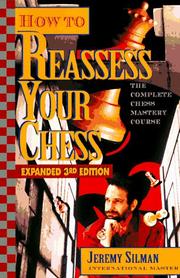
Silman's imbalance method gives you a practical decision-making process for every position; it translates Nimzowitsch's abstract ideas into a concrete thinking system you can apply in your own games immediately.
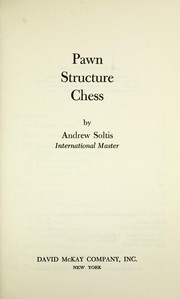
Organizes strategic thinking around pawn formations (Isolated Queen's Pawn, Caro structures, Sicilian formations, etc.), directly connecting opening choices to middlegame plans — the perfect bridge into opening study.
Opening Mastery: Theory Grounded in Ideas
IntermediateUnderstand how to build and study an opening repertoire based on ideas rather than memorization, and gain a working knowledge of the most important modern systems.
▸ Study plan for this stage
Pace: 10–12 weeks total: Week 1–3 — "Logical Chess, Move by Move" (~20–25 pages/day, reading each annotated game slowly and replaying on a board); Week 4–6 — "The Amateur's Mind" (~15–20 pages/day, pausing after each student game to self-assess before reading Silman's critique); Week 7–12 — "Fundamental C
- Every move must have a concrete reason — Chernev's move-by-move method trains the habit of asking 'why?' before accepting any move as natural or obvious
- Imbalances as the engine of chess strategy — Silman's framework (weak squares, piece activity, pawn structure, space, king safety, material) explains WHY openings are played the way they are
- Identifying and exploiting imbalances from the opening — the opening's job is to create a middlegame imbalance that favors your style and strengths
- Piece activity over material — both Chernev and Silman repeatedly show that active, coordinated pieces outweigh static material advantages
- Opening families and their defining ideas — van der Sterren organizes openings by pawn structure and strategic theme, not by rote move-order, making knowledge transferable across variations
- Repertoire building by understanding, not memorization — knowing the 'point' of each opening system allows you to handle deviations and transpositions confidently
- Pawn structure as a long-term commitment — van der Sterren's treatment shows how the pawn skeleton chosen in the opening dictates the middlegame and even endgame plans
- Recognizing amateur thinking patterns — Silman's student-game format exposes the most common strategic errors at the intermediate level, providing a mirror for self-diagnosis
- After playing through a Chernev game, can you articulate the strategic reason behind each of White's and Black's key moves in your own words, without looking at the notes?
- Can you list Silman's seven imbalances and, given a sample position from 'The Amateur's Mind', correctly identify which imbalances are present and which side benefits from each?
- For any of the major opening systems covered in 'Fundamental Chess Openings' (e.g., the Ruy López, the Sicilian, the Queen's Gambit, the King's Indian), can you explain the core strategic idea for both sides in two or three sentences — without reciting move orders?
- Can you explain why two openings that look different on the surface (e.g., the English Opening and certain Sicilian formations) can lead to the same pawn structure and therefore the same strategic plans?
- When an opponent deviates from the 'main line' of an opening you've studied in van der Sterren, can you identify whether the deviation is harmless or challenging, and why, based on principled reasoning rather than memorized refutations?
- Using Silman's imbalance framework, can you look at a position from one of Chernev's games and construct a concrete middlegame plan for the side to move?
- Replay every game in 'Logical Chess, Move by Move' on a physical or digital board, but STOP before reading Chernev's note on each move and write your own one-sentence explanation; then compare it to Chernev's — track how often you agree and where your thinking diverges.
- After finishing 'The Amateur's Mind', go back to 10 of your own recent slow games and annotate them using Silman's seven imbalances: label the imbalance present at each critical moment and judge whether your move improved or worsened your imbalance profile.
- For each opening chapter in 'Fundamental Chess Openings', play at least 3 rapid games (10+5 or 15+10) as BOTH colors in that system immediately after reading the chapter, then review the games asking: 'Did I follow the strategic ideas van der Sterren described?'
- Build a one-page 'Opening Idea Card' for each major system in van der Sterren: write the name, the key pawn structure, White's ideal plan, Black's ideal plan, and one typical tactical motif — no move orders allowed, ideas only.
- Take 5 middlegame positions from games in 'Logical Chess' and 5 from 'The Amateur's Mind', mix them together, and without knowing the source, apply Silman's imbalance checklist to each — then verify your analysis against the book's explanations.
- Once per week, play a slow game (30+30 or longer) using only an opening covered that week in van der Sterren, then write a brief post-game note: which opening idea did you successfully implement, which did you miss, and what would van der Sterren say about your play?
Next up: By internalizing the 'ideas over moves' framework from these three books, the reader has the strategic vocabulary and opening literacy needed to tackle deeper, system-specific works — such as detailed repertoire books or grandmaster game collections organized by opening — where concrete variations and subtleties can now be absorbed meaningfully rather than blindly memorized.
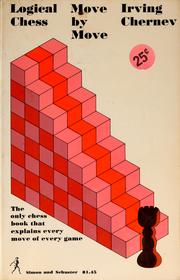
Every single move of 33 complete master games is explained in plain language; reading this first in the opening stage shows you how opening principles flow naturally into middlegame plans, making theory feel logical rather than arbitrary.
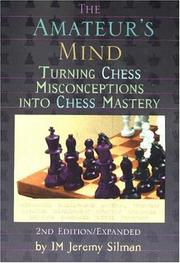
Silman annotates games played by club-level students, exposing the exact misunderstandings intermediates have about openings and plans — a brutally honest mirror that fixes conceptual errors before you cement them into a repertoire.
A single comprehensive reference that explains the ideas, typical plans, and key variations of every major opening system; use it as a guided survey to choose and understand your repertoire rather than as a memorization manual.
Endgame Precision: Converting & Saving
ExpertAchieve confident, technique-level endgame play — knowing theoretical draws and wins cold, and understanding the principles that let you navigate unfamiliar endings over the board.
▸ Study plan for this stage
Pace: 10–14 weeks total. Weeks 1–5: Silman's Complete Endgame Course — work through the chapters matched to your current level (focus on Class D through Master sections), reading ~20–30 pages/day and solving every diagram before reading Silman's explanation. Weeks 6–14: Dvoretsky's Endgame Manual — slower
- King activity and centralization: the king is a fighting piece in the endgame — Silman drills this from beginner chapters onward, and Dvoretsky shows its razor-sharp consequences in complex positions
- Pawn structure mastery: passed pawns, outside passed pawns, pawn majorities, and the concept of the 'most advanced' pawn as a decisive weapon
- The Opposition and related king-and-pawn theory: direct, distant, and diagonal opposition; the Lucena and Philidor positions as the twin pillars of rook endings (covered extensively in both books)
- Rook activity: the principle of the active rook (Philidor defense, cutting off the king, the 7th-rank rook) — Dvoretsky's Manual dedicates an entire chapter to rook-and-pawn endings and demands precise calculation
- Theoretical draws and saves: stalemate tricks, fortress construction, wrong-colored bishop + rook-pawn draws — Silman introduces these; Dvoretsky tests them under pressure
- Minor piece endings: bishop vs. knight, good bishop vs. bad bishop, knight outposts, and the principle of 'same-colored bishop' draws vs. opposite-colored bishop wins — both books treat these in depth
- The principle of two weaknesses: how to create and exploit a second weakness when one is not enough to win — a recurring theme in Dvoretsky's instructional games
- Calculation discipline in endings: Dvoretsky's Manual is built around the idea that endgame errors are almost always calculation errors; learning to count moves, tempos, and pawn races precisely
- After working through Silman's level-appropriate chapters, can you explain why the Philidor position is a draw and the Lucena position is a win — and execute both from memory on a board?
- Can you identify, without hints, whether a king-and-pawn ending is a theoretical win or draw based on opposition, key squares, and pawn structure — as tested in Silman's 'Class B and above' sections?
- How does Dvoretsky's Manual distinguish between 'technique' (converting a known theoretical win) and 'calculation' (navigating an unfamiliar ending) — and which positions in the book exemplify each?
- What are the three most common fortress structures for the defending side in rook endings, and how does the attacker break them according to Dvoretsky?
- Can you explain the 'principle of two weaknesses' with a concrete example from Dvoretsky's Manual, and describe the moment at which the second weakness becomes decisive?
- In a bishop-vs-knight ending with pawns on both sides of the board, what structural features favor the bishop, and which favor the knight — as outlined in Dvoretsky's minor piece chapter?
- Silman drilling ritual: After each chapter section in Silman's Complete Endgame Course, set up every diagram on a physical or digital board and attempt to find the winning/drawing move BEFORE reading the solution. Track your score per chapter to measure improvement.
- Lucena & Philidor cold recall: Without any reference, set up the Lucena position and demonstrate the 'bridge-building' technique, then set up the Philidor position and hold the draw against a strong engine. Repeat until both are automatic.
- Dvoretsky puzzle sessions: Work through Dvoretsky's exercises in timed 20-minute blocks — one position per session. Write down your full calculation tree before checking the answer. Review every line you missed, not just the first move.
- Pawn race counting: Take 10 pawn-race positions from Dvoretsky's pawn chapter and calculate the winner purely by counting moves and applying the 'square of the pawn' rule, then verify with an engine. Focus on positions where a tempo or opposition detail changes the result.
- Engine sparring in theoretical endings: Choose a theoretical rook-and-pawn ending from Dvoretsky (e.g., rook + 2 pawns vs. rook + 1 pawn) and play it out against a strong engine set to a fixed depth, trying to convert or hold. Analyze the game afterward with the engine at full strength.
- Endgame game collection review: Find 5–10 grandmaster games that reached endings covered in Dvoretsky's Manual (rook endings, opposite-colored bishops, knight outposts). Replay them move by move, pausing at each endgame decision point to predict the move before revealing it.
Next up: Mastering endgame precision through Silman and Dvoretsky gives you the concrete winning and drawing targets that make opening and middlegame strategy meaningful — you will now be ready to study advanced opening theory and strategic middlegame play with a clear understanding of what pawn structures and piece configurations you are steering toward.
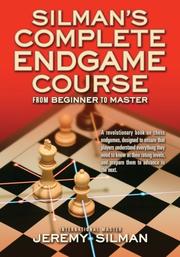
Uniquely organized by playing level, so you study only the endgames relevant to your current strength and progress in order; it makes endgame study feel achievable rather than overwhelming.
The definitive advanced endgame reference, used by IMs and GMs worldwide; after Silman builds your intuition, Dvoretsky provides the rigorous theoretical depth needed to handle any ending at a high level.
The Champion's Study Method: Putting It All Together
ExpertAdopt the deliberate practice habits, game-analysis techniques, and psychological frameworks that strong players use to keep improving — turning everything learned in prior stages into a self-sustaining growth engine.
▸ Study plan for this stage
Pace: 8–10 weeks total: ~3 weeks on "Think Like A Grandmaster" (~20–25 pages/day, revisiting candidate-move trees slowly) + ~5–6 weeks on "Pump Up Your Rating" (~15–20 pages/day with active journaling and game-analysis sessions between sittings). Budget at least 3–4 hours per week at the board alongside r
- The Candidate Moves Method (Kotov): systematically generating and pruning a tree of candidate moves before calculating — never revisiting branches already analyzed
- Tree of Variations: structuring calculation as a disciplined, non-repetitive tree rather than chaotic back-and-forth thinking
- Thinking in Time: managing clock pressure without abandoning the candidate-move discipline — knowing when to trust intuition vs. calculate deeply
- Blunder Anatomy (Kotov): classifying the types of errors (time pressure, psychological, calculation) to diagnose and fix your own weaknesses
- The Woodpecker Method (Smith): high-repetition tactical drilling on a fixed set of puzzles to hardwire pattern recognition at speed
- Deliberate Practice over Passive Study (Smith): distinguishing productive work (analysis, drilling, annotating own games) from comfortable but low-yield activity (blitz, reading without a board)
- Opening Repertoire Construction (Smith): building a lean, principled repertoire based on understanding rather than memorization, tied to middlegame plans you already know
- Self-Analysis & the Training Diary (Smith): annotating your own games without an engine first, identifying critical moments, then using the engine to audit — creating a personal error database
- Can you walk through Kotov's candidate-move procedure step by step and explain why revisiting a branch mid-calculation is a critical error?
- What distinguishes a 'thinking technique' blunder from a 'psychological' blunder in Kotov's classification, and how does each demand a different remedy?
- How does the Woodpecker Method work, what is its theoretical basis for improvement, and how do you know when a puzzle set is 'done'?
- According to Smith, what separates a high-quality training session from a low-quality one — and what common habits do improving players mistake for serious study?
- How should an opening repertoire be structured so that the middlegame plans drive the opening choices, rather than the other way around?
- What is the correct sequence for analyzing your own games (pre-engine vs. post-engine), and what specific questions should you ask at each stage?
- Candidate-Move Logging: For 10 positions from your own recent games, write out your full candidate-move tree on paper before moving any pieces — then compare your tree to Kotov's prescribed method and identify where you skipped branches or revisited nodes.
- Blunder Audit: Review your last 20 rated games, classify every significant error using Kotov's blunder taxonomy (calculation, time, psychological, etc.), tally the results, and write a one-paragraph diagnosis of your dominant error type.
- Woodpecker Cycle: Select a set of 100–200 tactics puzzles (rated just above your comfort zone). Complete the full set, record your score and time, rest 1–2 days, repeat. Do at least 3 full cycles and track improvement in speed and accuracy across cycles.
- Training Diary Launch: Following Smith's framework, start a dedicated chess notebook. After every serious game or study session, write: (1) the critical moment, (2) your thinking process at that moment, (3) what you missed, and (4) the pattern to remember. Review entries weekly.
- Repertoire Blueprint: Choose one opening system for White and one for Black against 1.e4 and 1.d4. For each, write a one-page 'plan sheet' describing the key middlegame ideas, typical pawn structures, and piece targets — before memorizing any move orders, as Smith recommends.
- Weekly Study Audit: At the end of each week, log every chess activity by category (tactics drilling, game analysis, opening study, blitz, reading). Calculate the percentage of time spent on deliberate vs. passive work, and adjust the following week's plan to maximize the deliberate fraction.
Next up: By internalizing Kotov's calculation discipline and Smith's deliberate-practice framework, the reader now has a self-correcting improvement engine — making them ready to tackle deeper positional and endgame mastery, where the same analytical rigour can be applied to more complex, long-horizon strategic problems.
Kotov's analysis tree and candidate-move method is the classic framework for structured over-the-board thinking; reading it now, after you have strategic and tactical grounding, lets you apply it immediately and meaningfully.

A modern, no-nonsense training manual by a Swedish GM that prescribes exactly how to study openings, analyze your own games, use engines correctly, and build a training schedule — the practical capstone that ties the entire curriculum together.
Discussion
Keep reading
Paths that share books, cover the same subject, or open a related topic.