Start with Atonement. A hot day at an English country house in 1935, a thirteen-year-old who misreads what she sees, a lie, and then the retreat to Dunkirk and a wartime hospital. It is his most complete novel: the prose is at its best, the plot mechanism is watertight, and the final section reframes everything you have read in a way that is still argued about. If you read one McEwan, read this one.
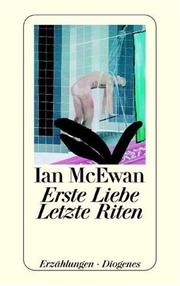
The obvious alternative is to begin at the beginning, with First Love, Last Rites, and that is a genuine mistake. His first books were written to unsettle — the nickname the British press gave him in the 1970s was Ian Macabre — and a reader who opens with the early stories meets a very different and much colder writer than the one who wrote Atonement. This is the rare author where publication order and recommended order come apart, and it is worth saying so directly.
Publication order versus this order
The case for publication order is real: McEwan's career is a legible arc from claustrophobic short fiction to expansive historical novels, and reading it forwards lets you watch the transformation. If you already know you like him, do it that way.
The case against, which is the recommendation here: the early work is not merely darker, it is deliberately repellent in places, and most readers who start there stop there. The middle novels are the ones that earn him his readers. Start at the peak, then decide how far back you want to go.
The core: start here
Atonement first. Then Enduring Love, which opens with a ballooning accident in an Oxfordshire field — probably the best first chapter he has written — and becomes a study of a man being stalked by someone convinced of a love that does not exist.
Then The Child in Time, about a father in the years after his daughter is taken from a supermarket. It is the most emotionally serious of the earlier novels and the point at which his work changed.
Then On Chesil Beach, a 160-page account of a wedding night in 1962 that goes wrong, and of the decades that follow from a single conversation on a beach. It is the shortest route to what he does best, and a reasonable alternative starting point if 400 pages feels like a commitment.
The early, difficult work
First Love, Last Rites, The Cement Garden and The Comfort of Strangers belong together and carry a warning. The stories and the first novel deal in incest, children burying a parent in concrete, and sexual violence; The Comfort of Strangers moves toward a scene of deliberate cruelty in Venice that some readers find gratuitous and others consider the most controlled thing he did before Atonement.
They are short, they are extremely well made, and they are not for everyone. Read them once the later novels have earned your trust, or do not read them at all — nothing in the mature work depends on them.
The later novels
Saturday follows a neurosurgeon through one day in London in 2003, against the backdrop of the Iraq war protest. It is his most divisive book: admirers find it a sustained argument about civilisation and threat, detractors find its central confrontation, resolved by a recitation of poetry, hard to swallow.
The Children Act concerns a High Court judge ruling on whether to order a blood transfusion for a teenage Jehovah's Witness. Machines Like Me is an alternate-history novel with an android in a 1980s Britain where Alan Turing lived. Both are novels of ideas in which the ideas are more interesting than the people, and both are the sort of late work that satisfies existing readers more than new ones.
Lessons is his longest and most historically expansive book, following one man from a boarding school in the early 1960s through the Berlin Wall and beyond. It is baggy by design and the best of the recent novels.
Where to stop
Four books make a complete reading: Atonement, Enduring Love, On Chesil Beach and The Child in Time. That is the range, the technique and the recurring subject — one small misjudgement, and the decades it costs. Everything else is for readers who want more of him rather than the best of him.
Browse more author reading orders on Discover.
Follow the full reading path →