Ian McEwan Reading Order: Where to Start
Ian McEwan began as 'Ian Macabre', writing short, cold, deeply unsettling fiction, and gradually became the most polished English novelist of moral crisis. Reading him in career order works unusually well: start with the early novellas, which are short and show the nerve; move to the major novels where the same precision is turned on love, guilt and class; then the mid-career books; and finish with the late work, where he takes on law, AI and a whole postwar life.
The Early Unsettling Books
BeginnerMeet the young McEwan — clinical, claustrophobic, very short — and understand the cruelty the later novels learned to control.
▸ Study plan for this stage
Pace: 3 weeks. All three are short — 445 pages together. Read First Love, Last Rites (165 pages) one story an evening over a week and a half; the collection is far more disturbing taken in one sitting than it needs to be. Then The Cement Garden (153 pages) and The Comfort of Strangers (127 pages) in a few
- The 'Ian Macabre' method: a calm, clinical, faultlessly correct sentence describing something appalling, with the flatness doing all the work
- Transgression delivered without commentary — incest, murder and cruelty are narrated in the same register as breakfast, and the reader supplies the horror
- Adolescent narrators whose limited understanding is the source of the dread: Jack in The Cement Garden reports what he cannot interpret
- The sealed setting as a device — a house with the neighbours gone, a foreign city with no map — that removes the ordinary corrections of the outside world
- The Cement Garden's collapse of family roles once the parents are gone, and how quickly the children reconstruct a household on the wrong terms
- The Comfort of Strangers as the first book where the menace has an adult moral dimension: Colin and Mary's passivity is complicity, not innocence
- Tourist dislocation and the unnamed Venice — McEwan's early habit of withholding the name of a place to keep the reader as lost as the characters
- The technical control that later serves Atonement is fully formed here; only the sympathy is missing
- Pick one story from First Love, Last Rites and describe the exact sentence at which you understood what was happening. Why did McEwan choose to place it there?
- What does Jack's narration in The Cement Garden fail to see, and how does the novel let you see it anyway?
- How long does it take the children to rebuild a family, and what does the speed of it suggest about McEwan's view of family itself?
- In The Comfort of Strangers, at what point could Colin and Mary have left? Why do they not?
- What is the difference between the shock in the stories and the dread in the two novellas — is one more sophisticated than the other?
- Take one paragraph from The Cement Garden and note the ratio of physical detail to emotional statement. The imbalance is the whole early style.
- Read The Comfort of Strangers in a single evening, then write down the moment you knew. McEwan plants it early and most readers pass it.
- For each of the three books, write one sentence on what the sealed setting makes possible. The pattern will recur throughout the path.
- Note which of the early stories you would defend as more than provocation, and why.
Next up: You have seen the nerve and the coldness; the major novels attach the same precision to real grief, which is the whole of McEwan's development.
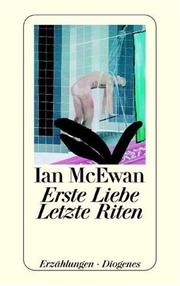
His debut story collection and the fastest way into the early sensibility: perverse, exact, and only a few pages per shock. Start here because it inoculates you against the novellas that follow.

Four children bury their mother in the cellar to avoid being taken into care. The most notorious of the early books and a perfect small demonstration of his control of dread.
An English couple in Venice drift toward a couple who mean them harm. The last of the truly cold books, and the one where the menace finally has an adult moral dimension.
The Major Novels
BeginnerSee McEwan's breakthrough into full-scale fiction, where a single accident detonates a life and the prose becomes famously precise.
▸ Study plan for this stage
Pace: 6–7 weeks, ~25 pages a day. The Child in Time (263 pages) and Enduring Love (259 pages) take about two weeks each. Give Atonement (384 pages) three weeks and read its three parts as three distinct books — the 1935 country house, the Dunkirk retreat, and the wartime hospital — before the coda, which
- The set-piece opening as McEwan's signature: a child vanishing from a supermarket queue, a balloon accident in a field, a fountain in 1935 — one page that generates a whole novel
- The Child in Time as the pivot: the same dread as the early books, now attached to a grief the novel takes entirely seriously
- Enduring Love's argument between rationalism and belief, with Joe Rose the scientist made unreliable precisely by his insistence on being reasonable
- The clinical appendix at the end of Enduring Love — a fabricated case study in the form of a psychiatric paper — and what a forged document does to a novel about evidence
- Atonement's central lie: a thirteen-year-old's misreading of a scene, and the class assumptions that let a whole legal system accept it
- The novel as an act of restitution and its own confession of failure — the coda reframes everything you have read, and the reframing must be earned
- The scale of McEwan's research and its risks: Dunkirk and the wartime hospital are meticulously sourced, and the sourcing later became a controversy about the debt fiction owes its material
- Guilt as a lifelong condition rather than an event, which is the through-line linking all three books
- How does The Child in Time keep Kate present in a novel in which she is absent from page fourteen?
- Is Joe Rose right about Jed Parry? Is he right about anything else? Separate the two questions.
- What does the fake appendix ask you to do, and does it strengthen or undercut Enduring Love?
- What does Briony actually see at the fountain and at the library, and what makes her interpretation available to her?
- Does Atonement's coda redeem the novel or expose it? Argue from the final pages rather than from the idea.
- Across all three books, McEwan builds an entire novel from a single accident. What does that structure assume about how lives work?
- Reread the first three pages of Atonement after finishing it. The coda changes the status of every sentence, including the descriptions of the weather.
- Write down Joe Rose's account of Jed and then Clarissa's. Enduring Love is largely the gap between them.
- Time the supermarket scene in The Child in Time — count how many words cover the actual disappearance, then how many cover the aftermath.
- For each novel, write the one-sentence set piece it grows from, then judge whether the rest of the book is a consequence or a departure.
- Compare the prose of the Dunkirk section with a page of The Cement Garden. The same clinical eye is doing entirely different moral work.
Next up: With the masterpiece behind you, the mid-career novels turn the same technique on competent adults — surgeons and married couples — and watch them fail differently.
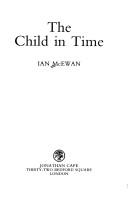
A child vanishes in a supermarket queue and a marriage dissolves around the absence. The pivot novel: the same dread as the early work, now attached to real grief.
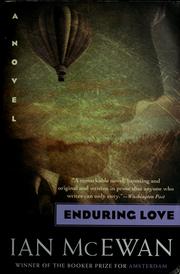
A ballooning accident, then a stalker with a religious delusion. The best example of his set-piece openings and his science-versus-belief argument.
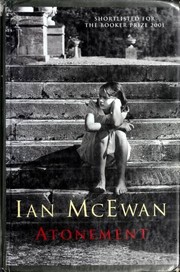
A girl's lie in 1935 ruins two lives, and the novel then interrogates its own telling. His masterpiece — read after the earlier books so its final turn lands as more than a trick.
Mid-Career
IntermediateFollow McEwan into the novels of adult competence and its failures — surgeons, marriages, politics after 9/11.
▸ Study plan for this stage
Pace: 3–4 weeks. Saturday (308 pages) over two weeks, and it works best read in day-sized chunks, since the whole novel is one Saturday. On Chesil Beach (178 pages) in three or four sittings — it covers a few hours, and reading it slowly across a fortnight dissipates the pressure it is carefully building.
- The professional man as McEwan's mature protagonist: expert, rational, comfortable, and entirely unequipped for what the plot brings him
- Saturday's compressed single day, set against the February 2003 anti-war march, with the public event pressing on a private one
- The technical research on display — neurosurgery described procedurally — and the argument, not universally accepted, that competence is a moral quality
- Baxter and Huntington's disease as a collision between medical knowledge and class, and the deeply contested scene in which a poem defuses violence
- On Chesil Beach's single hinge: a few minutes on a hotel bed in 1962 that determine two entire lives
- Historical specificity as the source of the tragedy — Edward and Florence lack the vocabulary to say what is wrong, and the novel is precise about why they lack it
- McEwan's late-forming preference for the counterfactual last page: what would have happened had someone spoken, delivered after it is too late
- Compression as his strongest suit — both books cover hours, and both are about the sentence nobody said
- What is Perowne's day designed to demonstrate before Baxter arrives, and does the novel endorse his contentment?
- The poem scene in Saturday is either the novel's peak or its worst misjudgement. Make the case both ways, then choose.
- How does the Iraq march function — as backdrop, as argument, or as a comment on Perowne's insulation?
- In On Chesil Beach, what could Florence have said, and what specifically in 1962 prevents her from saying it?
- Both books turn on the collision of a private life with a historical moment. Which does it better, and why?
- Read 'Dover Beach' before Saturday. The scene it appears in cannot be evaluated without it.
- Chart Perowne's day hour by hour and mark the points at which he is complacent. The novel arranges them deliberately.
- After On Chesil Beach, write the conversation Edward and Florence do not have — a page of dialogue. It demonstrates exactly how small the missing thing was.
- Compare the final page of On Chesil Beach with the coda of Atonement: both are retrospective, and both are about a chance not taken.
Next up: The late novels take the same reasonable, competent protagonist and set him against law, machines and a whole century.
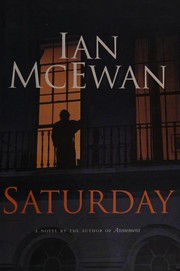
One day in a neurosurgeon's life, against the Iraq war marches. The most technically researched of his novels and the fullest version of his professional-man protagonist.

A 1962 wedding night that goes wrong in a few hours and costs both people everything. Short, devastating, and the purest distillation of the McEwan pivot-point.
The Late Work
IntermediateSee the late novels, where McEwan argues with law, technology and his own century, and decide how the career adds up.
▸ Study plan for this stage
Pace: 6 weeks. The Children Act (224 pages) in ten days. Machines Like Me (333 pages) in two weeks. Lessons is his longest and most capacious novel, covering seventy years — give it three weeks at a steady 25–30 pages a day and let it sprawl rather than pushing for the plot.
- The moral-dilemma novel in its cleanest form: Fiona Maye must rule on whether a Jehovah's Witness teenager may refuse a transfusion, and the law is given its full weight rather than treated as an obstacle
- The judgment as prose — McEwan writes Fiona's ruling straight, and the legal register is the most controlled writing of his late career
- What happens after the ruling: The Children Act's real subject is a professional's inability to bear the human consequence of a correct decision
- Machines Like Me's alternate 1982 — Turing alive, the Falklands lost — as a device for putting the old McEwan questions about conscience inside a machine
- Adam the android as a moral absolutist, and the novel's discovery that consistent ethics are unbearable to live with
- Lessons as the capacious autobiographical book: a life traced from a boarding-school abuse through Suez, Chernobyl, the Berlin Wall, Brexit and the pandemic
- Roland Baines as the anti-Perowne — unsuccessful, unfocused, acted upon — and the significance of McEwan ending on a protagonist without expertise
- The whole career reread from here: the early cruelty, the middle guilt and the late reckoning with what a life adds up to when nobody is to blame
- Is Fiona's ruling right? Separate the legal question from the outcome, which is what the novel wants you to find difficult.
- What does Adam Henry want from Fiona after the judgment, and why can she not give it?
- What does Machines Like Me gain from its alternate history that a near-future setting would not have provided?
- Adam behaves consistently and it ruins everyone. What is McEwan claiming about human moral life?
- In Lessons, how much is Roland's life determined by Miriam Cornell, and how much by history? Does the novel decide?
- Having read eleven books: what changed in McEwan between The Cement Garden and Lessons, and what did not change at all?
- Read Fiona's written judgment as if it were a standalone document, then judge the rest of the novel by it.
- List the historical events Lessons passes through and mark which ones actually alter Roland's life. The disproportion is deliberate.
- Write down what Adam does that a person would not, and what he does that a person should. The second list is the novel's argument.
- Put the opening paragraph of The Comfort of Strangers beside the opening of Lessons. Forty years apart, the same eye, entirely different intentions — describe the difference.
- Choose the McEwan book you would hand a new reader and write the two-sentence case. Your answer will probably not be Atonement, and it is worth knowing why.
Next up: That is the whole arc, from the clinical shocks of the 1970s to a novel that rereads its own century — you can now place any McEwan book in the career and say what he was trying to fix.
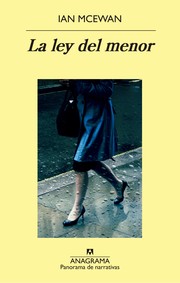
A High Court judge must rule on whether a Jehovah's Witness teenager may refuse a transfusion. The clearest of the late moral-dilemma novels and the most controlled.

An alternate 1980s in which Alan Turing lived and androids are for sale. It puts the old McEwan questions about conscience into a machine, which makes them newly strange.

A man's whole life traced from a boarding-school abuse through Chernobyl and Brexit. His most autobiographical and capacious book — a natural last stop, because it rereads the entire career.
Discussion
Keep reading
Paths that share books, cover the same subject, or open a related topic.