Human geography is easy to mistake for two things it is not: a list of capitals, or a soft version of sociology. Its actual claim is more specific — that space is produced, that the arrangement of people and things is the outcome of decisions and power rather than a neutral backdrop, and that you can read those decisions off a map, a border, or a block.
Reading it in the wrong order makes it feel either obvious or ideological. Start too abstract and the theory floats free of anything you can check. Start too descriptive and you never get to why the pattern exists. The sequence below begins with places you can observe, moves to the systems that shape them, and only then reaches the critical work that names the mechanism.
Start where you can see it
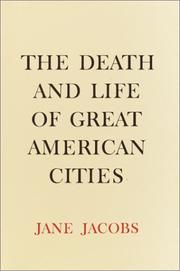
Begin with The Death and Life of Great American Cities. Jane Jacobs is not a geographer by training, and that is part of the point — she taught a generation to look at sidewalks, block length, mixed use, and eyes on the street as the actual substance of urban life, against the planning orthodoxy of her day. Her arguments are contested by planners and economists, but every subsequent urban geographer is in dialogue with her.
Then Topophilia by Yi-Fu Tuan, the humanistic counterweight: how people form attachments to place, how perception and culture shape environmental values, and why the difference between space and place is not semantic. Tuan is the reason the emotional dimension of geography is taken seriously at all.
Zoom out to systems and movement
Prisoners of geography by Tim Marshall is the accessible geopolitics entry — mountains, rivers, ports, and buffer zones as constraints on state behavior. Read it, but read it critically: geographic determinism is a real tendency in this genre, and Marshall leans on it more than academic geographers would. Treat it as a useful set of physical facts rather than an explanation.
Arrival city by Doug Saunders turns to the largest human migration in history, the rural-to-urban move, and argues that the informal settlements on city edges are engines of mobility rather than only sites of deprivation. It is an argument, not a consensus, but it is well-reported and it changes how you read a slum.
The City & The City by China Miéville is the odd one out — a novel, included because it dramatizes the sociology of urban boundaries better than any textbook. Two cities occupy the same ground and residents are trained to unsee each other. Read it as a thought experiment about how borders are enforced by perception.
The critical layer
Now the books that name mechanisms. The divide by Jason Hickel argues that global inequality is produced by the structure of the world economy rather than by a failure of poor countries to develop; it is polemical and disputed by many development economists, and worth reading alongside opposing accounts. Border and Rule by Harsha Walia examines borders as instruments of labor control and racial governance rather than neutral lines — again, an explicitly political argument, presented as such.
The Color of Law by Richard Rothstein is the most concretely evidenced book here: a documentary account of how American residential segregation was created by federal, state, and local policy rather than by private preference alone. Whatever your politics, the archival record it assembles is difficult to argue with, and it is the clearest demonstration of the field's central claim that space is made.
Close with Uneven development by Neil Smith, the theoretical capstone — a Marxist account of how capital produces geographical difference at every scale. It is the hardest read on the path and it will make sense only after the empirical books; taken first, it is abstraction without evidence.
The field contains genuine political disagreement, and several books here take sides. Read them as arguments in a live debate. Adjacent material sits at sociology and archaeology.
Follow the full path to keep the sequence, and the abstractions will land on ground you have already walked.
Follow the full ordered path here: Best Human Geography Books, in Reading Order.