Genomics is a field where the reading order should roughly follow the history, because the technology changed so fast that books written five years apart describe different worlds. The Human Genome Project took thirteen years and billions of dollars; the same sequencing now runs overnight for a few hundred. Books written before that collapse in cost assume scarcity in a way that shapes every claim they make.
The second reason for order: the interesting arguments in genomics are downstream of the technology. What a genome predicts about a person, what ancient DNA can tell us about migration, and what it is legitimate to conclude about human groups are all live disputes, and they only become tractable once you know what sequencing actually produces.
What a genome is, and how we got one
Start with Genome, Matt Ridley's tour of human genetics organized as one chapter per chromosome — a device that lets him cover disease genes, evolution, behavior and history without a textbook's structure. It predates the fast-sequencing era, which is fine; it is the clearest introduction to what the material is.
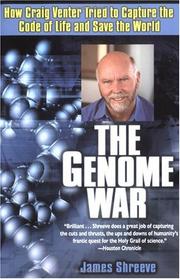
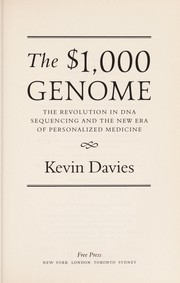
Then the race to read it. The Genome War by James Shreeve is the reported account of Craig Venter's private effort against the public consortium, written with unusual access, and it captures the science and the rivalry together. The $1,000 genome by Kevin Davies picks up immediately after, tracking the collapse in sequencing cost and the first wave of consumer testing companies. Together they explain how a moonshot became a commodity.
The Gene by Siddhartha Mukherjee is the broadest history on the path — heredity from Mendel through eugenics to modern molecular biology, told with the same narrative control as his cancer book. Its eugenics chapters are the essential background for the arguments at the end of this path.
What genomes tell us about people
Who we are and how we got here is David Reich's account of ancient DNA rewriting prehistory: repeated migrations, population mixture as the norm rather than the exception, and the disappearance of the tidy tree-shaped models archaeology once used. It is the most consequential science on this list and pairs naturally with archaeology. Reich is also explicit about the discomfort of discussing genetic differences between populations, and the reception of those chapters is itself part of the story.
The genome factor by Dalton Conley and Jason Fletcher turns to social science — what polygenic scores can and cannot predict about education, income and behavior, and why gene-environment interplay makes simple heritability claims misleading. It is the necessary corrective to strong genetic determinism, from authors who use the data rather than dismiss it.
INFERIOR by Angela Saini examines how science has treated women's biology, including the genetics, and documents how often weak evidence supported strong conclusions. Read it alongside Conley as a lesson in how easily this field's findings get overstated.
Medicine and editing
Genomic and Precision Medicine, edited by Geoffrey Ginsburg and Huntington Willard, is the clinical reference — pharmacogenomics, risk stratification, implementation in health systems. It is a professional text and the driest thing here, but it is where the promises of the earlier books meet practice.
Close with A Crack in Creation, Jennifer Doudna and Samuel Sternberg's account of CRISPR from one of its discoverers, including the ethical debate over germline editing that she helped convene. Reading it last means you arrive at heritable editing already knowing what a genome is, what it predicts, and how badly this science has been misused before.
Follow the full path in order and two decades of upheaval read as a single argument rather than a news cycle.
Follow the full ordered path here: How to Learn Genomics from Books, in Reading Order.