Flamenco is difficult to read about for a specific reason: the tradition was transmitted orally within Andalusian Gitano families for generations before anyone wrote it down, and much of what got written down was written by outsiders looking for authenticity. So the literature splits into three uneven kinds — poetic attempts to describe the feeling, technical maps of the palos and their rhythmic cycles, and firsthand accounts by people who went and lived in it.
Read them in that order and each one supports the next. Start with the technical map and you will memorize compás counts without knowing why anyone cares. Start with the feeling and the counting becomes something you want to learn.
Begin with duende
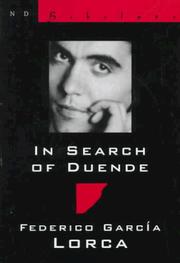
In search of duende collects Federico García Lorca's writing on the quality he considered the heart of Andalusian art — not skill, not charm, but a dark, mortal presence that arrives only when a performer is genuinely at risk. It is short, it is the most quoted text in flamenco writing, and it sets the terms everything else responds to. Follow it with Deep song and other prose, which gathers Lorca's lectures on cante jondo — the older, heavier song forms — along with his broader essays. Here he is closer to a folklorist, writing about the Gitano cante, Arabic and Jewish inheritances, and the campaign he ran with Manuel de Falla to preserve the tradition.
Reading both is not redundant. The first is Lorca at his most incantatory, the second at his most historically specific, and the pair gives you both registers of how Spaniards themselves talk about this music.
The forms, the history, the argument about origins
Flamenco : gypsy dance and music from Andalusia, edited by Claus Schreiner, is the closest thing to a proper survey: the palos and their structures, the guitar's role, dance, the cafés cantantes era, and the contested history of Roma migration into Andalusia. It is a collection of scholarly essays, so read it as a reference rather than front to back. This is where you learn what soleá, seguiriya, bulerías and alegrías actually are, and why the twelve-beat compás patterns keep recurring.
Be aware that origin claims in flamenco are politically loaded — Gitano, Moorish, Sephardic and Andalusian contributions are all asserted with varying evidence, and writers differ sharply on how much credit each deserves. Schreiner's contributors are more careful than most.
Then go and live there
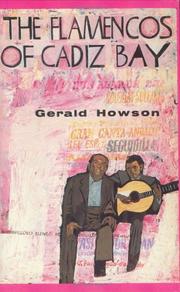
The Flamencos of Cadiz Bay is Gerald Howson's account of the years he spent among flamenco musicians in and around Jerez and Cádiz in the late 1950s, when the old café world was already dying. It is an ethnography written as memoir, unromantic about poverty and clear-eyed about how the music actually got made in kitchens and back rooms.
The Art of Flamenco by D.E. Pohren is the standard English-language companion — Pohren ran a flamenco school in Andalusia and wrote about the forms, the artists, and the culture with the authority of someone inside it. It covers cante, baile and toque and remains the book most often handed to newcomers who want a working vocabulary. It is also, honestly, a book of strong opinions about who counts as authentic; read those as one insider's judgment.
Five books will not teach you compás — that takes a teacher and a lot of clapping — but they will teach you what to listen for. Follow the full path in order, then find a recording of a seguiriya and see whether Lorca was exaggerating.
Follow the full ordered path here: How to Understand Flamenco Through Books, in Order.