Start with The Country Girls. She wrote it in three weeks, it was banned by the Irish Censorship Board on publication in 1960, and copies were burned in her own parish. It is 192 pages and can be read in two sittings, and everything she wrote for the next sixty years is measured against the voice it established.
The alternative most readers reach for is The Little Red Chairs, the late novel about a Balkan war criminal hiding in an Irish village, because it is the one that got the international reviews. It is a better book than the first novel in most technical respects and a much worse place to begin, because its subject is how a closed Irish community absorbs a stranger — the same community that burned her first book. It needs the early village novels underneath it.
What was found obscene in 1960 now reads as almost nothing. The novels were prosecuted for describing Irish girls as having desires, ambitions and contempt for the church at all. Knowing that before page one is not optional context; it is the reason the trilogy is written the way it is.
The Country Girls trilogy, in order
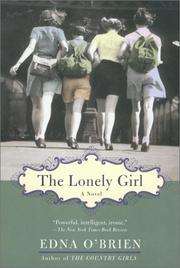
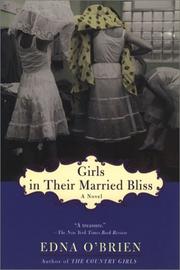
The Country Girls, then The Lonely Girl, then Girls in Their Married Bliss. Read them consecutively with nothing in between: they are one continuous story across roughly fifteen years of two lives, and the third only detonates if the first two are still audible. Caithleen narrates the first two in a voice so warm that readers routinely mistake the opening novel for a comedy. Then Baba takes over the narration in the third, and the tonal change is the whole point — the same world, told by someone with no illusions and a filthy tongue. The following two novels were banned as well.
One catalogue warning worth reading twice
Our list includes an entry called Girl with green eyes. That is the second Country Girls novel under an alternative edition title: it is the same book as The Lonely Girl, published under the name of the film adaptation. Read it in the trilogy, not as a separate novel, and do not buy both.
It is also, confusingly, not her final novel. That book is called Girl, published in 2019 and based on the abduction of schoolgirls by Boko Haram, researched on the ground when she was nearly ninety. It is a real and quite separate book, and it is not currently in our catalogue.
The sixties and seventies
August Is a Wicked Month was banned like its predecessors and is the first book in which she writes desire with none of the comic protection the trilogy provided. A Pagan Place is her most formally radical novel — a childhood in the west of Ireland told entirely in the second person, which removes the retrospective adult voice and leaves only the experience. It cannot be skimmed. Saints and Sinners is a late story collection placed here on purpose, as a demonstration of her range and a pause between the two modes. Across this stage the plots thin and the prose thickens; if you came for the trilogy's storytelling, this is where the books ask you to want something else.
The political novels
This is the hinge of the career: private life abandoned for the Troubles, Irish abortion law and war crimes, written in her sixties, seventies and eighties. House of Splendid Isolation puts an IRA man on the run in an elderly widow's house and gives him a hearing, which earned her the accusation of glamourising terrorism; the charge is part of the book's history and worth knowing as you read. Down by the River is based on the 1992 X case, in which a fourteen-year-old pregnant by rape was prevented by injunction from leaving Ireland for an abortion. It is her angriest book and the material is exactly as hard as that sentence sounds. The Little Red Chairs comes last of the fiction. Leave a gap between each of these three.
The memoir
Finish with Country girl, the autobiography: the convent, the marriage she left, the writing of the first novel, the banning, and the London decades. Half its power is retrospective, because you keep meeting scenes you first read as fiction. It is also shaped and selective, as memoirs are. Reading it last means you can check it against the novels rather than the other way round, which is the only order in which the checking is interesting. The ordered list is in the Edna O'Brien reading path.