Edna O'Brien Reading Order: Where to Start
Edna O'Brien's career splits cleanly in two: the early novels about Irish girls escaping convent country for London, which were banned and burned in Ireland when they appeared, and the late novels about violence and public catastrophe, written decades later by a writer with nothing left to lose. Start with The Country Girls trilogy in order, because it is one continuous story and the later books assume you know what she did there, then follow the sixties experiments, then the political novels, and finish with the memoir, which reads very differently once you know which parts of the fiction were true.
The Country Girls Trilogy, in Order
BeginnerRead the three linked novels that made her famous and got her banned, following Caithleen and Baba from convent school to a London that does not save them.
▸ Study plan for this stage
Pace: 3 weeks, and they are short: The Country Girls 192 pages, The Lonely Girl 255, Girls in Their Married Bliss 175. Any of them can be read in two or three sittings. Read them consecutively with no other book in between — they are one continuous story across roughly fifteen years of two lives, and the
- Factual context you need before page one: The Country Girls was banned by the Irish Censorship Board on publication in 1960, and copies were burned in O'Brien's own parish. The following two novels were banned as well
- What was found obscene now reads as almost nothing — the books were prosecuted for describing Irish girls as having desires, ambitions and contempt for the church at all
- The trilogy is Caithleen and Baba's story from a convent school in the west of Ireland to Dublin and then London, and the shape is escape that does not deliver
- Caithleen narrates the first two books: romantic, self-deceiving, and written in a voice so warm that readers routinely mistake the first novel for a comedy
- Baba takes the narration in Girls in Their Married Bliss, and the tonal change is the point — the same events, told by someone with no illusions and a filthy tongue
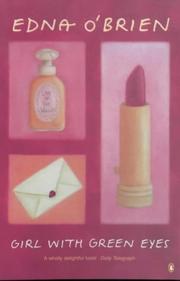
- The Lonely Girl, published in some editions as Girl with Green Eyes, is where the comedy curdles: Caithleen with an older married man, and her father arriving to drag her home by force
- The convent, the drunk father, the mother's early death and the priest's authority are not background — they are the machinery every later novel is still arguing with
- What exactly in The Country Girls could a 1960 censor have objected to? Point to specific passages and say what the objection reveals.
- Caithleen tells you what she feels and Baba tells you what happened. Where do the two narrations contradict each other, and whom do you believe?
- At what moment does the comedy of the first novel stop working, and is it in book one or book two?
- London was supposed to be the escape. What does it actually offer these women, and what does it fail to remove?
- Why hand the third book to Baba? What can she say that Caithleen structurally cannot?
- Read the last page of Girls in Their Married Bliss and then the first page of The Country Girls again. The distance travelled is the trilogy's whole argument.
- Note every appearance of a priest or nun across the three books and what each one is doing. It is a short list and it is always the same thing.
- Write a paragraph in Baba's voice describing a scene from book one. It will show you how much Caithleen's narration was withholding.
- Check whether your copies are the standalone novels or an omnibus, and if it is an omnibus, find out whether it includes the later epilogue O'Brien added — some editions do and it changes the ending.
Next up: You have the voice and the material; the sixties novels are O'Brien deliberately breaking that voice to see what else it can do.

Written in three weeks and burned by her local parish priest. The only sensible entry point: it establishes Caithleen, Baba and the voice that everything after it is measured against.
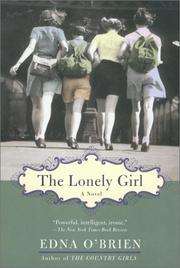
Published in some editions as Girl with Green Eyes. Caithleen in Dublin with an older married man, and her father coming to drag her home. The middle volume, and the one where the comedy of the first book curdles.
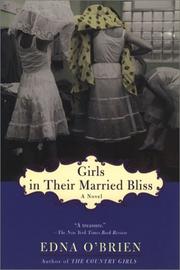
Baba takes over the narration and the tone turns savage. The trilogy's payoff and unreadable out of sequence; it is also where O'Brien first shows the coldness the late novels run on.
The Sixties and Seventies Novels
IntermediateFollow her through the experimental decade, where the plots thin out and the prose does the work.
▸ Study plan for this stage
Pace: 3–4 weeks. August Is a Wicked Month is 188 pages, A Pagan Place 229, and Saints and Sinners 245. The two novels are short but resistant — A Pagan Place is written entirely in the second person and cannot be skimmed, so give it a fortnight at 20 pages a sitting. Saints and Sinners is a collection: on
- August Is a Wicked Month was banned in Ireland like its predecessors, and it is the first book where O'Brien writes desire with none of the comic protection the trilogy provided
- Its subject is a separated woman taking the holiday she believes she is owed, and the punishment the novel delivers is deliberately disproportionate — that disproportion is the argument
- A Pagan Place is her most formally radical novel: a childhood in the west of Ireland told in the second person throughout, so the reader is placed inside a girl being formed
- The second person does something specific here — it removes the retrospective adult voice that made the trilogy bearable, leaving only the experience
- Saints and Sinners is a late collection placed here on purpose: emigrant labourers, old women, exiles, across the full range of her career in one short book
- The stories are the best demonstration that O'Brien is a compression writer as much as a novelist, and they work as a pause between the early and late modes
- Across this stage the plots thin and the prose thickens; if you came for the trilogy's storytelling, this is where the series asks you to want something else
- August Is a Wicked Month ends in disaster. Is the novel endorsing that outcome, reporting a social fact, or something else?
- What does the second person in A Pagan Place make impossible, and what does it make available?
- Where does A Pagan Place's prose break most obviously from the trilogy's, and why would O'Brien want to break it at this point in her career?
- Which story in Saints and Sinners would you hand to someone who had read nothing else of hers, and what does that choice say about her range?
- The banning stopped mattering legally but the books kept provoking. What was actually being objected to by this point?
- Read the opening page of A Pagan Place aloud. The second person only reveals what it is doing when heard.
- Take one paragraph from The Country Girls and one from A Pagan Place and mark the differences in sentence length and punctuation. The change is measurable.
- After Saints and Sinners, list which stories look back to the trilogy's Ireland and which belong to the late political mode. The collection straddles both.
- Write down what August Is a Wicked Month would have to change to be publishable in 1965 Ireland. The list is the censorship regime in miniature.
Next up: With the private novels exhausted, O'Brien turns outward — and the late books are written by someone who has stopped worrying about being banned.
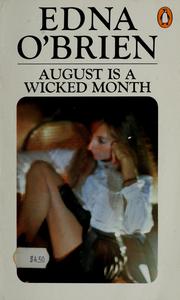
A separated woman goes to the south of France to have the holiday she thinks she is owed. Banned in Ireland like its predecessors, and the first book where she writes desire without the protection of comedy.
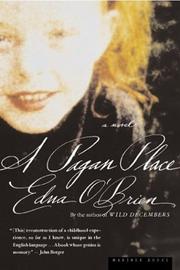
A childhood in the west of Ireland told entirely in the second person. Her most formally radical novel; read it after the trilogy so you can hear how deliberately she is breaking her own voice.

A late collection, but placed here because the short stories are the best demonstration of her range across the whole career — emigrant labourers, old women, exiles. A useful pause between the early and late novels.
The Political Novels
IntermediateRead the late work, where O'Brien leaves private life for the Troubles, abortion law, war crimes and abduction.
▸ Study plan for this stage
Pace: 5–6 weeks. House of Splendid Isolation is 224 pages, Down by the River 282 and The Little Red Chairs 320. None is long, all are heavy. Read them in this order with a gap between each — Down by the River in particular is best not read immediately after House of Splendid Isolation. Expect to reread pa
- This stage is the hinge of the career: O'Brien leaves private life for the Troubles, Irish abortion law, and war crimes, writing in her sixties, seventies and eighties
- House of Splendid Isolation puts an IRA man on the run in the house of an elderly widow, and gives him a hearing. It earned her the accusation of glamourising terrorism, and knowing that charge is part of reading it
- The novel's method is refusal to caricature — the widow and the gunman talk, and the book declines to tell you who is right
- Down by the River is based on the 1992 X case: a fourteen-year-old, pregnant by rape, prevented by injunction from leaving Ireland for an abortion. It is her angriest book and the material is exactly as hard as that summary suggests
- It proves the point the trilogy's banning made — thirty years on, the young novelist who scandalised the state was still writing directly against its law
- The Little Red Chairs hides a Balkan war criminal in a small Irish village as a healer, and the first half is a village comedy that turns without warning
- It needs the earlier village novels to land, because its subject is how a closed Irish community absorbs a stranger — the same community that burned her first book
- One catalogue note: the entry listed here as Girl with Green Eyes is the second Country Girls novel under an alternative edition title, the same book as The Lonely Girl in stage one. Read it there, not here
- House of Splendid Isolation gives a gunman interiority. What does the novel gain from that, and is the charge against it fair?
- Down by the River is fiction built on a documented case. Where does O'Brien follow the record and where does she invent, and why does the invention matter?
- How does The Little Red Chairs manage its tonal break, and did the first half prepare you for it in ways you only saw afterwards?
- All three books put an outsider inside an Irish community. What does O'Brien think such a community does to a stranger?
- The early novels were banned for private matter and the late ones attack public institutions. Is that a change in her, in Ireland, or in both?
- Read a short factual account of the X case before Down by the River. The novel assumes a reader who knows what happened.
- Mark the point in The Little Red Chairs where you stopped reading it as a comedy, then go back and find the sentence that had already told you.
- Set the widow's house in House of Splendid Isolation beside the village in The Country Girls. It is recognisably the same Ireland forty years on.
- Write a defence of House of Splendid Isolation against the glamourising charge using only evidence from the text.
- Note which of these three you would recommend and to whom. They are not interchangeable and one of them is genuinely hard to hand to someone.
Next up: Six decades of fiction are now behind you, which is the only condition under which the memoir does what it is designed to do.
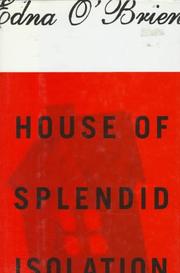
An IRA man on the run takes refuge with an elderly widow. The hinge of her career and the book that earned her the accusation of glamourising terrorism; read it first of the late novels because it announces the turn.
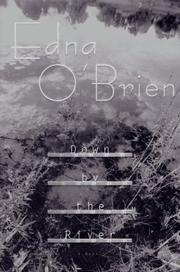
Based on the X case, a fourteen-year-old prevented from leaving Ireland for an abortion. Her angriest book, and the clearest evidence that the banned young novelist never stopped being a threat to the state.

A Balkan war criminal hides in a small Irish village as a healer. Written in her eighties and the most ambitious thing she attempted; it needs the earlier village novels to land, because it is about how such a place absorbs a stranger.
A Nigerian schoolgirl taken by Boko Haram, researched on the ground when O'Brien was nearly ninety. Her final novel and the furthest she travelled from Tuamgraney; read it last of the fiction.
The Memoir
IntermediateClose with the autobiography, and see which of the novels were reporting.
▸ Study plan for this stage
Pace: 1–2 weeks. Country Girl is 352 pages and reads quickly — it is episodic and the London chapters are pure anecdote. Read it in a handful of long sittings rather than nightly, because its effect is cumulative recognition: you keep meeting scenes you first read as fiction fifty years earlier.
- Country Girl covers the whole life: the convent, the pharmacy apprenticeship, the marriage she left, the writing of The Country Girls in three weeks, the banning, and the London decades
- Half its power is retrospective — the childhood chapters are the raw material of the trilogy and A Pagan Place, and you can see exactly what was transposed and what was invented
- It confirms the banning story in her own words, including her mother's response to the book, which is the most painful thing in it
- The London section is a different register altogether: parties, film people, famous names, and a woman enjoying having escaped, told without apology
- The memoir is also selective and shaped, which is worth holding onto — it is a writer's account, not a record, and it dramatises
- Reading it last means you can check it against the fiction rather than the other way round, which is the only order in which the checking is interesting
- It closes the argument the whole path makes: that O'Brien's subject was always the cost of leaving, and that she paid it in public
- Which scenes in the memoir did you first meet as fiction, and what did the novel change?
- How does her account of the banning differ from the version usually summarised, and what does she emphasise that summaries drop?
- The London chapters are lighter than everything else in the path. Is that evasion or earned relief?
- Where is the memoir visibly shaped as a narrative rather than reported, and does that undermine it?
- Having read the whole path, what was O'Brien's actual subject — and did it change between 1960 and the late novels, or only its setting?
- Read the memoir's convent chapters and the opening of The Country Girls back to back, and list what fiction added.
- Note every writer and public figure she meets in the London section, then ask why she includes them. The list is an argument about having got out.
- Write a paragraph on her mother as the fiction presents her and as the memoir does. The two portraits are not the same.
- Finish by rereading the last page of Girls in Their Married Bliss. It is where the path started and it reads differently now.
Next up: That is the whole career, fiction and life side by side — from here the remaining reading is the short stories and the plays, which extend the same material rather than changing it.
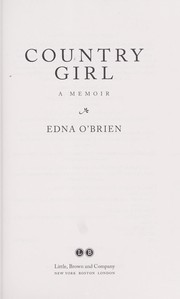
The convent, the marriage she fled, the London parties, the decades of work. Deliberately last: half its power comes from recognising scenes you already met as fiction fifty years earlier.
Discussion
Keep reading
Paths that share books, cover the same subject, or open a related topic.